


The Bhutanese artist Pem Lham has received the Rubin Museum Himalayan Art Prize, an unrestricted $30,000 award supporting contemporary artists from the region. The prize is to be formally presented Friday (11 September) at a ceremony in Bhutan’s capital of Thimphu; Queen Jetsun Pema was expected to attend.
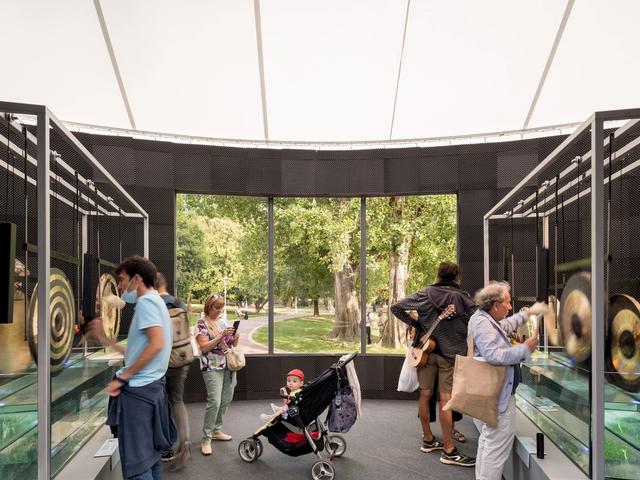
The annual prize launched in 2024, the same year that the Rubin Museum of Himalayan Art permanently closed its New York space and transitioned to a decentralised global model, or what it has described as a “museum without walls”. The model aims to refocus the museum’s collection, expertise and relationships, and to redirect financial resources to initiatives like the prize and a grant programme for researchers working in the field of Himalayan art.
Elena Pakhoutova, the museum’s senior curator, tells The Art Newspaper that Pem Lham’s work stands out for its “versatility and notable skill”, and for having an “emotional agility, which invites a connection to her subjects and topics”.
“Pem Lham manages to present important ideas relevant to her culture, but in a way that is inviting and considerate—whether sharing her take on a particular person, celebrating the women of Bhutan or raising awareness of environmental situations,” Pakoutova says. “Being a young woman with the ability to pursue the creative path of an artist also makes her a great role model for the younger generation of Bhutan, especially girls, to whom Pem Lham’s art speaks most vitally and directly.”
Pem Lham was born in Lhuentse, Bhutan, in 1997 and earned a bachelor’s degree in visual arts from Beaconhouse National University in Lahore, Pakistan. The multidisciplinary artist creates work that merges traditional Bhutanese art with contemporary techniques, exploring themes such as memory and identity. Since childhood, she has been closely involved with Voluntary Artists Studio (Vast Bhutan), a nonprofit where she had her first solo exhibition in 2025.
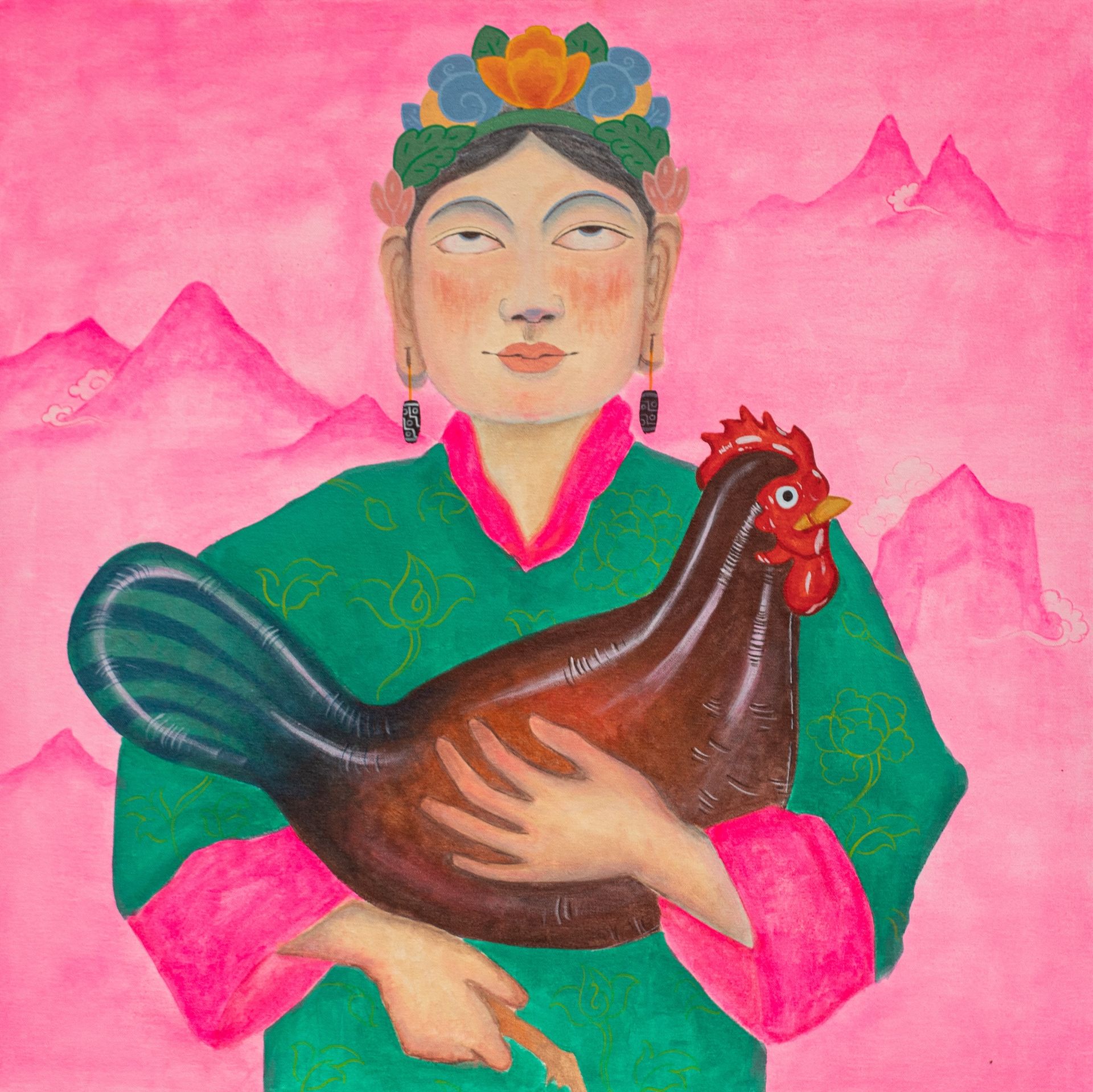
Pem Lham’s Untitled (2025) Photo: Karma T. Dorji, courtesy the Rubin Museum of Himalayan Art
A recurring image in Pem Lham’s recent body of work is a female figure fading into a wall, a metaphor for the domestic expectations placed on women. She will revisit that motif in an upcoming mural commissioned for the Gelephu Mindfulness City in Bhutan.
In the next few months, the artist also plans to continue working with Vast Bhutan on its Lungta Art Festival, a year-long celebration of contemporary art and environmental awareness, while expanding her research and experimentation in the studio.
“What this award means to me is permission to slow down and to trust that the work will find its shape in its own time,” Pem Lham says. “I want to spend this time going deeper into painting, weaving, installation and sculpture, and letting those forms bump up against each other more. There’s a version of my work I can feel I haven’t fully made yet. I think it lives in the spaces between those forms.”
Michelle Bennett Simorella, the Rubin’s director of global projects and collections, says that the prize is especially important given that Himalayan women artists are largely overlooked in the contemporary art world. “Their work can remain hidden from international art connoisseurs”, she says, because of “systemic barriers to formal art training and travel opportunities, as well as limited access to international galleries”.
“Himalayan female artists are typically included within the South Asian categories of global contemporary art and face many similar challenges in gaining recognition, including being embedded in patriarchal societies that predominantly spotlight male artistic achievement,” Simorella says. “They tend to come from communities that have historically focused on male-dominated monastic art forms, a legacy that carries through to today.”