

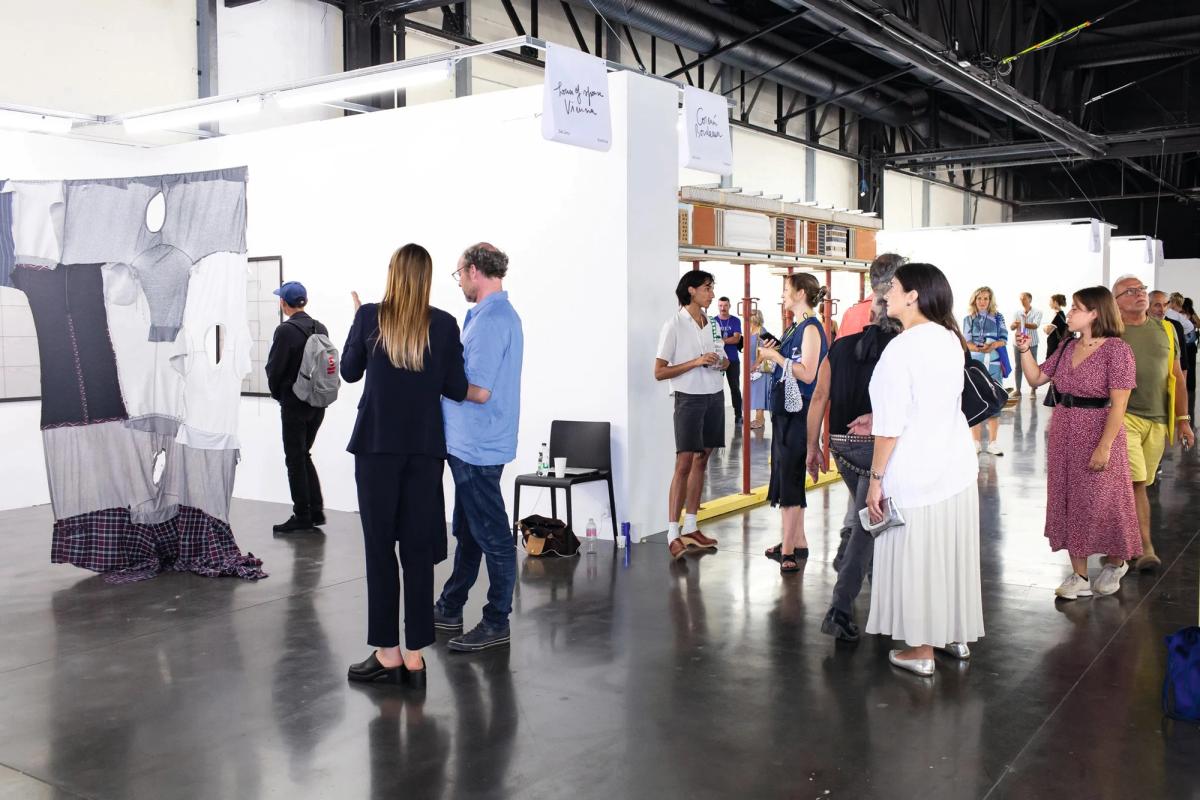
As the city of Marseille changes, the Art-o-rama art fair’s emphasis on emerging art remains. Low stand fees, fresh exhibitors and an increasingly international outlook have helped the southern French fair grow alongside its home city.
By pairing emerging contemporary art with laid-back rhythms of life on the Mediterranean coast, Art-o-rama has grown to be one of the art world’s most beloved summer traditions since its founding two decades ago, alongside Marseille’s transformation from a gritty port city into a magnet for artists.
Art-o-rama returns to Friche la Belle de Mai—a former tobacco factory that was transformed into a cultural centre—today (until 30 August). The fair has grown from just five galleries at its inception to 38 exhibitors this year. Although this year’s edition marks 20 years since Art-o-rama’s founding, organisers are holding off on celebrating—because the fair’s traditional format was suspended in 2020 due to the onset of the Covid-19 pandemic, the event will wait until next year to mark its 20th anniversary.
The fair remains focused on spotlighting emerging galleries and artists with curatorially interesting presentations, which is not always the case for commercial art fairs. Low stand fees allow dealers to bring more unconventional material, with less economic pressure if a work is commercially unviable.
“If we propose something that is a little bit ambitious and intuitive, it’s more interesting for the visitors,” says the fair’s director, Jérôme Pantalacci. “That’s why we have a lot of young galleries; because it’s interesting for them, they have the possibility to show what they are able to do, and because in another art fair it would be very expensive.”
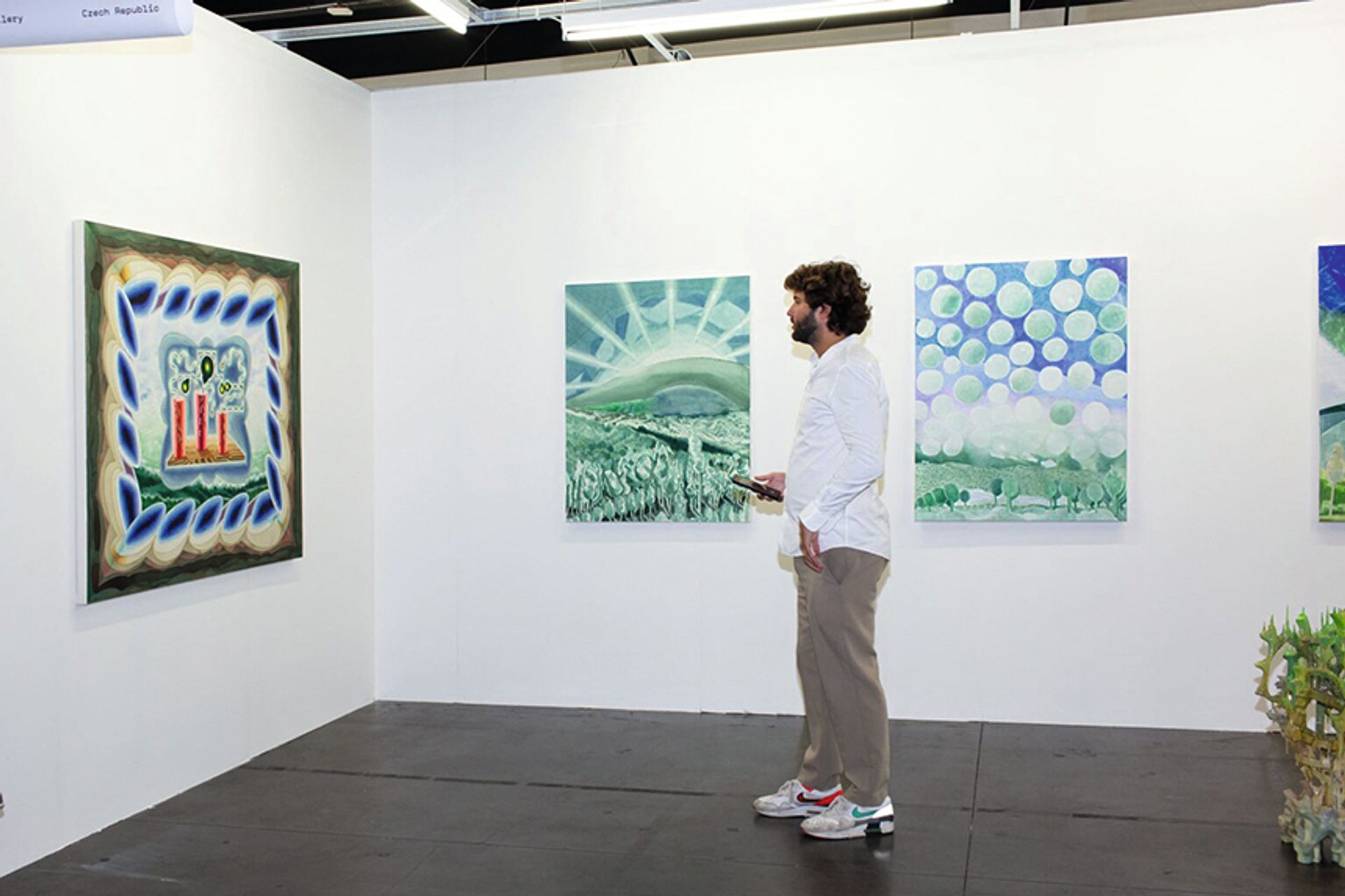
Half of the exhibitors at the fair this year—19 galleries—are participating in Art-o-rama for the first time, reflecting the expo’s typically high turnover rate from one edition to the next. While exhibitors have traditionally been predominantly young European galleries, that is changing—new participants this year include Mueve Galería from Lima and two Tokyo galleries, Tatsuro Kishimoto and Gallery Hayashi + Art Bridge. Around 70% of exhibitors typically come from outside France, a strategy intended to bring new artistic perspectives to Marseille and connect the local scene with an international one, Pantalacci says.
The fair’s increasingly international scope mirrors wider changes in Marseille itself. Once seen as dangerous and scruffy, the city has become an increasingly desirable destination for artists and cultural workers, a shift that accelerated during the Covid-19 pandemic.
“I would say that it’s a vibrant scene, without a real market,” Pantalacci says, though he adds that the art ecosystem may follow the influx of artists moving to the city and the surrounding region. “Now, more and more artists live in Marseille, and Marseille is very attractive for the youngest artists and even even more established artists from Europe.”
One of the stands Pantalacci is most looking forward to is Berlin gallery Dittrich & Schlechtriem’s presentation, which will feature a new photographic series by the German artist Lukas Städler. Produced over the course of the summer in Marseille, the project explores themes of intimacy, community and identity through the lens of the city, examining the points where urban life intersects with the natural landscape, including the cruising culture of Mont Rose beach.
“I hope that here in Marseilles [visitors can see] good proposals, discover many new galleries and artists, and at the same time enjoy the city and environment,” Pantalacci says.