

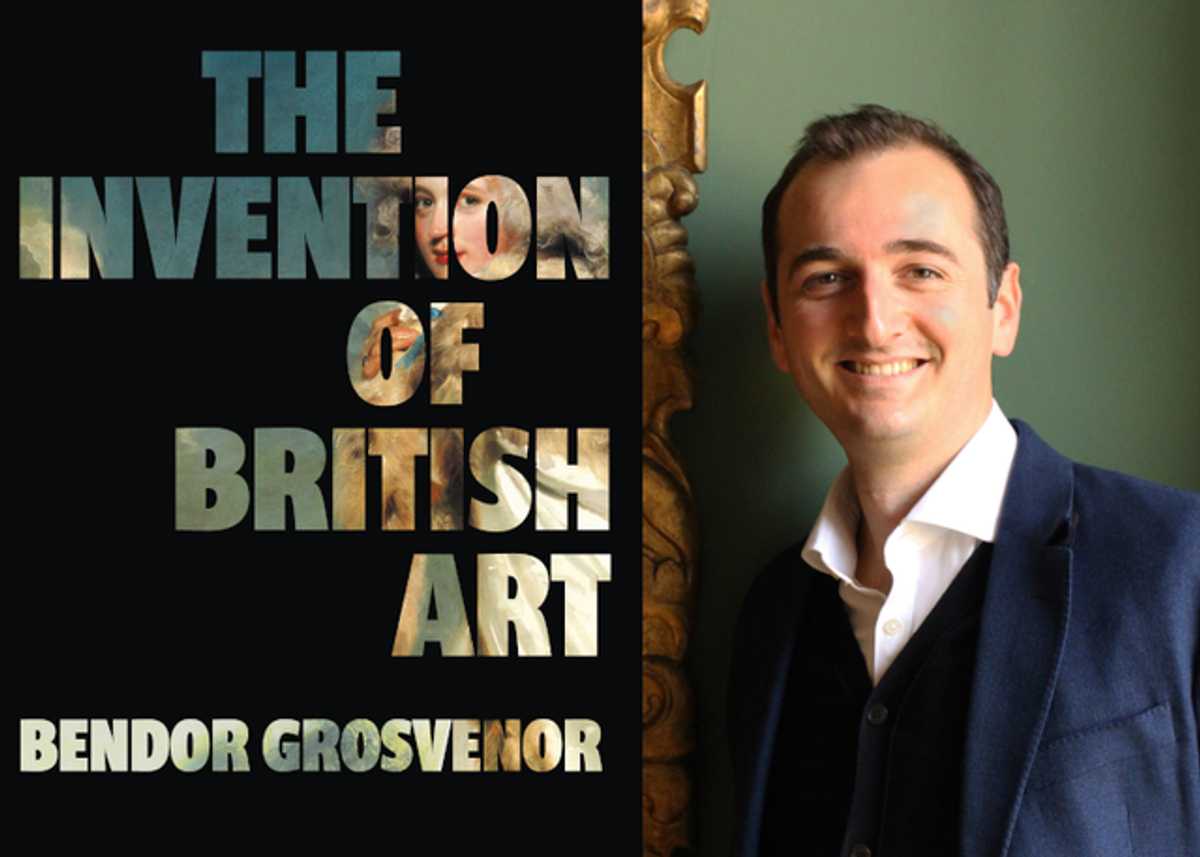
They say the human body can’t remember pain, which must be why I’ve returned to the book business. My 2024 book, The Invention of British Art, is coming out in paperback, and because the economics of printing won’t afford me the luxury of the hardback’s 200 images, I must make some changes. Some of the paintings that I can’t illustrate I’ll need to describe more fully, while others will have to be cut from the text entirely. I’m in agony deciding what has to go.
There will be an audiobook too, which, for obvious reasons, will demand an altogether different approach. But describing an object without reference to an image has always seemed to me one of the best ways to think and communicate about art. It makes you think about the things you might have missed.
Artists make good detectives
My other book project is also about art but will take me away from illustrations completely. It’s a novel. I’m trying my hand at art historical fiction, a niche within a niche. It is set in London in the 1630s and is a detective novel. Regular readers may know of my obsession with Anthony van Dyck, so of course he is the detective. Artists make good detectives. They see things differently, and their instinct is to pursue the truth. As a court portraitist, Van Dyck has a further advantage in that nobody sees through deception better than someone paid to create it.
The Stuart court has everything you want in a novel: conflict, intrigue, mystery, treason
Most of the historical fiction I come across these days is set in the Tudor age. But after writing a history of British art covering some 12,000 years, it was the Stuart period that stayed with me the most. It is still so misunderstood. The Civil War really began as what we would now call a culture war. They were fighting over art long before they reached for their pikes. And the Stuart court has everything you want in a novel: conflict, intrigue, mystery, treason. It is true that Charles I provides fewer opportunities for sex than Henry VIII, but happily it’s not that kind of book. Some things are better left to the artists.
Whether or not my novel will see the light of day is another question altogether. But I’m enjoying the challenge of writing in a new way. I have spent more than 20 years writing non-fiction. The demands of fiction are very different. In non-fiction, facts are a constraint but also a guide. Once you have done your research and formed your argument, the path ahead is clear. Try plotting a novel, and you’ll soon see how much you need that map. And how you guide the reader is different too. Non-fiction needs clear signposting, especially when communicating specialist information to a general audience. “This matters, here’s why,” you must tell your reader, or they’ll get lost. Fiction, on the other hand, needs signposts that are carefully smuggled in, so readers can make their own discoveries.
And then there is the importance of “show, don’t tell” in fiction. This is the hardest shift of all. The art historian’s first instinct is to tell, because the artist has already done the showing. But here is where my two projects meet, and why they are worth (I tell myself) doing together. The novel, like the audiobook, will have no images: every painting in it must be made of words alone. Writing as Van Dyck, I have to see the canvas before the reader can—the pose, the light, the lie. It is the best training in looking I’ve ever set myself. And if it all comes to nothing? No matter. Sometimes the pain is the pleasure.