

China's National Cultural Heritage Administration has ordered public museums across the country to strengthen emergency management protocols to protect visitors and artefacts, following a string of power outages and overcrowding incidents during the summer holiday season.
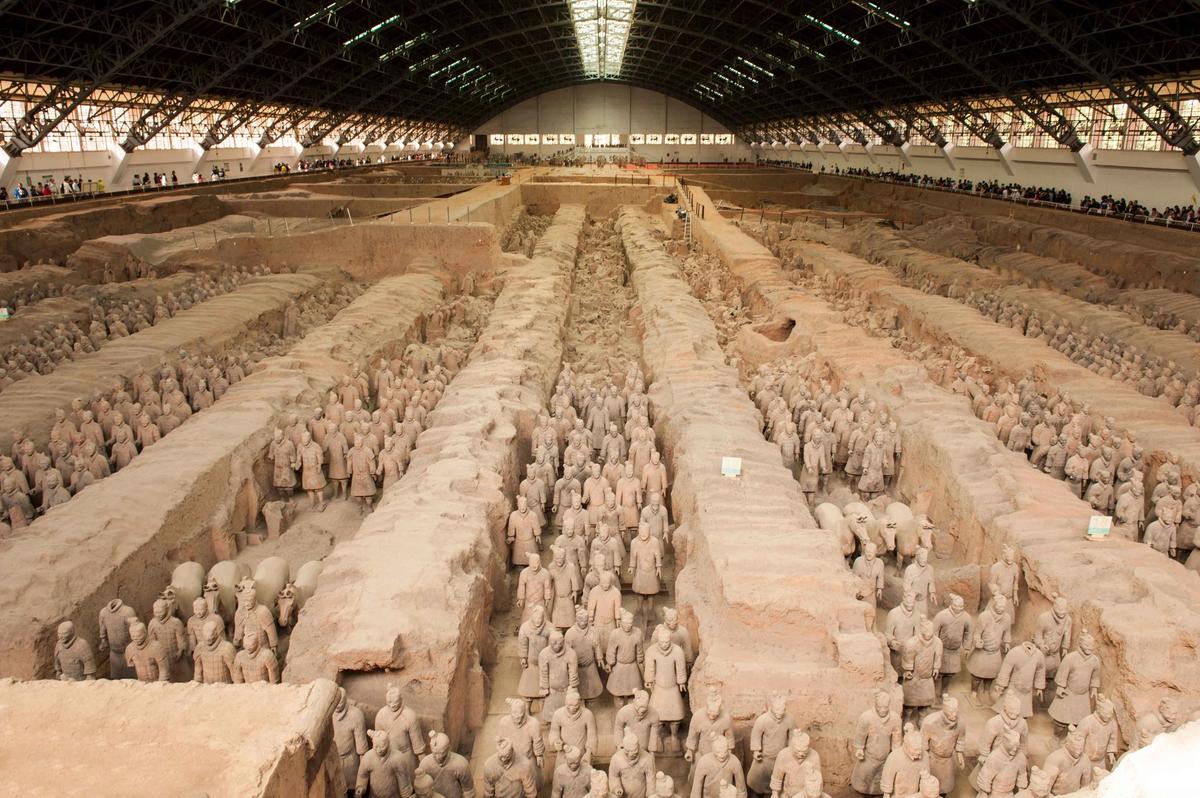
The directive follows several infrastructural breakdowns at major cultural institutions. On 4 August, the Terracotta Warriors Museum in Xi'an, Shaanxi province, suffered a sudden blackout and air-conditioning breakdown across its three excavation pits and main exhibition hall, at around 1pm local time. The outage lasted several hours. News of the blackout first circulated on the social media platform Rednote, before being picked up by local media; videos and photos showed visitors relying on flashlights to keep viewing the exhibits.
Similar outages struck the Lu Xun Museum in Beijing and the Datong Museum in Shanxi province on 7 and 8 August, respectively.
Meanwhile, Zhejiang Museum issued an apology on its official WeChat account to visitors who faced entry delays caused by overcrowding and gates malfunctioning on 6 August.
According to notices from the museums involved, the outages stemmed from system overload and ageing equipment, worsened by the summer's extreme heatwave.
Conservation experts have expressed concern over the effect the outages may have had on delicate historical relics.
“Sudden power outages can have a detrimental impact on antiquities that require strict temperature and humidity controls,” Joey Cao, a lecturer in the Department of Conservation and Restoration at the China Academy of Art, tells The Art Newspaper. “However, the severity depends on the environmental contrast created by the outage. A drastic shift between ambient conditions and an artefact's ideal climate poses a serious threat, whereas a minor fluctuation is far less damaging.”
The incidents come as cultural tourism has become a mainstay leisure activity for Chinese families, driving steadily rising museum attendance nationwide. The Terracotta Warriors Museum, a Unesco World Heritage Site built on the mausoleum of Qin Shi Huang, China's first emperor, houses the famed terracotta army that was created as a funerary offering. It was the second most visited museum in China in 2025, drawing almost 11 million visitors, according to a report by the National Cultural Heritage Administration.
In response to the disruptions, the National Cultural Heritage Administration said museums should deploy camera surveillance and other flow-monitoring systems to track real-time visitor numbers, and should implement mechanisms to refine booking systems and prevent “sudden surges in visitor numbers and entry disruptions”. It also encouraged museums to establish information-sharing mechanisms with local governments, so that officials are alerted once visitor numbers reach a certain threshold and to avoid problems caused by delayed communication.
Additionally, the directive mandates comprehensive maintenance overhauls across key facility infrastructure, including back-up power supply systems, central air-conditioning, fire control mechanisms and collection storage spaces.
The Art Newspaper has reached out to the National Cultural Heritage Administration as well as the Terracotta Warriors Museum, the Lu Xun Museum and the Datong Museum for comment.