

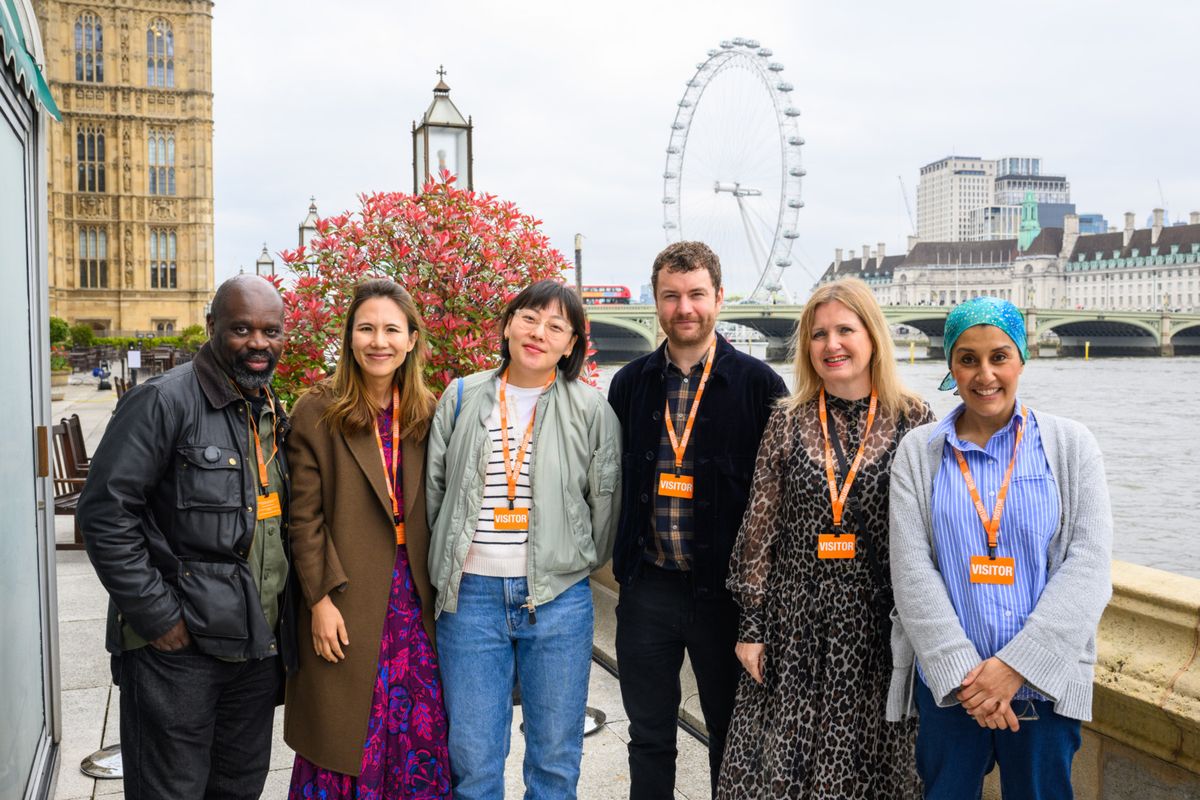
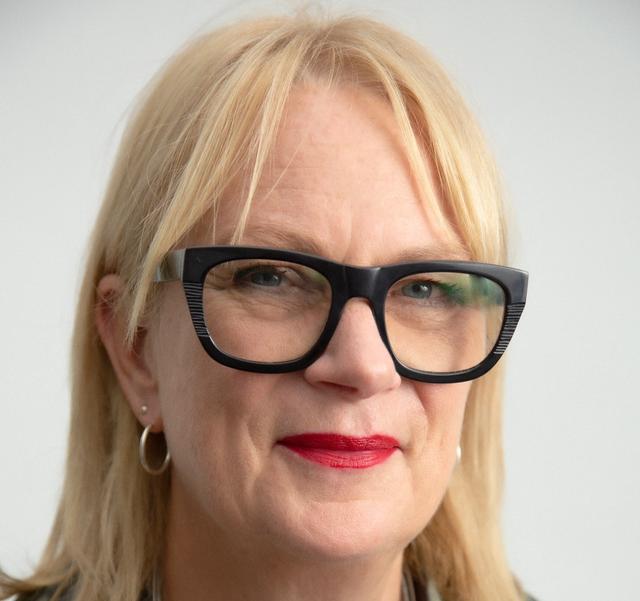
I first encountered Artists Now in the early 1980s when, as Artist’s Newsletter—which was almost immediately shortened to "a-n"—the organisation consisted of a few photocopied sheets of useful information pinned up onto studio noticeboards. Today it is the UK’s largest artist’s membership organisation and last month it took the new name Artists Now to mark its current role as a powerful professional body. Via a comprehensive website, it connects a 36,000-plus membership—which includes the leading artists Antony Gormley, Sonia Boyce and Larry Achiampong—to a wide range of skills, services and opportunities.
Over four decades, what was originally a small grassroots outfit has also evolved into a highly effective lobbying force. It gives voice to artist communities and campaigns on crucial issues ranging from fair pay, to disability rights and intellectual property; and is often to be found making the case for investment in artists and the visual arts through the UK’s All Party Parliamentary Group for Visual Arts and Arts.
As acknowledgment of this enduring mission to empower artists with both essential information and powerful advocacy, last month’s launch of the revamped Artists Now was also accompanied by the unveiling of a Green Manifesto. “We see it as a call to action,” declares Artists Now CEO Julie Lomax. “We want to give artists the tools not just to survive but to thrive in a fast-changing society, and we are proud to be publishing a Green Manifesto to support artists who want to make their practice more environmentally friendly.”
Back in September 1980 the very first issue of a-n pledged to offer both “the information side of art” and also to be “a means of raising issues significant to visual artists” and Lomax sees the manifesto as continuing to honour both these strands by addressing an issue that is momentously significant for us all. “We chose to relaunch with a Green Manifesto because it is something that everybody can do, whatever their circumstances,” she says. “It affects us all and reaches out to everyone, across all the art world and beyond.” Or, as one of the manifesto’s opening clarion calls declares: “What’s good for the planet is good for artists.”
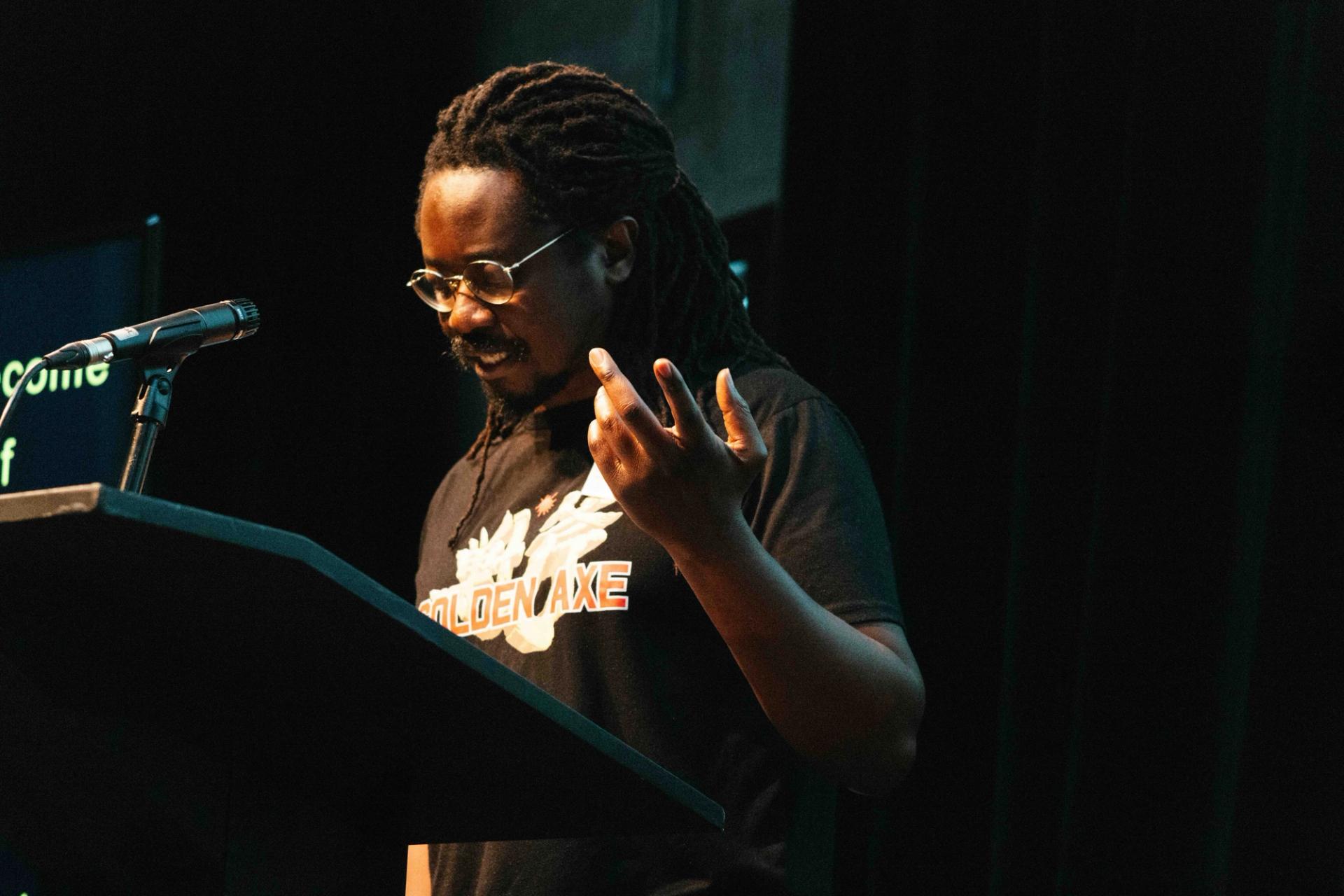
Larry Achiampong—who is an Artists Now member—at the International Association of Art Europe 2025 Symposium: Artists Make Change, co-hosted by Artists Now Photo: ©Lewis Ronald
In keeping with the grassroots spirit that continues to underpin Artists Now, its Green Manifesto was developed through a collaborative research process led by the artists Tom Pope, Alys Scott Hawkins and Melanie Wheeler. It also involved a number of artist’s studios across the UK. The overall intention was to make the information as accessible and user-friendly as possible. “It’s been developed by artists for artists and is rooted in the reality of their practice,” Lomax says. “Artists are endlessly resourceful and have long been a driving force in supporting sustainability and raising environmental awareness and we want to support this in a way that works for everyone.”
To this end the Green Manifesto divides up its practical advice into categories, colour coded according to level of challenge: green being “easy”; amber “moderate”; and red “hard”. Each category is then further subdivided and information given under subject headings of making, exhibiting, shipping, travel, admin and digital. Its creators describe the manifesto as a constantly- growing “living resource”, freely accessible to both members and non-members on the Artists Now website. All users are invited to add and exchange their own sustainability tips and to share their experiences online by tagging Artists Now on social media so that “we can continue to learning from one another.”
Throughout, the tone of the manifesto is upbeat and reassuring rather than militant, doom-y or finger-wagging. The emphasis is on engagement at whatever level. “Not every action will be relevant to every practice, so focus on what is achievable and meaningful for you,” declares one manifesto statement, while another urges artists to “do what you can [...] don’t feel guilty: individually we can’t do everything”.
However, collectively we can do a great deal. As Lomax points out: “Just one action from each of our members would amount to more than 36,000 actions—and that’s already a lot of change.” This is a maxim that can be taken to heart by all of us, artists or otherwise.