

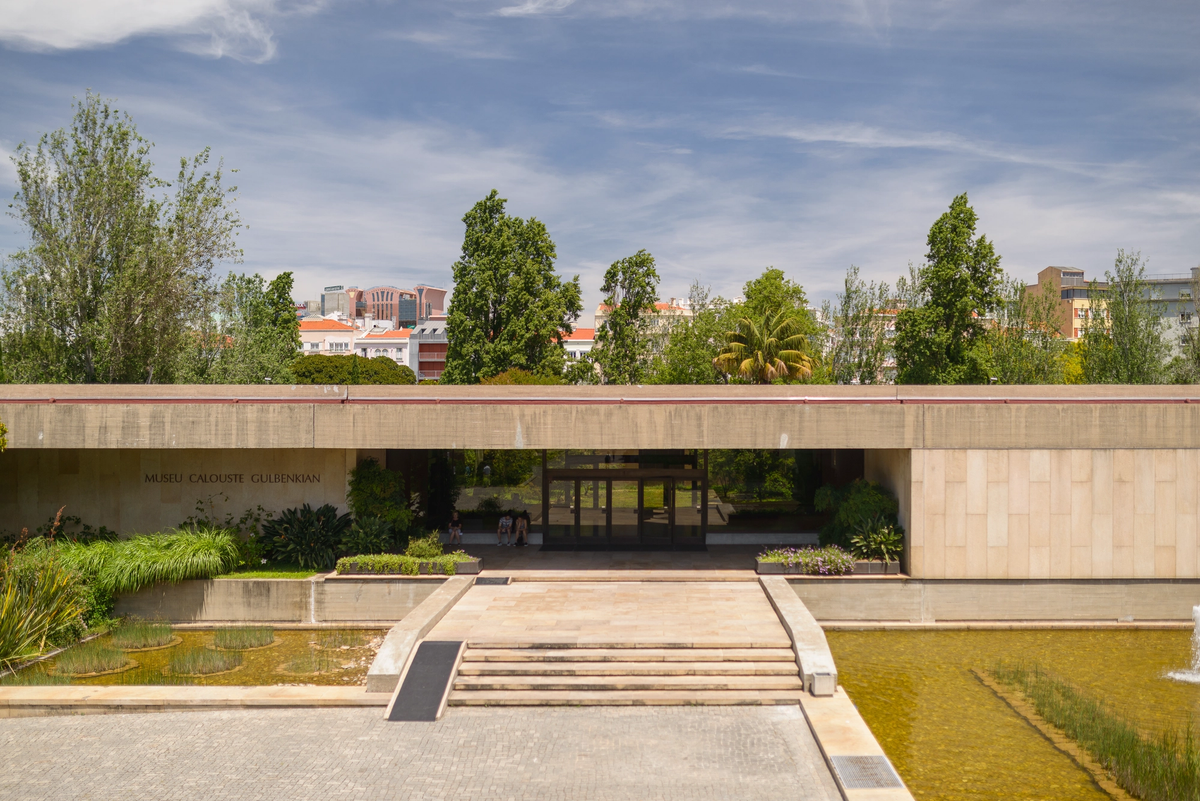
The Museu Calouste Gulbenkian reopened in Lisbon on Saturday (18 July) after an 18-month refurbishment. Named after the Armenian tycoon and collector—considered one of the richest men in the world on his death in 1955—the museum timed its re-inauguration for the 70th birthday of the eponymous foundation of which it is part. Prompted by the need to overhaul essential systems—in particular security, fire safety, ventilation and lighting—the €7.8m renovation sought to return the display “as much as possible to its original 1969 state”, says Xavier Salomon, the museum’s recently appointed director.
The museum is surrounded by greenery, located in Lisbon's upscale Avenidas Novas neighbourhood
Calouste Gulbenkian Museum © Pedro Pina
Calouste Gulbenkian was born in Istanbul in 1869, when it was the capital of the Ottoman Empire, to an Armenian family of merchants and bankers who traded commodities that, in the later 19th century, included petroleum. Known as “Mr Five Percent”, he earned a vast fortune brokering exploitation of oil reserves in modern-day Syria and Iraq. A lifelong collector, he insisted on “only the best”, amassing a personal horde of over 6,000 objects including coins, rare books, Renaissance tapestries and Islamic tiles, glassware and carpets, as well as 18th-century French furniture and silverware.
In 1930, Gulbenkian acquired major works from the Hermitage, including Jean-Antoine Houdon’s Diana (1780), Peter Paul Rubens’ Portrait of Helena Fourmont (1630-31) and two Rembrandts. “As a collector, Gulbenkian is fascinating because his vision was so broad, far more so than Henry Clay Frick’s,” Salomon, who was formerly chief curator at New York’s Frick Collection, tells The Art Newspaper.
Although a British national as of 1902, Gulbenkian spent the last 15 years of his life in Lisbon. The philanthropic foundation that inherited his estate—created posthumously in 1956, with assets today totalling around €3.5bn—inaugurated new headquarters in the Portuguese capital in 1969, the centenary year of Gulbenkian's birth. The complex, located on a parkland site on the city limits, included a museum for the display of his collections.
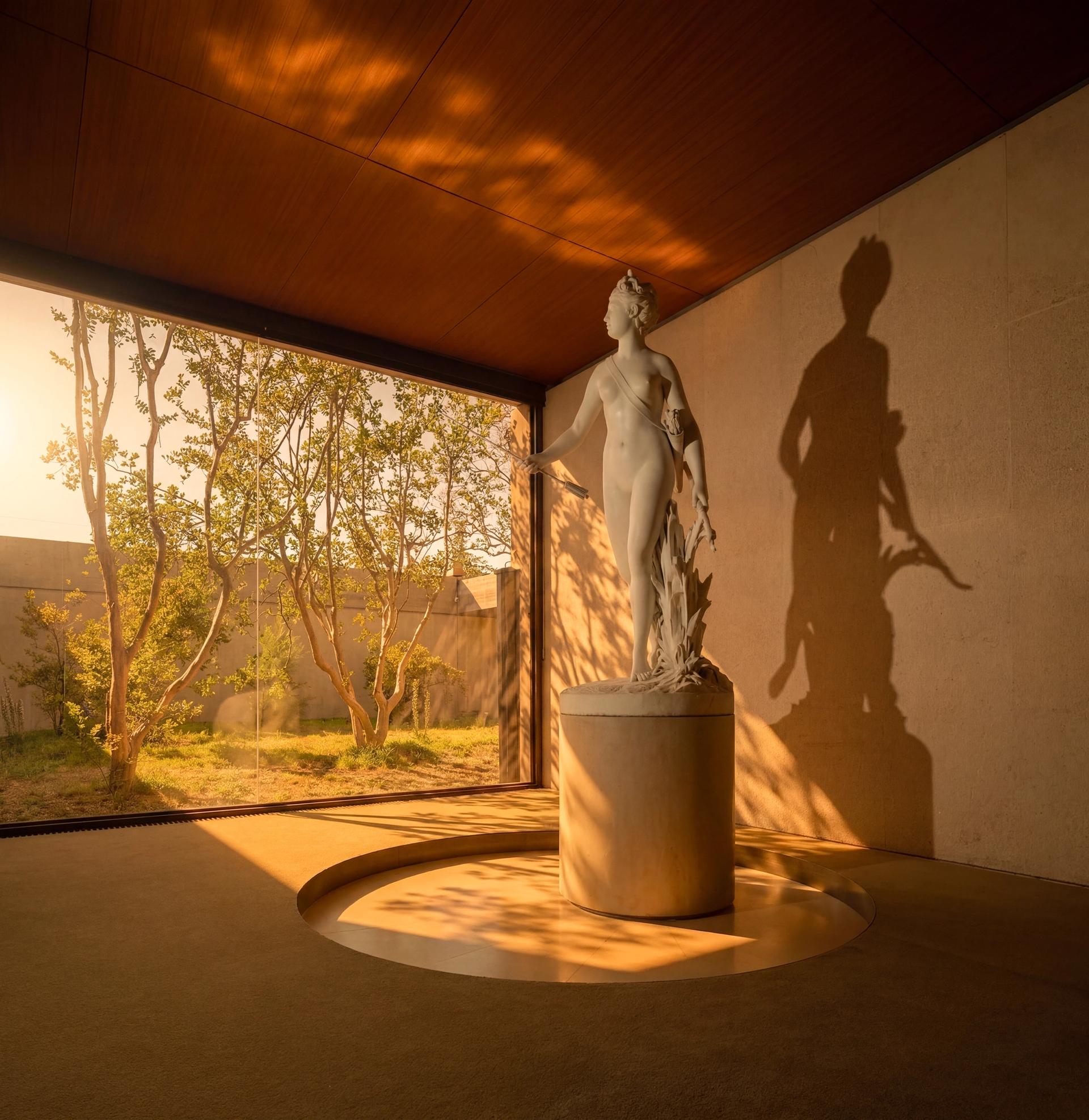
Installation of Jean-Antoine Houdon’s Diana (1780)
Calouste Gulbenkian Museum © Fernando Guerra
Built by the Portuguese architects Alberto Pessoa, Pedro Cid and Ruy Jervis d’Athouguia, the museum followed was organised both geographically and chronologically. Consultants on the project included the UK’s Leslie Martin, one of the architects of the Royal Festival Hall; the French ethnologist Georges Henri Rivière, at the time director of the International Council of Museums; and the Italian architect and designer Franco Albini.
The result was a single-storey building in a restrained palette of wood, granite, marble and raw concrete, with large expanses of glazing that allowed views over the park and into planted courtyards. Integrating both fine and decorative arts, the museum displayed its treasures in a Brutalist setting with strong Japanese influence.

The museum displays in 1969-70
©Mário Oliveira
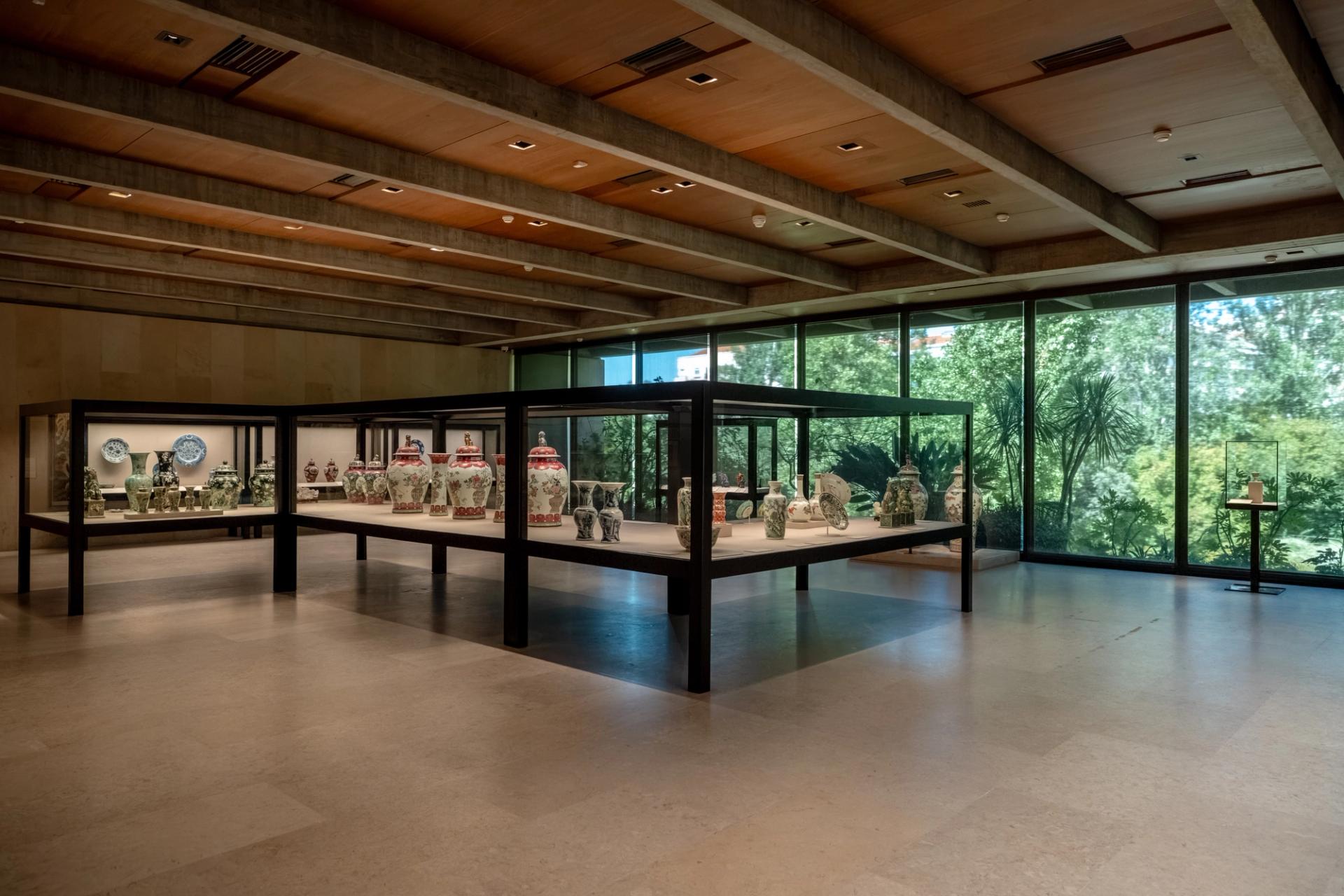
Over the years, repairs and changing curatorial outlooks diluted the original vision. While some of the showcases, with designs clearly influenced by Albini, disappeared, others lost their English silk linings in favour of cheaper paint jobs. The moss-green carpet in the European galleries gave way to varnished floorboards, while views between galleries and out into the surroundings were blocked off or obscured.
As pushed through by Salomon, who took up directorship of the museum halfway through the renovation process, in collaboration with architects Teresa Nunes da Ponte and Frédéric Ladonne, the museum now presents an updated version of its 1969 display, with anti-reflective glass and LED lighting throughout.
In the Islamic world section, the 14th-century Mamluk mosque lamps are once more in individual vitrines, while in the Asia galleries the giant zigzagging display case has returned in a more practical form; where the original had just one opening, which meant object handlers had to crawl through it to place exhibits, the 2026 version can be accessed from multiple points. Designed by the French specialist ACL, the museum’s new lighting system recreates the 1960s amber glow, but greatly increases legibility.
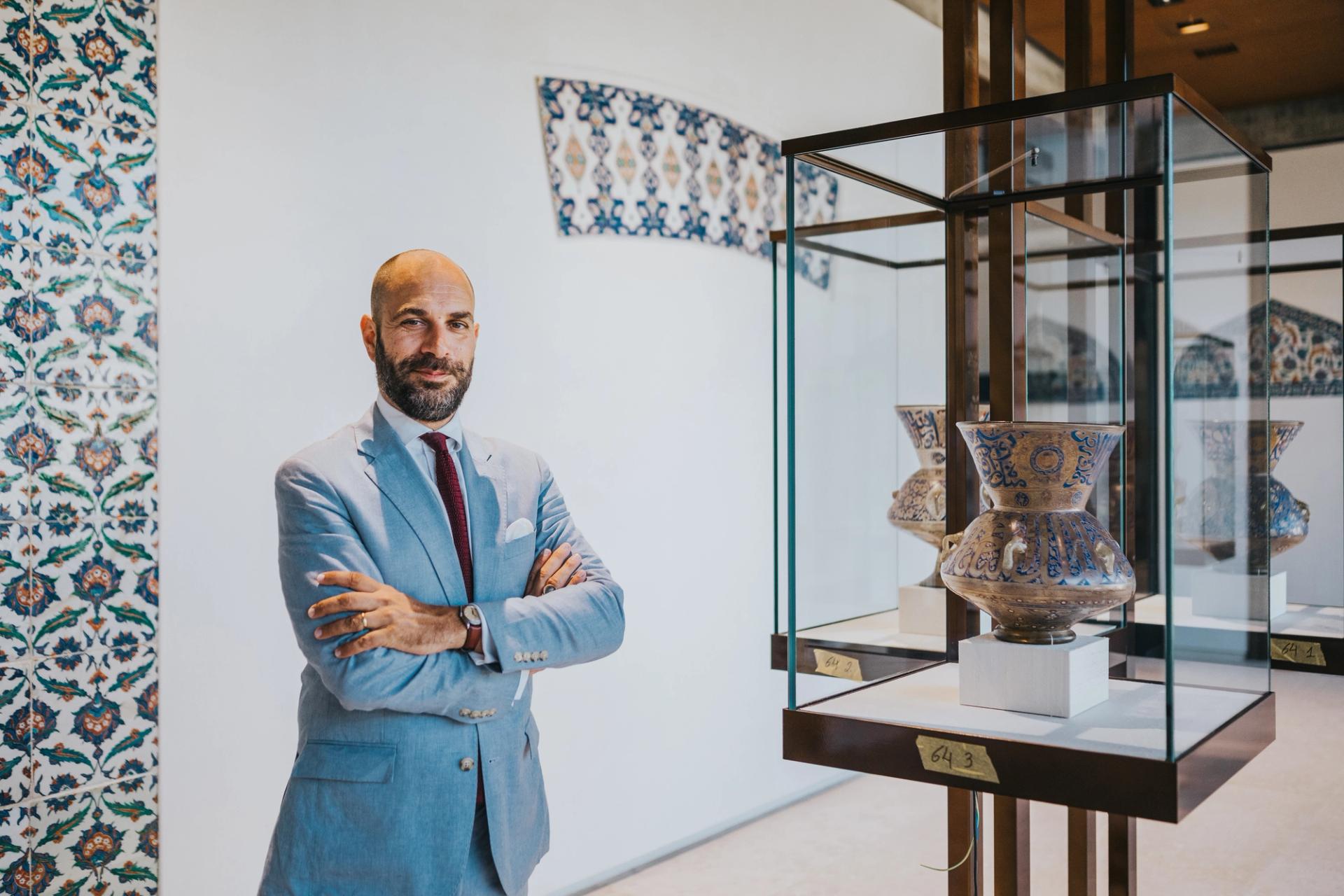
The museum's director Xavier Salomon was previously the deputy director and chief curator at the Frick Collection in New York
Xavier Salomon & Calouste Gulbenkian Museum © Pedro Pina
Although photographs of the 1969 display guided the refurbishment, it is not an exact copy. To declutter the antiquity galleries, a former study once closed to the public has metamorphosed into a new numismatic cabinet for the display of coins—the only space added as part of the renovation. The museum’s Assyrian winged-guardian relief, now cleaned and restored, has been moved to a more prominent position. And a gallery showcasing the work of the French designer René Lalique has also been transformed with silk hangings, showing Art Nouveau and Art Deco glassware and jewellery in dialogue with paintings by Edward Burne-Jones and John Singer Sargent.
Throughout the museum, in keeping with the 1969 spirit, labels are short and to the point, with multimedia screens entirely absent. “They’re distracting, and in architecturally pure buildings like ours, they just look terrible,” Salomon tells The Art Newspaper. For the new director—who recalls being inspired by the Museu Gulbenkian when moving the Frick’s holdings to the 1960s Breuer building—the renovation reinstates “the museum’s unique relationship between art, architecture and nature”.