

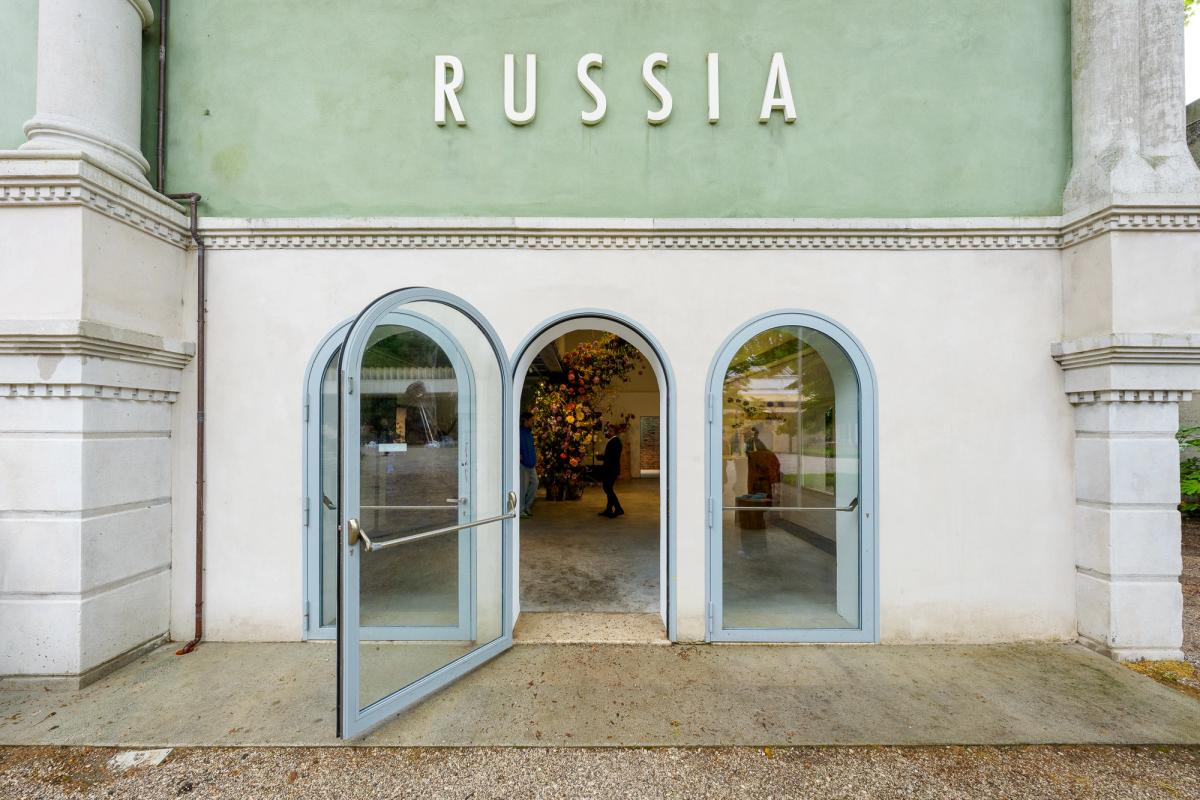
The European Union has formally cut its €2m grant to the Venice Biennale, which opened in May and was preceded by weeks of tension over Russia being allowed to use its pavilion for the first time since 2022 despite its ongoing full-scale invasion of Ukraine.
“Cultural events, funded by European taxpayers’ money, should safeguard democratic values, foster open dialogue, diversity and freedom of expression—values which are not respected in today’s Russia,” said European Commission spokesman Thomas Regnier, in comments reported on Tuesday by Agence France-Presse news agency and other European media.
Mikhail Shvydkoy, Russian President Vladimir Putin’s international cultural envoy, announced in March that Russia would present a musical programme of folklore and world music for the Venice Biennale. Russia’s pavilion was open only during the preview of the international exhibition. Protestors outside the Russian venue included Pussy Riot and Robert Kuzovkov, a dissident artist from Russia who was killed in Poland last month.
Shvydkoy’s March announcement prompted immediate calls for Russia and its participants to be barred, reaching a crescendo with the refusal of the Biennale’s president, Pietrangelo Buttafuoco to act against Russia.
Earlier this month, the European Commission recommended that the European Education and Cultural Executive Agency (EACEA) terminate the grant. “This follows a thorough assessment of the replies from the Biennale to justify the re-opening of Russia’s pavilion,” wrote Henna Virkkunen, the Commission’s executive vice-president for Tech Sovereignty, Security and Democracy on the social media platform X on 11 July, preceding the EACEA’s official decision on 21 July.
The Biennale Foundation has said it will “assert our rights in all competent venues” and appeal the decision, according to a statement reported by Italy’s Ansa news wire. At the same time it noted that the EU grant helped to fund film activities “that have nothing to do with Russia’s participation in the Biennale”, adding that its the funding's cancellation “has no significant impact on the budget, the balance sheet, or the scheduled and ongoing activities of the Venice Biennale, which remain confirmed”.
Last week, Putin’s spokesman Dmitry Peskov criticised efforts to cancel the grant as part of “ongoing attempts to cancel our culture in other countries”.