

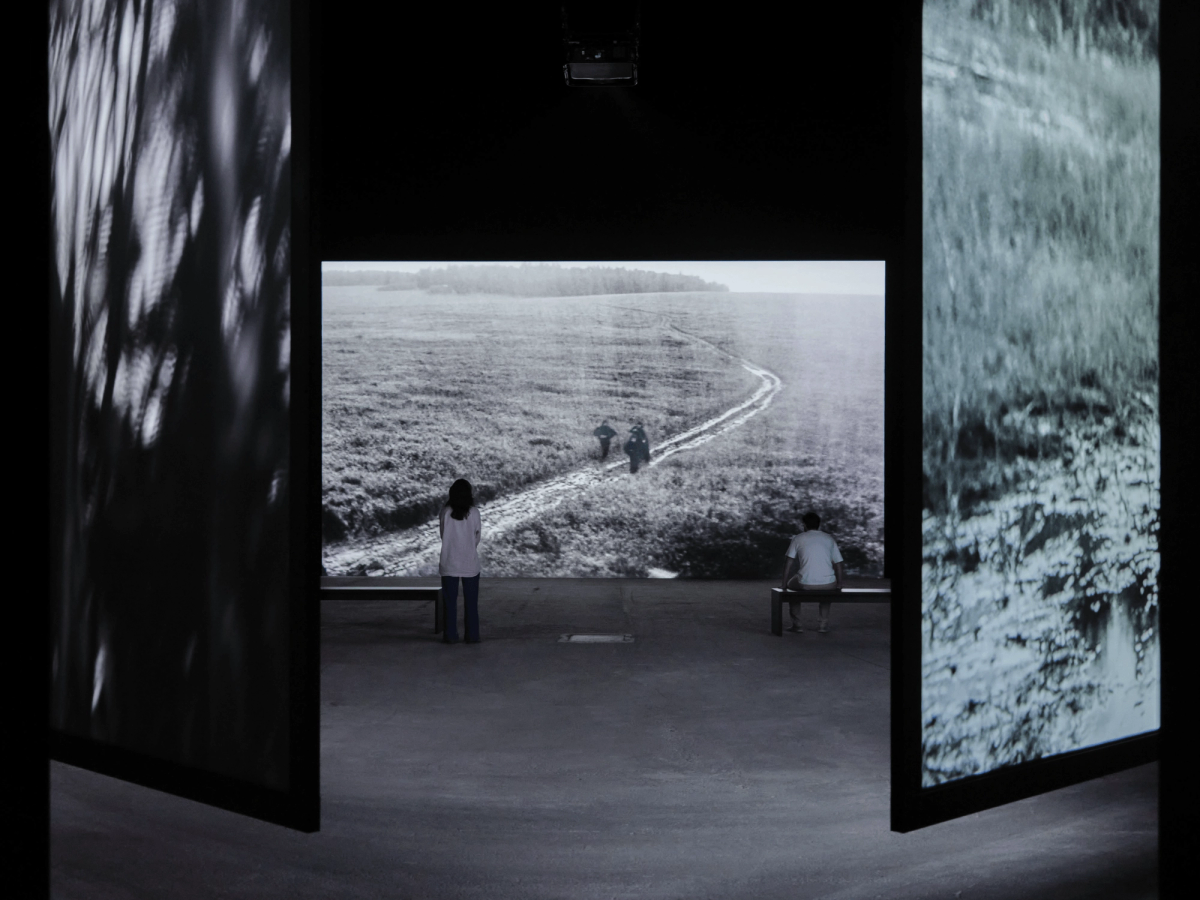
More than a decade after the sound art platform Soundwalk Collective first began collaborating with the punk poet Patti Smith, their ever-evolving multimedia project has reached its most ambitious incarnation yet. Opening at Luma Arles in the south of France, Correspondences (until 8 November) marks the first major European presentation of the work, bringing together all eight films created between 2023 and 2026 alongside two new commissions, as well as Smith's drawings, photographs, handwritten texts and archival installations created specifically for the occasion.
The setting is integral to the exhibition's impact. Installed across large intersecting screens at the centre of the 5,000 sq. m La Grande Halle—a vast former railway engineering workshop built in 1894 and now one of the principal exhibition spaces on the Luma campus—the work occupies a scale that few institutions could accommodate. Like a musician graduating from intimate venues to a stadium, Correspondences has been fundamentally reimagined for Arles rather than simply enlarged.
Smith, who has collaborated with Soundwalk Collective since 2016, also used the commission to expand the project beyond moving image. Working on site in Arles, she produced new drawings and photographic works that she described during a preview as “interpretations or expansions of ghost images”.
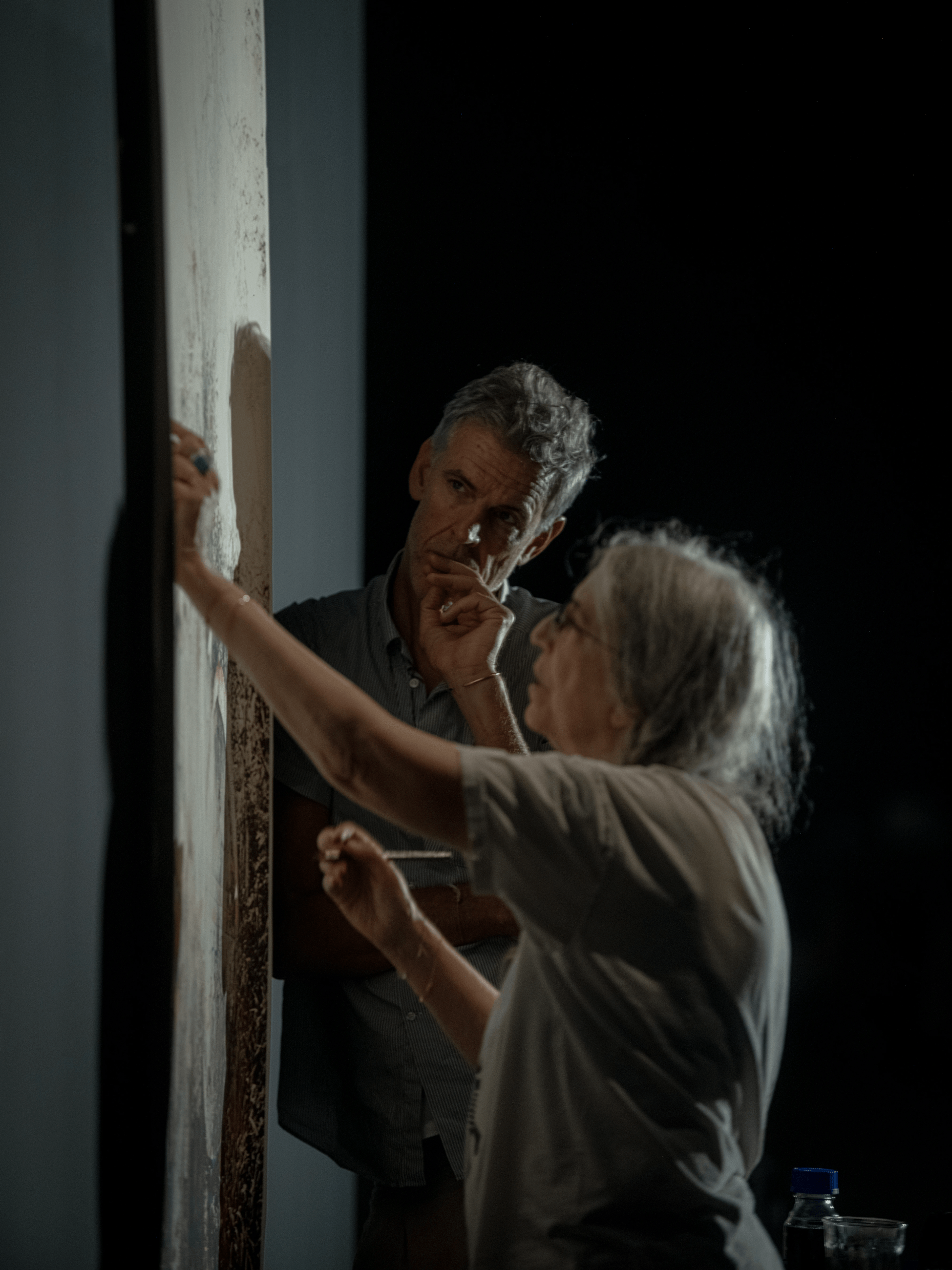
Patti Smith and Stephan Crasneanscki © Victor&Simon - Joana Luz
“I like to work on site,” Smith said at a preview of the show, explaining that the various elements “all relate to one another... Everything is part of understanding the world we're living in: ecological crisis, the responsibilities of an artist, the ability to communicate on many levels in many realms, as the shaman does, and also to channel the past as well as the future.”
Ghosts, in fact, seem to inhabit almost every corner of the exhibition—and not only metaphorically. Long before La Grande Halle turned from a busy ironworks that built steam engines into an industrial graveyard, and was then transformed into an art cathedral, the site formed part of the Alyscamps, one of the Roman world's best-known necropolises. Throughout the Middle Ages, bodies were transported from across Europe for burial here, lending an uncanny historical resonance to an exhibition populated by abandoned cities, extinct species, archaeological relics, saints, mythological figures and voices from the past.
That preoccupation with what survives runs throughout the installation. Across ten multi-channel films, Smith and Soundwalk Collective move between Chernobyl, Greenland, the Black Sea, Siberia and the wilderness of the Camargue wetland that edges Arles, invoking figures as varied as the Italian writer and filmmaker Pier Paolo Pasolini, the sorceress of Greek mythology Medea, the German scientist Alfred Wegener, the Russian philosopher Peter Kropotkin and the Russian artist Andrei Rublev. Melting glaciers release traces of deep time; Roman shipwrecks emerge from beneath the Mediterranean; discarded film rushes acquire new lives; the children of Chernobyl are imagined sleeping until radiation subsides. Together they form less a sequence of narratives than a continuous archaeology of memory.
Perhaps the project's most original idea is formal rather than thematic. Instead of treating sound as accompaniment, Soundwalk Collective reverses the relationship between soundtrack and image. The group's founder, the sound artist Stephan Crasneanscki, first records acoustic environments—from glaciers, forests, oceans and contaminated landscapes—before Smith responds with poetry. Only then are the films made. “The soundtrack dictates what you're going to see,” Crasneanscki explained at the preview.
That inversion helps explain why Smith's contribution rarely feels descriptive. Her poems do not caption the images but inhabit them, moving associatively through recurring motifs of birds, bones, water, bells, wolves and light. Smith has long cited the French poet Arthur Rimbaud as a formative influence, and his Symbolist approach is palpable here. Rather than explaining ideas, she accumulates images until they generate an emotional or spiritual atmosphere. Meaning emerges less through narrative than through rhythm, repetition and juxtaposition—incantations that mirror her best known work as a musician. The cumulative effect of sound and image, film and text, is one of total immersion.
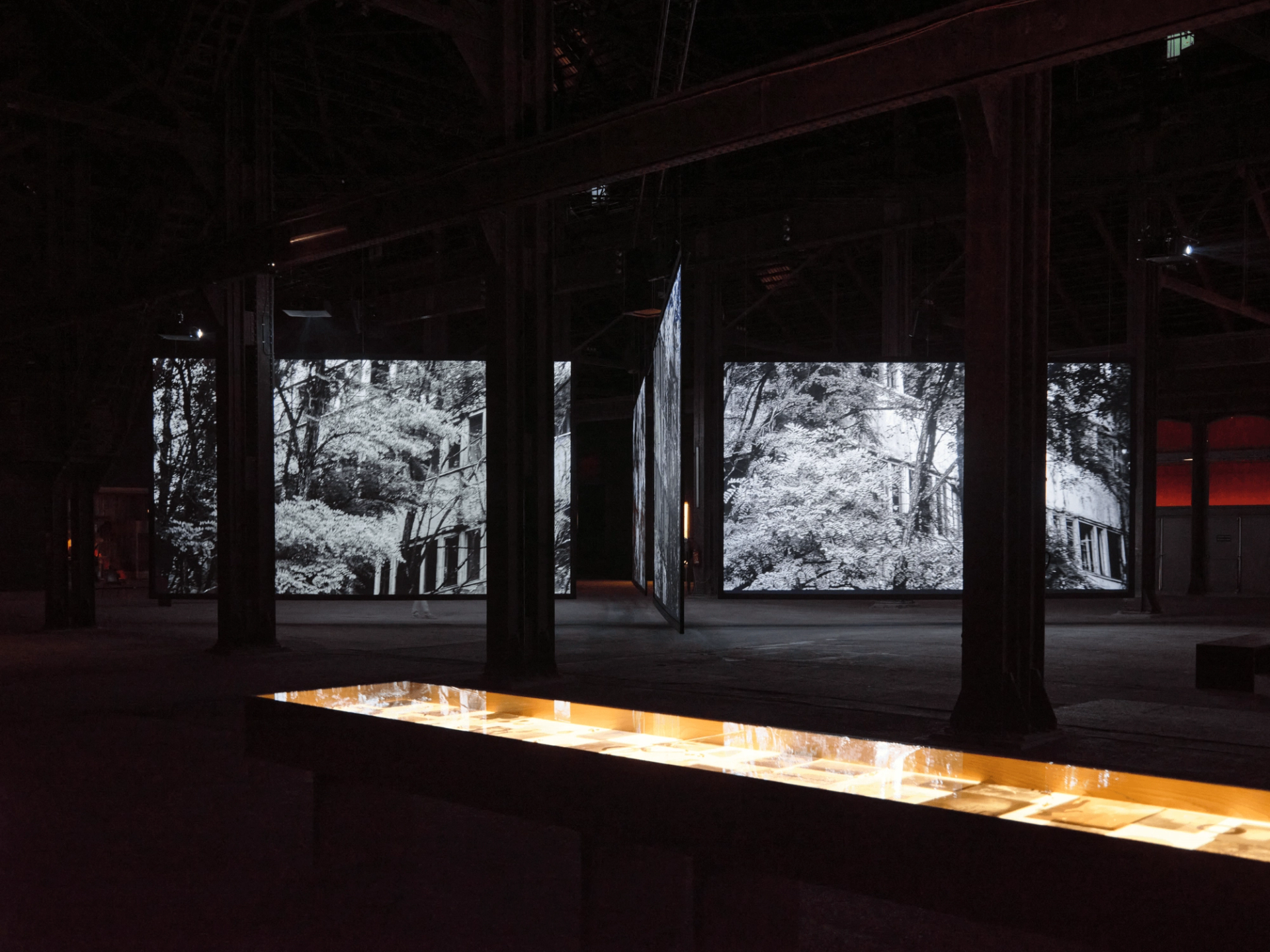
Installation view of Correspondences by Soundwalk Collective and Patti Smith in the La Grande Halle at Luma Arles, France © Victor&Simon - Grégoire d’Ablon
This reaches its most moving expression in quieter works such as Children of Chernobyl (2025), in which Smith imagines a lullaby for the abandoned children in the city of Pripyat, or the newly commissioned Le Mistral (2026), where Mary Magdalene's mythic arrival in the Camargue unfolds through underwater archaeology, birdsong and the voice of Sara, the Black Madonna revered at the nearby town of Saintes-Maries-de-la-Mer.
Elsewhere, among Smith's newly created works on paper for the exhibition, we see the words, “The Earth Is a Skull That Refuses to Explain Itself”—a phrase repeated throughout the installation that could almost stand as its manifesto. Yet Correspondences also exposes the risks of working at such an elevated conceptual register. Mythology, ecology, archaeology, religion, politics and deep time are weighty matters that can get lost in the vaguery of poetry. At moments, the exhibition threatens to collapse into the familiar universalism of contemporary art, where every reference carries the same symbolic weight simply because it belongs to a shared language of significance. The effect can feel less revelatory than overreaching.
Smith herself, however, seems wary of that interpretation. "We're not preaching to anyone," she says in a conversation with Crasneanscki, printed to accompany the exhibition. "We're just showing that these are truths... [People] need to see what's happening to our mountains, to our glaciers, our water. So we just keep collecting evidence."
It is that tension—between mystical invocation and material witness—that ultimately gives Correspondences its emotional force. The exhibition may occasionally disappear beneath the weight of its own symbolism, but it is repeatedly rescued by the physicality of sound and the presence of Smith's voice. Like the ghosts that haunt both the installation and the ground beneath it, her poetry refuses to explain the world. Instead, it lingers within it, asking us not simply to look, but to listen.
• Correspondences, Luma Arles, France, until 8 November