

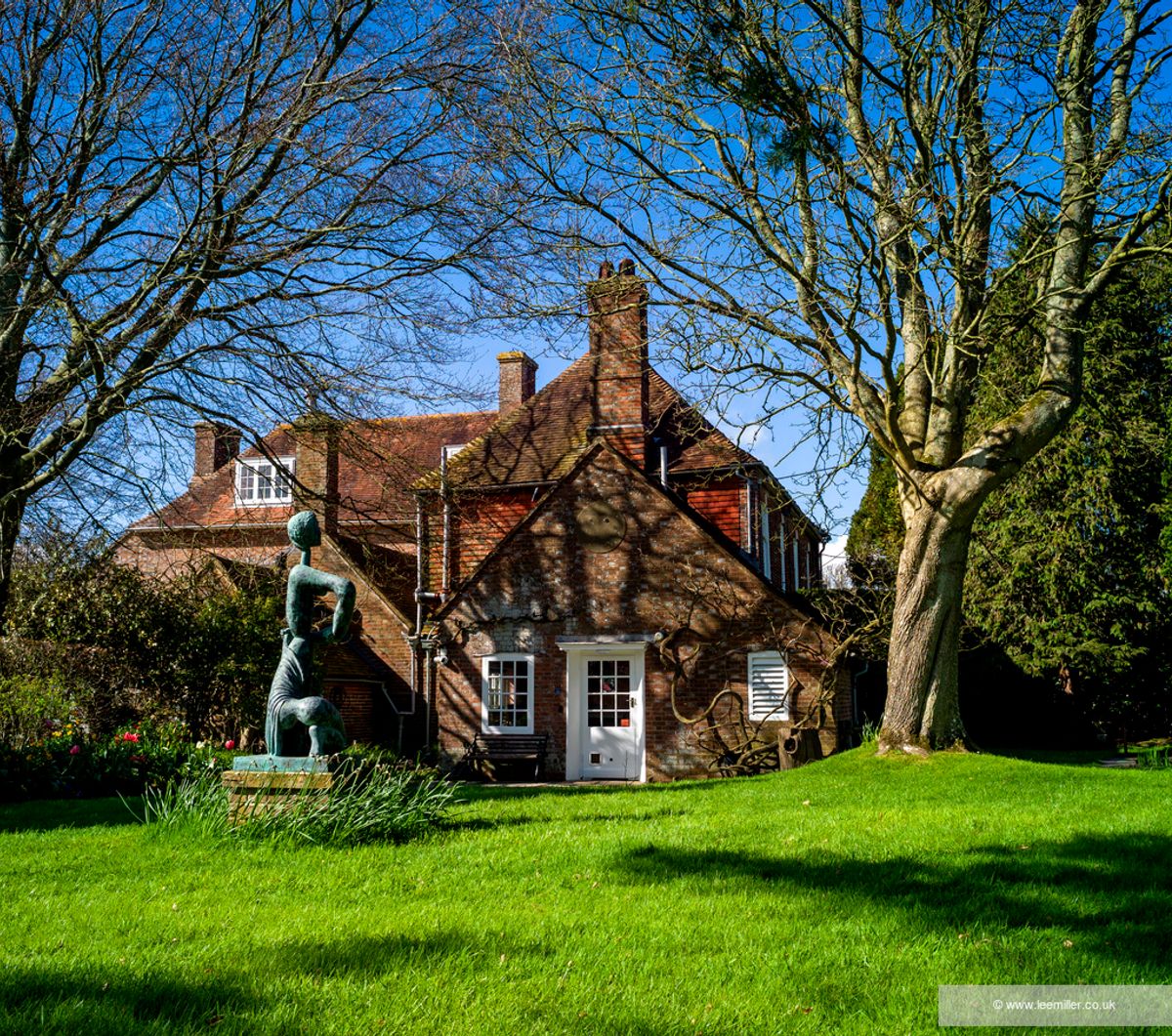
Nearly 50 years after Antony Penrose uncovered his mother Lee Miller's archive in the attic of the family's Sussex home, he is handing Farleys House & Gallery to a newly established charity in an effort to secure its future.
The move follows renewed international attention generated by the feature film Lee and Tate Britain's recent Miller retrospective. But Ami Bouhassane, Miller's granddaughter and co-director of the Lee Miller Archives, insists the decision had been driven instead by the lessons learned during the Covid pandemic.
"We nearly closed forever," Bouhassane tells The Art Newspaper. "Covid was a real wake-up call when it came to thinking about how we safeguard Farleys and make sure it is there for future generations."
The Surrealist artist Roland Penrose bought the secluded farmhouse in 1949 as a place of recuperation for his photographer wife, who had witnessed some of the worst atrocities of Nazism while documenting the liberation of the Dachau concentration camp. Farleys later welcomed many of the leading artists of the 20th century, who came to stay, collaborate and create. They included Pablo Picasso, who made an ink drawing of the farm's bulls; Leonora Carrington, who holidayed there with her sons; Joan Miró, who studied the garden birds; Dorothea Tanning, who did household chores; and Alfred Barr, the founding director of MoMA, who helped feed the pigs.
Decades later Penrose and his late wife Suzanna made the discovery that would transform Miller's reputation from that of a largely overlooked artist into the subject of more than a dozen major exhibitions over the past decade. After Miller's death, the couple were exploring the attic at Farleys when they found several cardboard boxes filled with thousands of negatives and prints, alongside maps and manuscripts, all jumbled together and forgotten, much like the photographer herself.
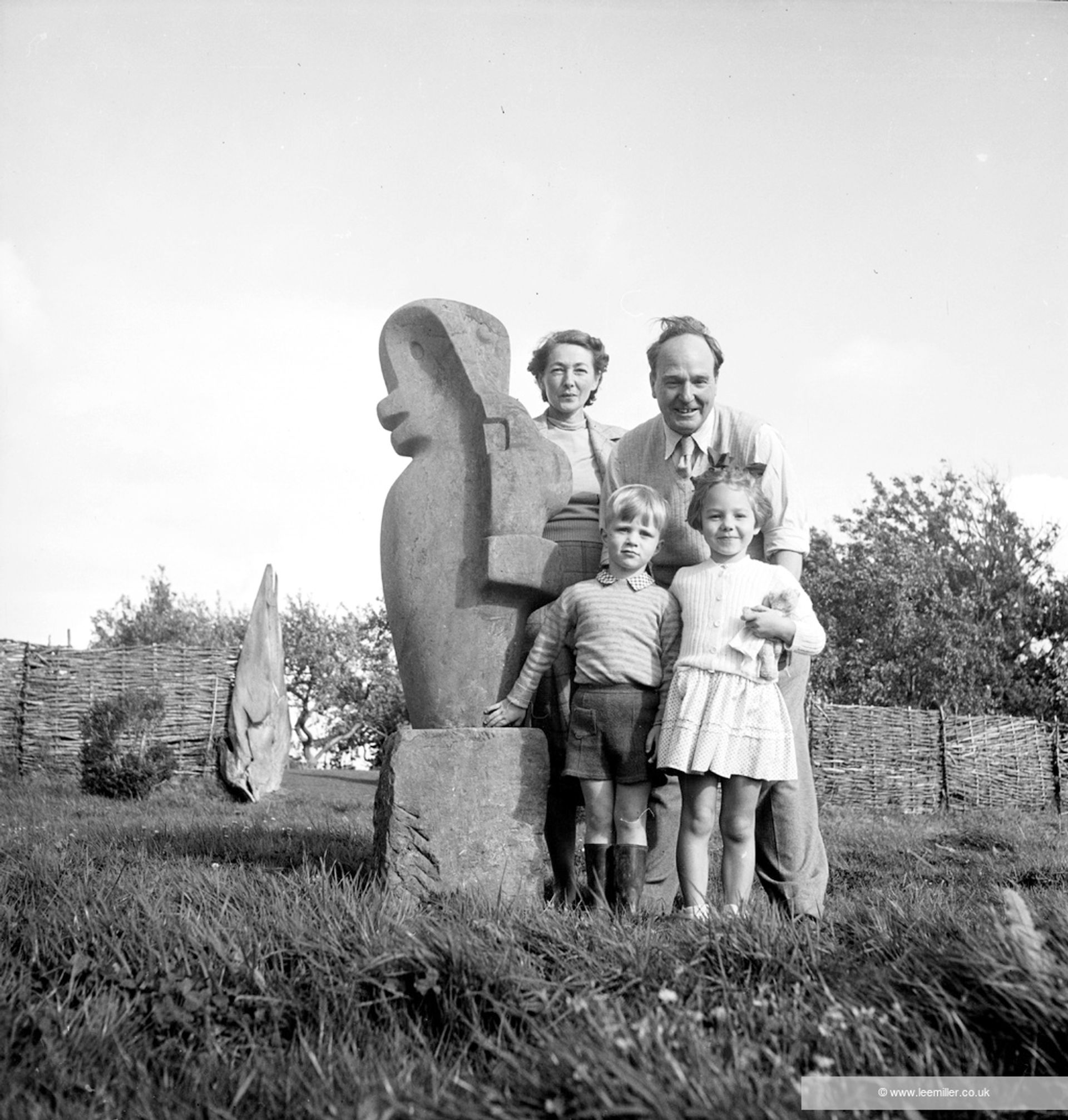
Irina and Henry Moore, Antony Penrose and Mary Moore with Mother and Child Sculpture, Farleys Garden, East Sussex, England 1953 by Lee Miller Photo: © Lee Miller Archives, England 2026. All rights reserved. leemiller.co.uk
Under their stewardship, and now that of their daughter, Miller's reputation as a major artist in her own right has been firmly established. The spirit of Farleys, the self-styled "home of the Surrealists" in Britain, has endured as one of the country's most distinctive artists' houses. Under the new arrangement, Penrose is transferring the house, surrounding farmland and associated buildings to the charity, while the Lee Miller Archive itself will remain in family ownership. The charity will hold the exclusive rights to manage and use the archive, with family members serving as trustees alongside a newly appointed board that includes the former BFI chief executive Amanda Nevill and Patrick Elliott, curator of Modern paintings at the National Gallery, London.
Farleys has been run by the Penrose family for decades as a private company, an arrangement Bouhassane says increasingly limited its ability to secure external support. "Being run by the family has been one of our strengths," she says. "But we were a private limited company, so it's always been much harder to get external support. If we want Farleys to continue beyond us, it needs to be in a structure that can really protect it for generations to come."
The charitable structure will also allow Farleys to pursue formal museum accreditation and benefit from the expertise of a board of trustees. Bouhassane describes the transition as enabling the organisation to "take the next step", rather than simply survive from year to year. Beyond preserving Miller's and Penrose's legacy, the family hopes to expand the house's role as a centre for photography outside London, building on a programme that has included exhibitions of Dorothea Tanning, Eileen Agar and the current show devoted to Dorothy Bohm.
For the family, the decision also represents a defining moment. "My dad said the other day that this is the biggest thing he's done since opening those boxes," Bouhassane says. "It's been a lot of hard graft to get to where we are, but now feels like the right moment. There has been a lot of soul-searching because this is a huge thing. It could [have belonged] to me and my sister [Eliza Penrose, head conservator at Christchurch Art Gallery Te Puna o Waiwhetū in New Zealand]. But then we'd have to find the money to pay the taxes, and its future would still be uncertain. This way we can help shape its future and make sure Lee and Roland would be proud of how their legacy continues."