

Total star rating: ★★★★½
The works: ★★★★
The show: ★★★★★
Anthony van Dyck is the rare example of an artist diminished by his own greatness. The Antwerp-born Baroque painter (1599-1641) had an active, far-flung career in the Habsburg Netherlands and the Italian peninsula, but that can all seem like a mere prelude or sideshow to his nine-year service, starting in 1632, as court painter to England’s King Charles I. Van Dyck’s elegant, richly detailed portraits of Charles, Queen Henrietta Maria and the Stuart court impacted how European royalty, British and otherwise, would be depicted for centuries.
But his larger career, though cut short by an early death at age 42, contained a surprisingly wide range of equally extraordinary work, from history paintings and religious scenes to self-portraits and a whole category of portraiture devised to depict the discreet, rarified world of the Genoese Republic’s aristocracy.
A gorgeous overview of Van Dyck’s oeuvre has been mounted in a superb show at Genoa’s Palazzo Ducale, once home to the Venetian rival’s own doges. Structured around the three major cities of Van Dyck’s working life—Antwerp, Genoa and London—Van Dyck, the European showcases the full range of his output, in a dramatic, crowd-pleasing installation that also manages to incorporate groundbreaking research. The largest show about the artist in a generation, it features 59 works by the artist, with a number on loan from private collections.
"Beautifully rendered hair": Van Dyck's Self-portrait (1615-17) Rubenshuis, City of Antwerp
Born into the family of an Antwerp silk merchant, Van Dyck was a true prodigy, creating accomplished oil paintings when he was scarcely 15 and distinguishing himself, before he was 20, as chief assistant to Peter Paul Rubens, at the time Europe’s pre-eminent painter.
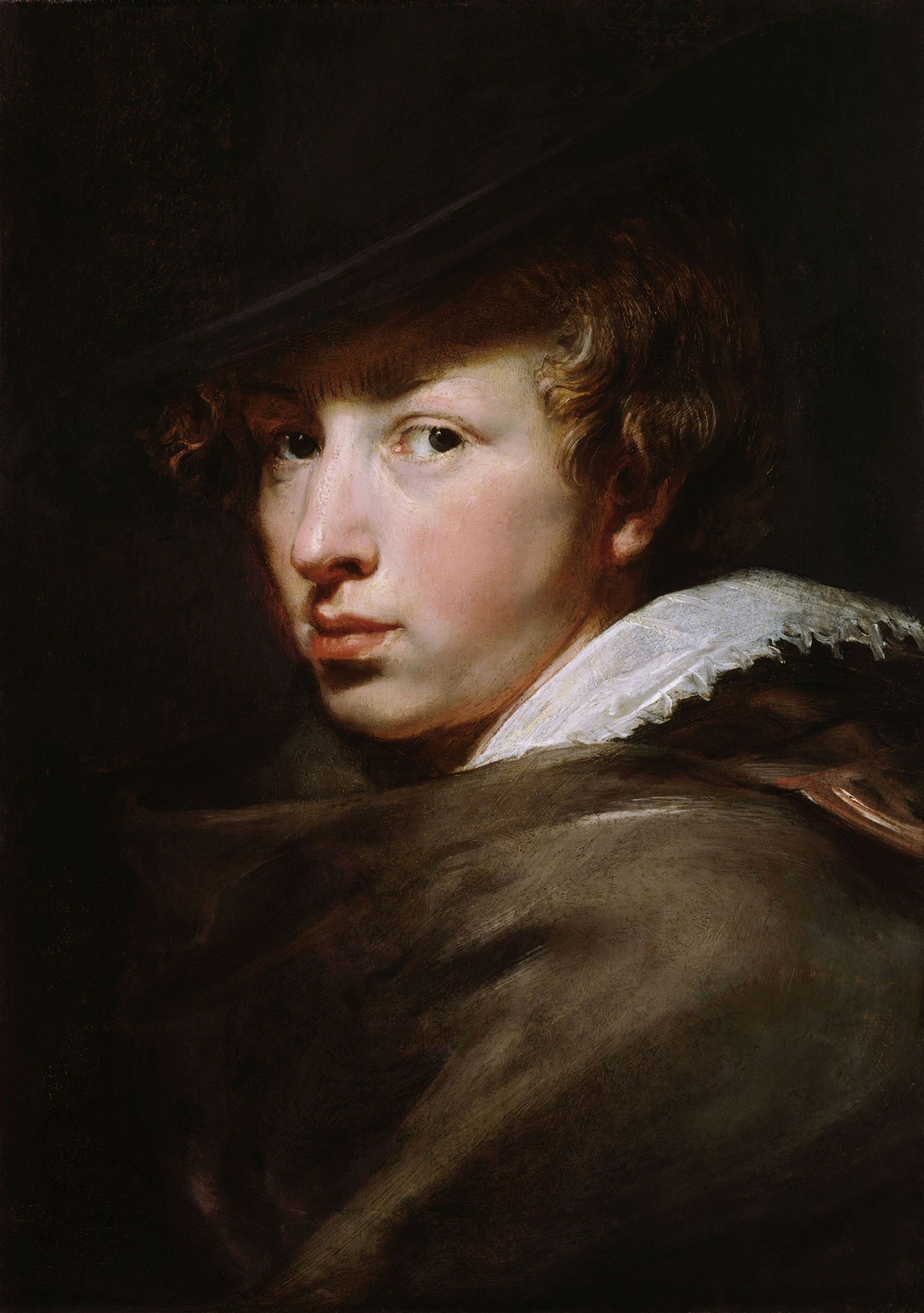
Early on, the show presents us with two very youthful self-portraits, including a work (1615-17) loaned from Antwerp’s own Rubenshuis, which is still in the style of the older artist but, with its beautifully rendered hair tendrils and costume, foreshadows the mature artist’s strengths.
The three main cities of Van Dyck’s activities had much in common. Genoese bankers had grown rich in the 16th century, using the port of Antwerp as a vehicle for their behind-the-scenes financing of Habsburg Spain’s overseas empire, and early 17th-century London was on the verge of establishing its own financial nexus of banking and imperial trade.
While Van Dyck works situated in the cities are marked by serene opulence, the show helpfully reminds us that each was in crisis. Antwerp, caught up in Spain’s wars with Holland, and Genoa were both in decline, and London was heading into an era of civil war and regicide. As the Flemish historian Hans Cools notes in the erudite and energetic catalogue, “Van Dyck’s language of poise, dignity and introspective nobility” is set at “the very moment the ideological foundations” of that world were “beginning to crack”.
Portrait of a Genoese Lady, Possibly Maria Chiavari Durazzo (around 1626-27) Rome, Odescalchi collection
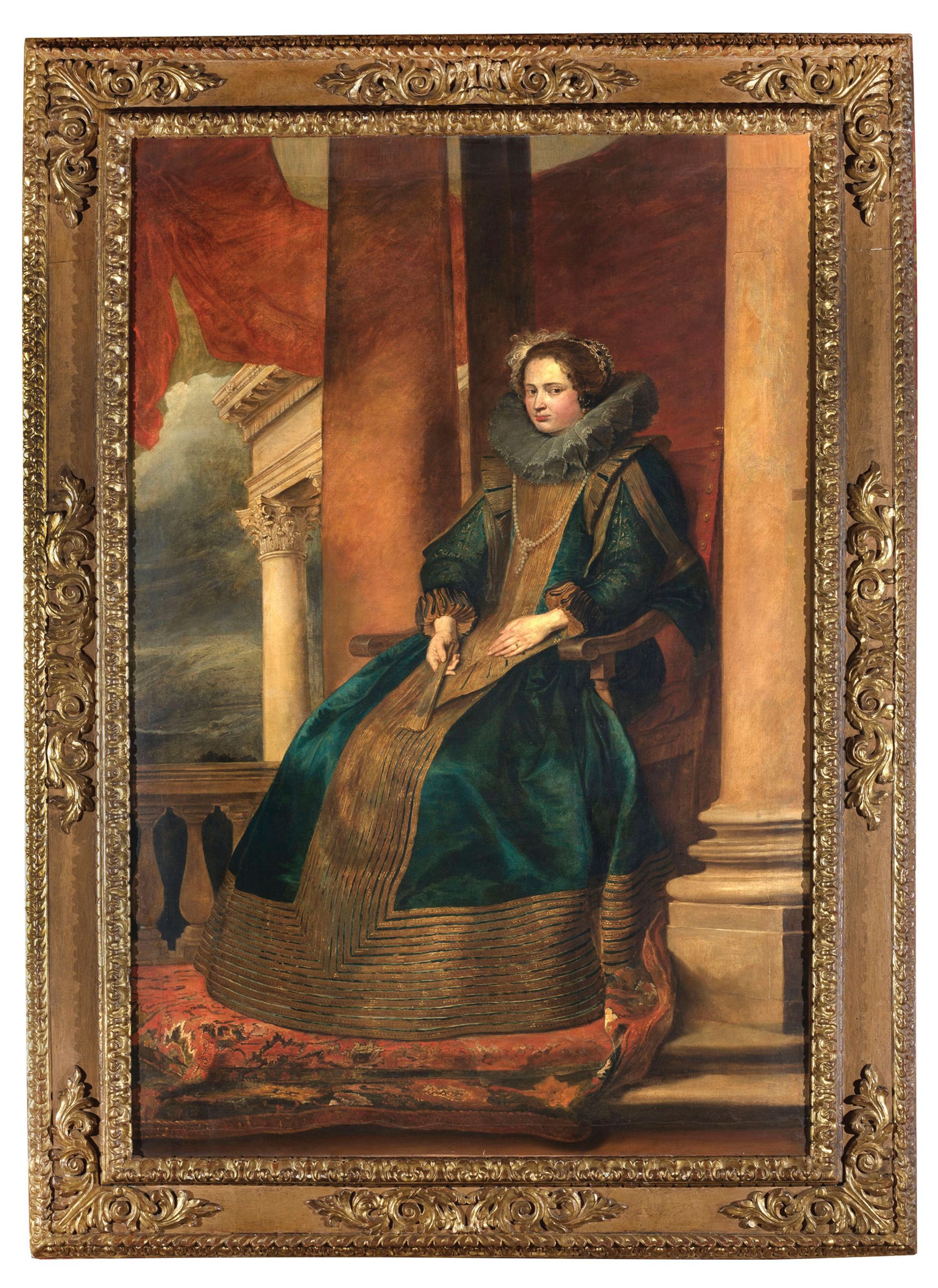
Proximate upheaval casts a spell of complexity and pathos over works such as Portrait of Lucas and Cornelis De Wael (1625), the then-thriving Flemish brothers who hosted the artist when he first arrived in Genoa in the early 1620s. Portrait of a Genoese Lady, Possibly Maria Chiavari Durazzo (around 1626-27), completed during his second stay in Genoa, is stripped down to stately architectural essentials, conveying an austerity, and even a whiff of misfortune, that belies its splendour. By the end of 1627, when Van Dyck left Genoa for good, the republic had been rocked by Spain’s bankruptcy, harkening an outright end to its longstanding economic order.
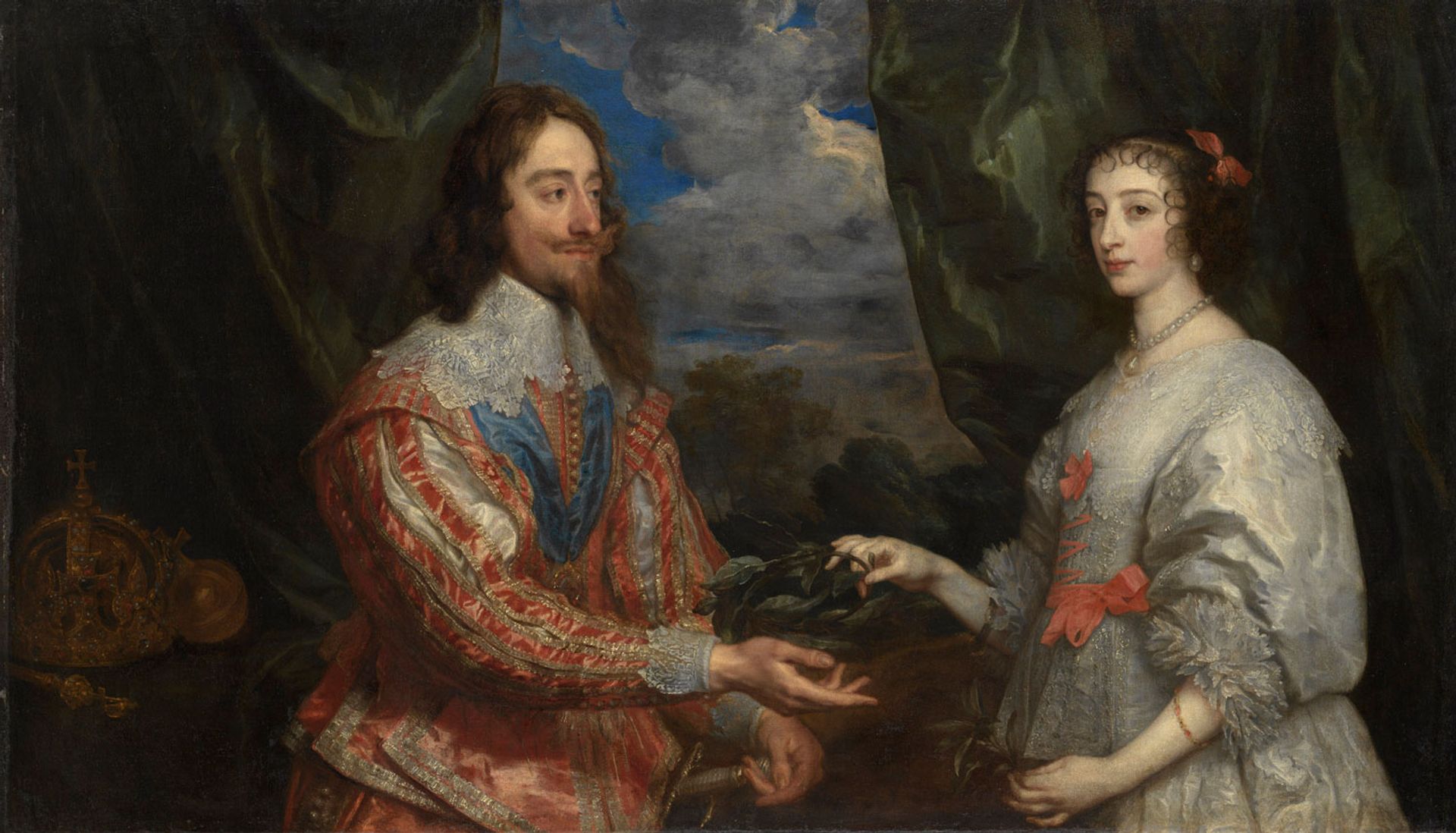
A royal portrait of Charles and a pregnant Henrietta Maria (1632 or 1633), on loan from a Czech collection, also has an odd and ominous impact. The more celebrated and better known portraits of Charles, beheaded on the order of the Parliamentary Roundheads in 1649, make him seem almost Christ-like—a martyr-to-be. Here, the queen and her protruding stomach far outshine her stiff husband, the doomed sovereign.
The co-curator Anna Orlando, a Genoa-based art historian, has come up with a new chronology for Van Dyck’s Italian years, putting his arrival in Genoa later than previously thought. And the show highlights new research into the identities of three young Genoese boys, in a mid-1620s group portrait from London’s National Gallery. Whether they were members of the Balbi family, as was once assumed, or are Giustiniani Longos, as is now believed, may not be of much consequence to the average museumgoer. But the detailing of the debate in the show is a reminder that these were real people, and that Van Dyck’s great talent was to convey personalities, not just surnames.
Van Dyck's Portrait of Charles I and Queen Henrietta Maria (1632 or 1633) Archbishopric of Olomouc, Archdiocesan Museum in Kroměříž KE
The Giustiniani Longo work is a visual anchor in the show, along with An Andalusian Horse (1620-21) from Van Dyck’s Antwerp years. Auctioned in 2000, it was later discovered that the rear side of the canvas contains a freely painted landscape, which is also featured in the double-sided display.
The portraits become a prelude for the lesser-known religious works, whose galleries have as their anchor a remarkable Ecce Homo (around 1625?), attributed as recently as a 2016 Bonhams sale to a follower of the artist. Scholars, including the former Ashmolean director Christopher Brown and the show’s curators, believe the painting, on loan here from a private collection, is by Van Dyck himself, a product of the artist’s Italian period. The doomed Christ figure, whose loose hair and beard so beautifully frame his weariness, is accompanied by a tangential, brutal executioner.
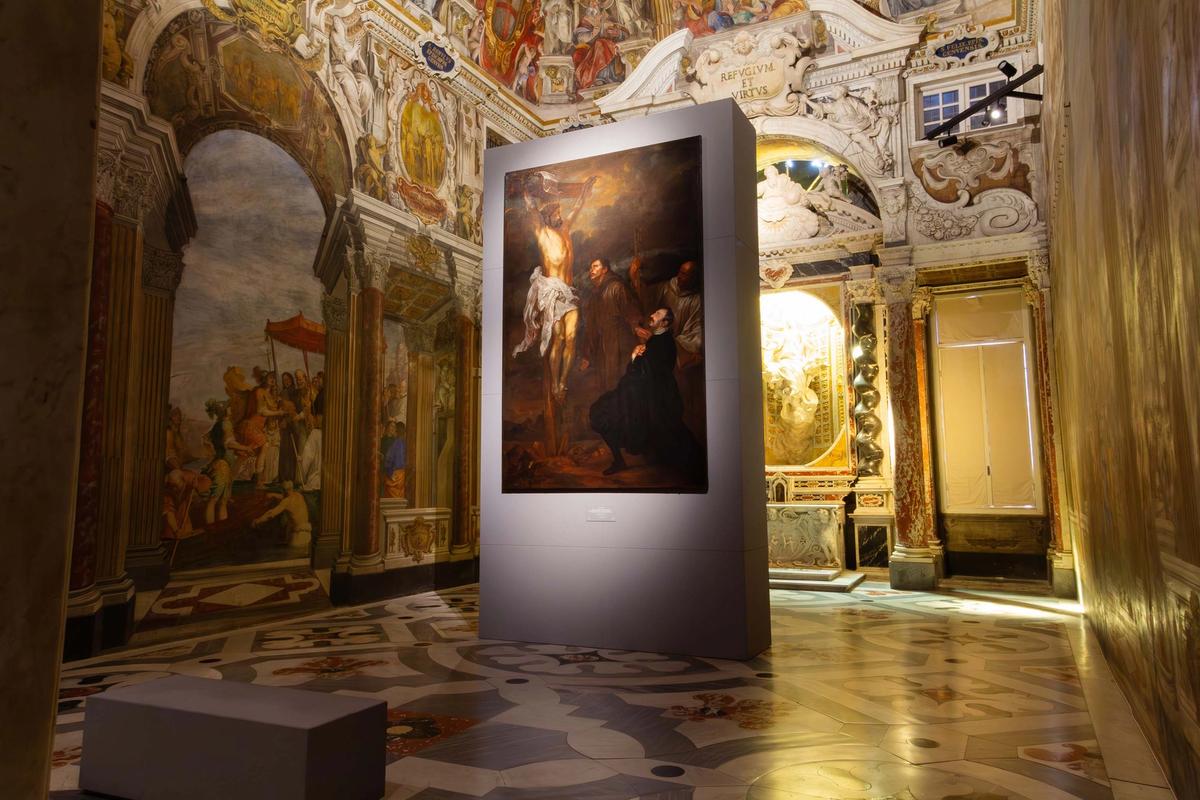
The show winds down in a stunning installation. In the Doge’s Chapel, which retains its lavish 17th-century fresco series by the Genoese artist Giovanni Battista Carlone, the curators have erected a Van Dyck altarpiece, on rare loan from a church down the coast from Genoa. Dominated by a monumental Christ on the cross, Francesco Orero Presented to the Dying Christ by Saint Francis of Assisi and Saint Bernard of Clairvaux plays off the chapel’s own marble altar, reconceived in the 18th century with a fanciful Rococo sculpture.
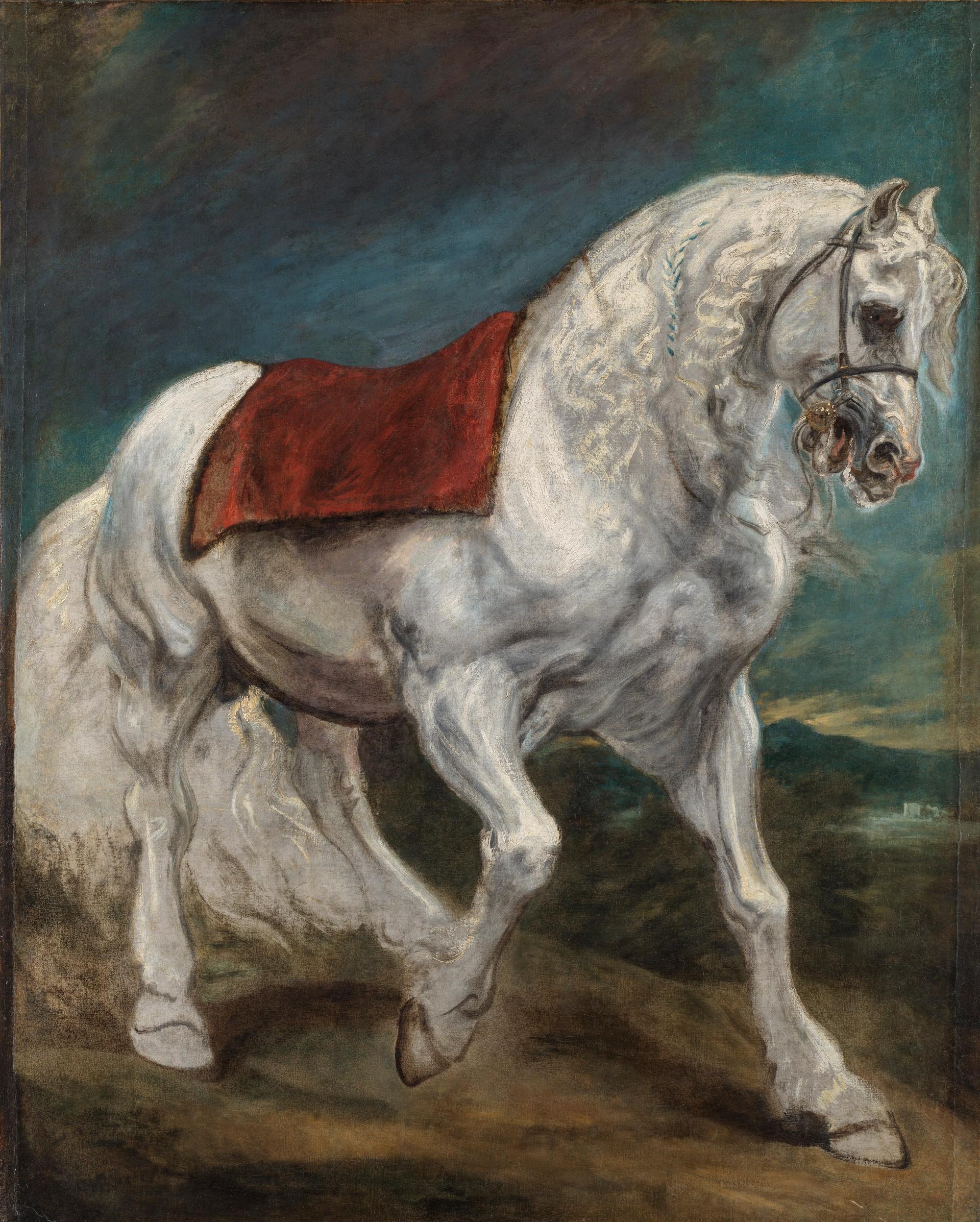
Van Dyck’s An Andalusian Horse (around 1620-21) also has a work on the reverse Photo: Michel Wuyts/Artishot; © The Phoebus Foundation, Antwerp
After leaving, visitors are advised to seek out other Van Dycks in Genoa—notably, the majestic portraits in the Palazzo Rosso museum, housed in a grandiose 17th-century mansion associated with the city’s Brignole-Sale family. I made my way there the next day and wondered if leaving those works in situ was a mistake. The Palazzo Ducale show has a special gallery devoted to equestrian paintings, and the Rosso’s Equestrian Portrait of Anton Giulio Brignole-Sale would have been a fine addition. And the gallery containing the Chiavari Durazzo portrait could have added an even grander work, the portrait of Anton Giulio’s wife, Maria. Orlando confirmed that the decision to exclude them was a curatorial one; they were not too fragile to move, or contract-bound to stay put. But I do wonder if taking the opportunity to direct the many visitors to Van Dyck, the European to the under-attended Palazzo Rosso was a missed opportunity.
Still, as Orlando and her co-curator, the Belgian art historian Katlijne Van der Stighelen, argue in their introduction to the catalogue, “The primary purpose of an exhibition is to enjoy works of art." Far more than a Stuart-bound image-maker, Van Dyck has a psychological acuity and a sheer marvelousness that put him—at least for this museumgoer—ahead of his master, Rubens.
• Van Dyck, the European, Palazzo Ducale, Genoa, until 19 July
• Curators: Anna Orlando and Katlijne Van der Stighelen
• Tickets: €16.50 (concessions available)