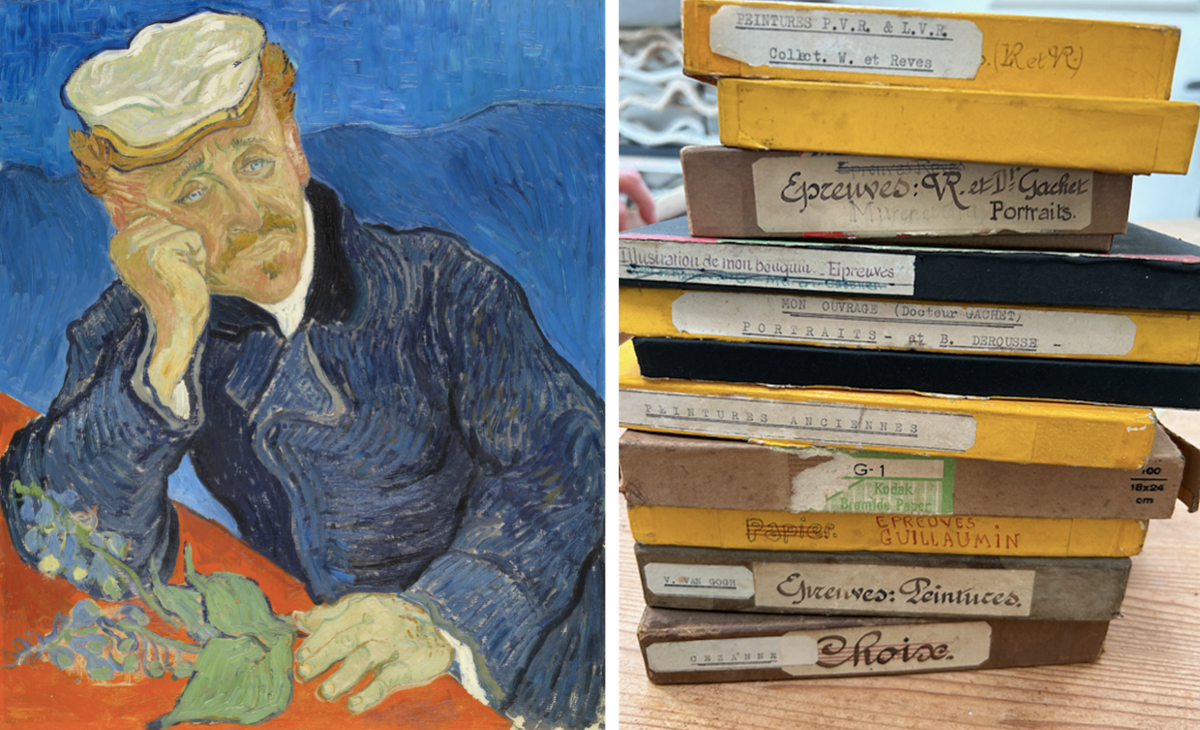
We can reveal the existence of a vast archive of material from the collection of Van Gogh's doctor, Paul Gachet (1828-1909), and his son, Paul-Louis Gachet Jr (1873-1962). This important material sheds fresh light on the man who cared for Van Gogh during in the last weeks of the artist’s life in 1890, in the village of Auvers-sur-Oise, northwest of Paris.
Van Gogh depicted the doctor in a pair of portraits and the two men became good friends. Gachet cared for the artist after he shot himself in the chest on 27 July, until his death two days later.
Both Gachet and his son (known as Gachet Jr or Gachet fils) were amateur artists, painting and etching under the pseudonyms Paul van Ryssel and Louis van Ryssel, respectively (Ryssel is the Flemish name for the city of Lille, where the doctor was born). Gachet loved art and knew many of the Impressionists and Post-Impressionists, including Camille Pissarro and Paul Cezanne.
The present owner of the Gachet Archive, who wishes to remain anonymous, allowed The Art Newspaper full access to the collection. Below are ten intriguing items from the archive.
1. Farewell sketch
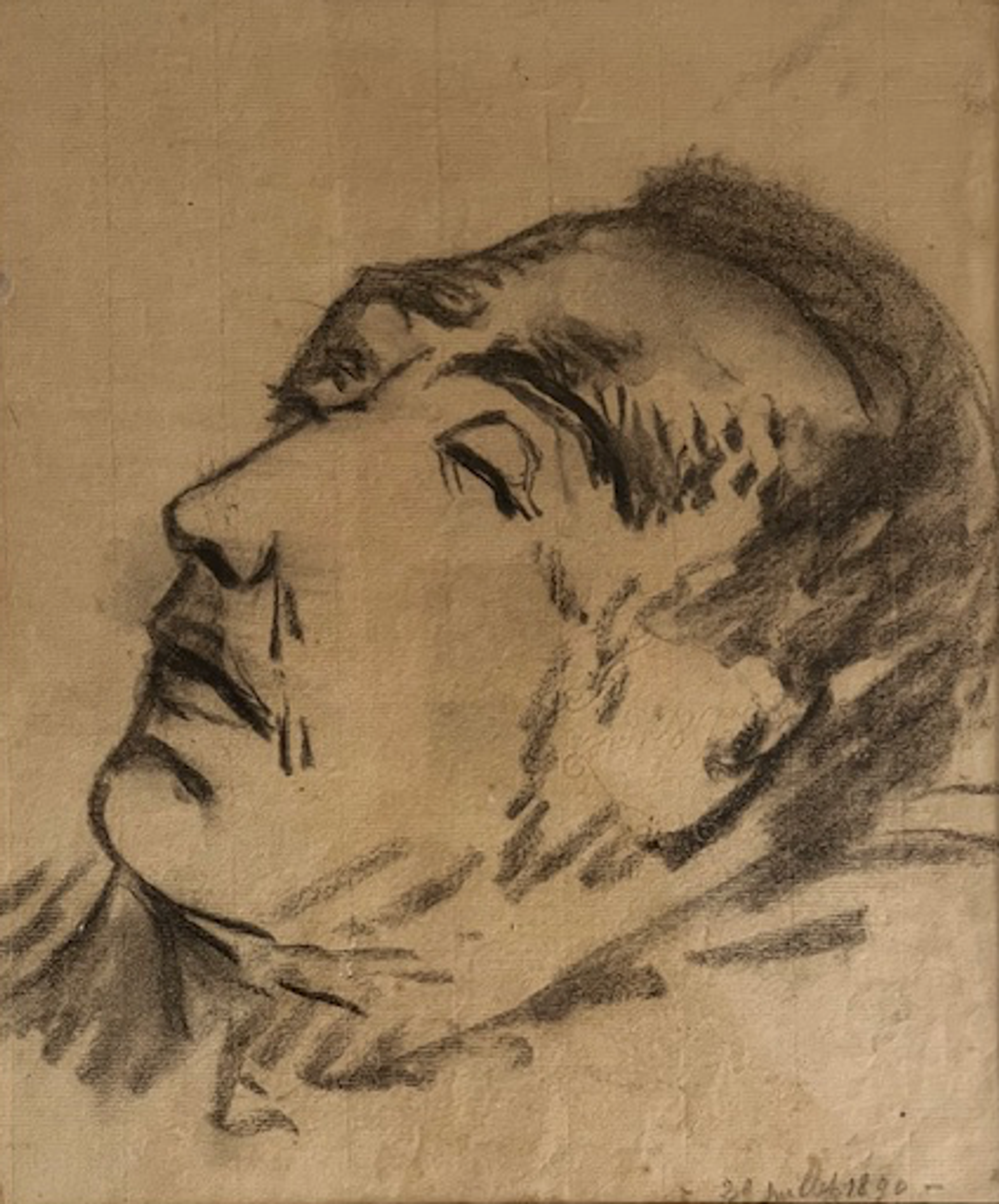
Gachet’s drawing, Van Gogh on his Deathbed, dated 29 July 1890
Gachet Archive
Gachet’s drawing Van Gogh on his Deathbed is the most important item in the archive. The doctor was called to the inn where Van Gogh was lodging a couple of hours after the artist had shot himself in the chest during the evening of 27 July 1890, causing a severe injury. Vincent died of his wound in the very early morning of 29 July, with his brother Theo at his bedside.
A few hours later Gachet was summoned again. After inspecting the body of his friend, the doctor found a stick of charcoal, probably from among Van Gogh’s artist materials, and immediately sketched a deathbed portrait. Gachet made no effort to idealise his friend’s lifeless features. The artist’s face is shaven, without his usual beard. Surprisingly, Gachet chose to depict the left side of his head, lightly indicating where Van Gogh had mutilated his ear just before Christmas 1888.
Along with the sketch which has just emerged, two similar deathbed drawings are in museums. One, probably the original version, was retained by Gachet and presented by his son to the Louvre in 1951 (it is now at the Musée d’Orsay, Paris). The other was given to Theo in 1890 and is now in the collection of the Van Gogh Museum, Amsterdam. The third version in the Gachet Archive is securely framed, so it has yet to be properly studied.
2. Homage print
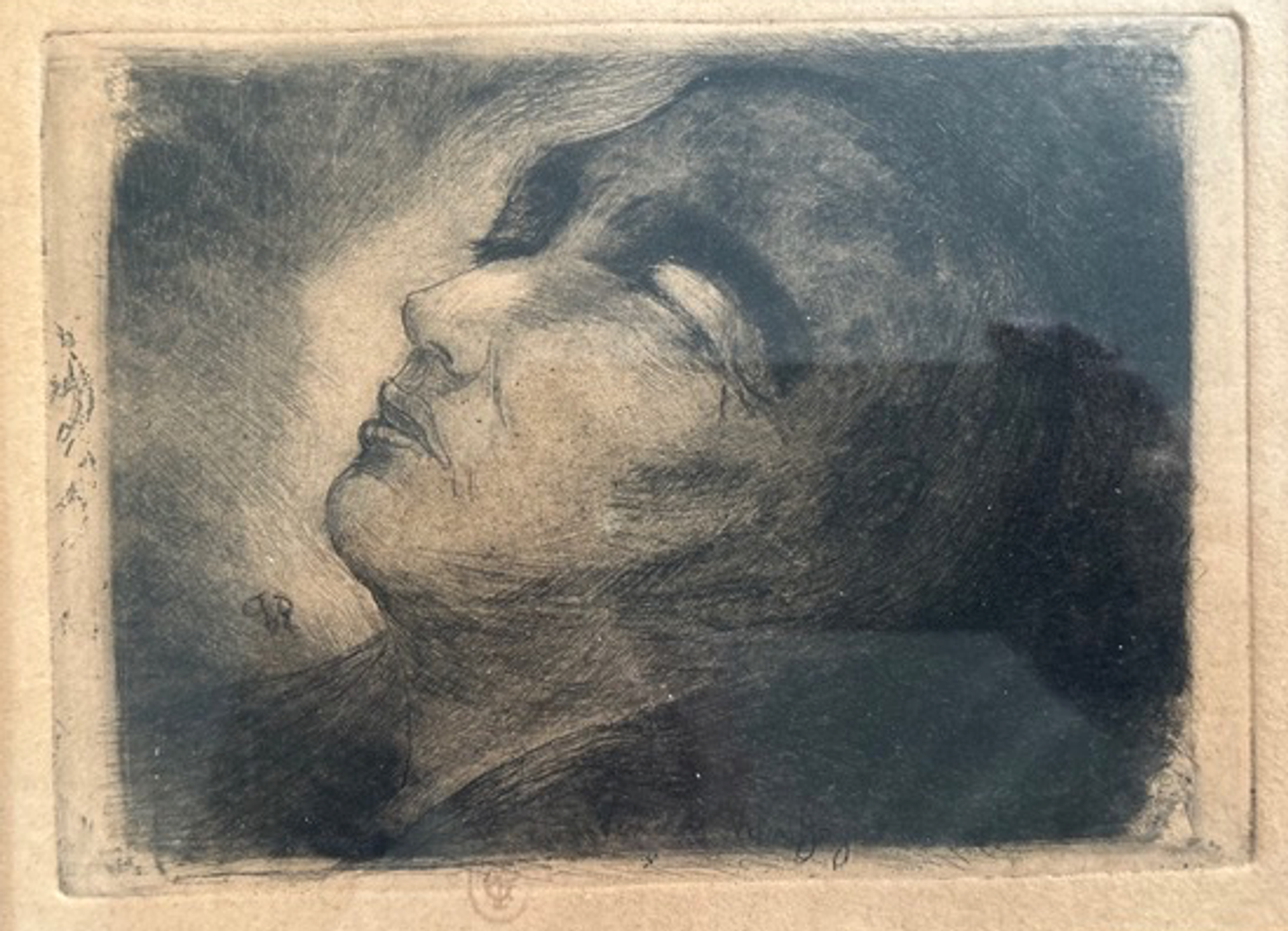
Gachet’s etching of Van Gogh on his Deathbed (1890)
Gachet Archive
From his drawings, Gachet soon made a print of Van Gogh on his Deathbed, in homage to his departed friend. These etchings are scarce, with perhaps a dozen or so examples surviving, one of which is included in the Gachet Archive.
3. Menu of memorabilia
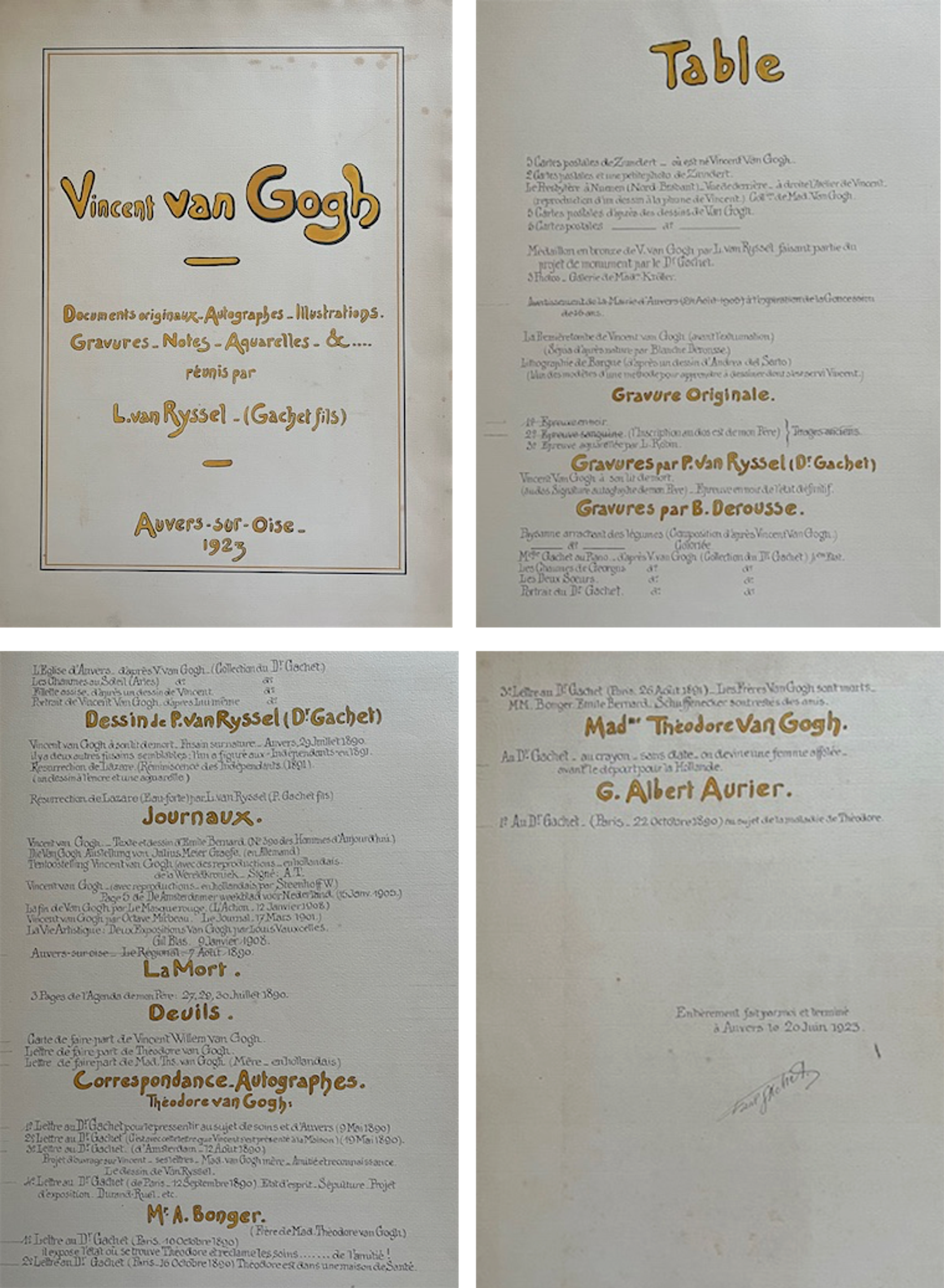
Gachet Jr’s record of the family’s Van Gogh memorabilia (20 June 1923)
Gachet Archive
Gachet Jr, the doctor’s son, was an accomplished calligrapher, as can be seen from this evocative 1923 folder listing the Van Gogh-related items in the family collection. Some still survive in the Gachet Archive, although others have gone elsewhere or been lost.
4. Piano pictures
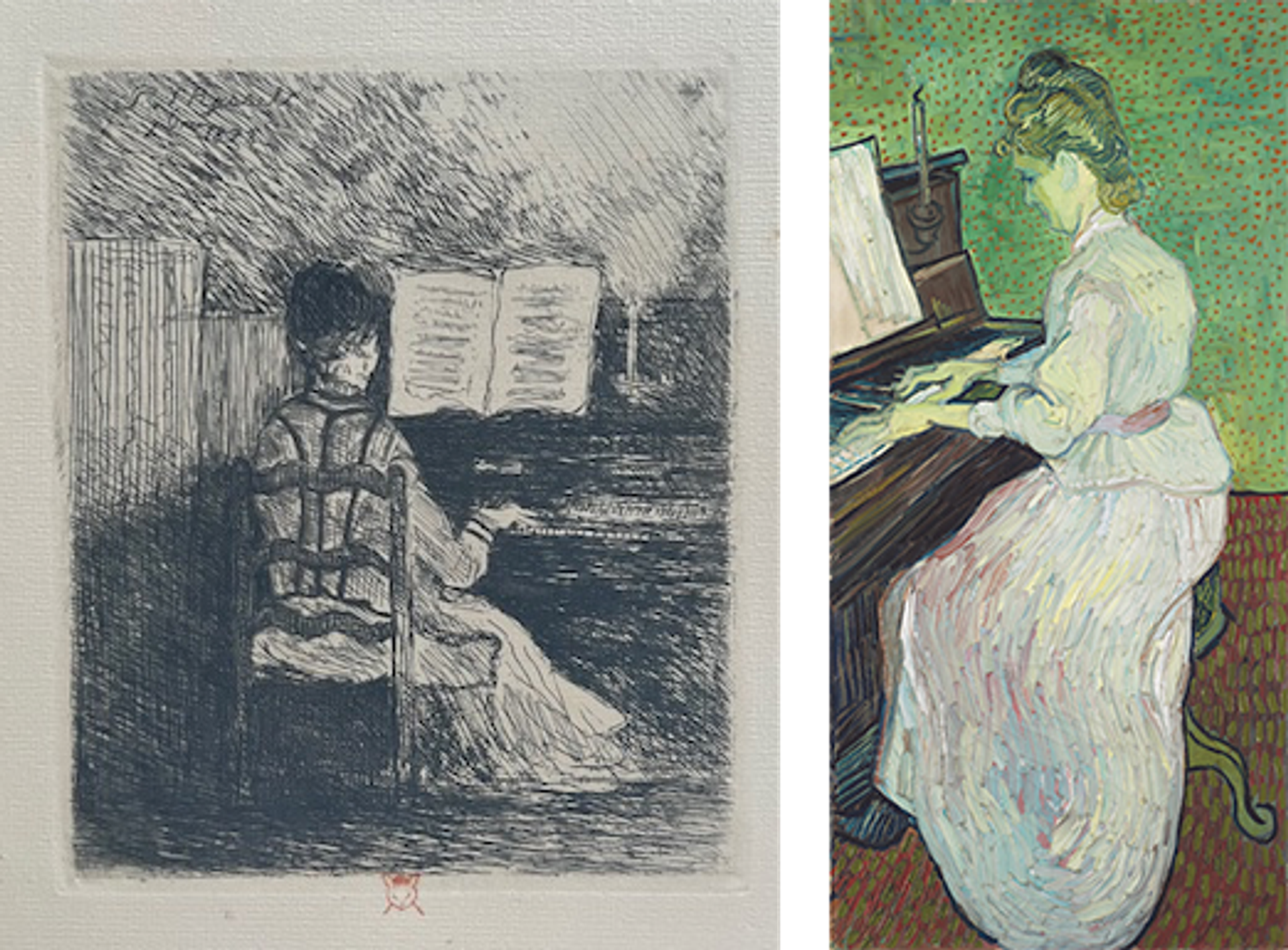
Gachet’s etching of his wife Blanche, Madame Gachet at the Piano (1873), and Van Gogh’s painting of their daughter, Marguerite Gachet at the Piano (June 1890)
Gachet Archive and Kunstmuseum Basel
Gachet was renowned for his etchings, which included one of his wife Blanche playing the piano. Van Gogh almost certainly knew this print, and it may well have inspired his painting of the couple’s 17-year-old daughter, Marguerite, at the family piano.
5. Wartime postcard
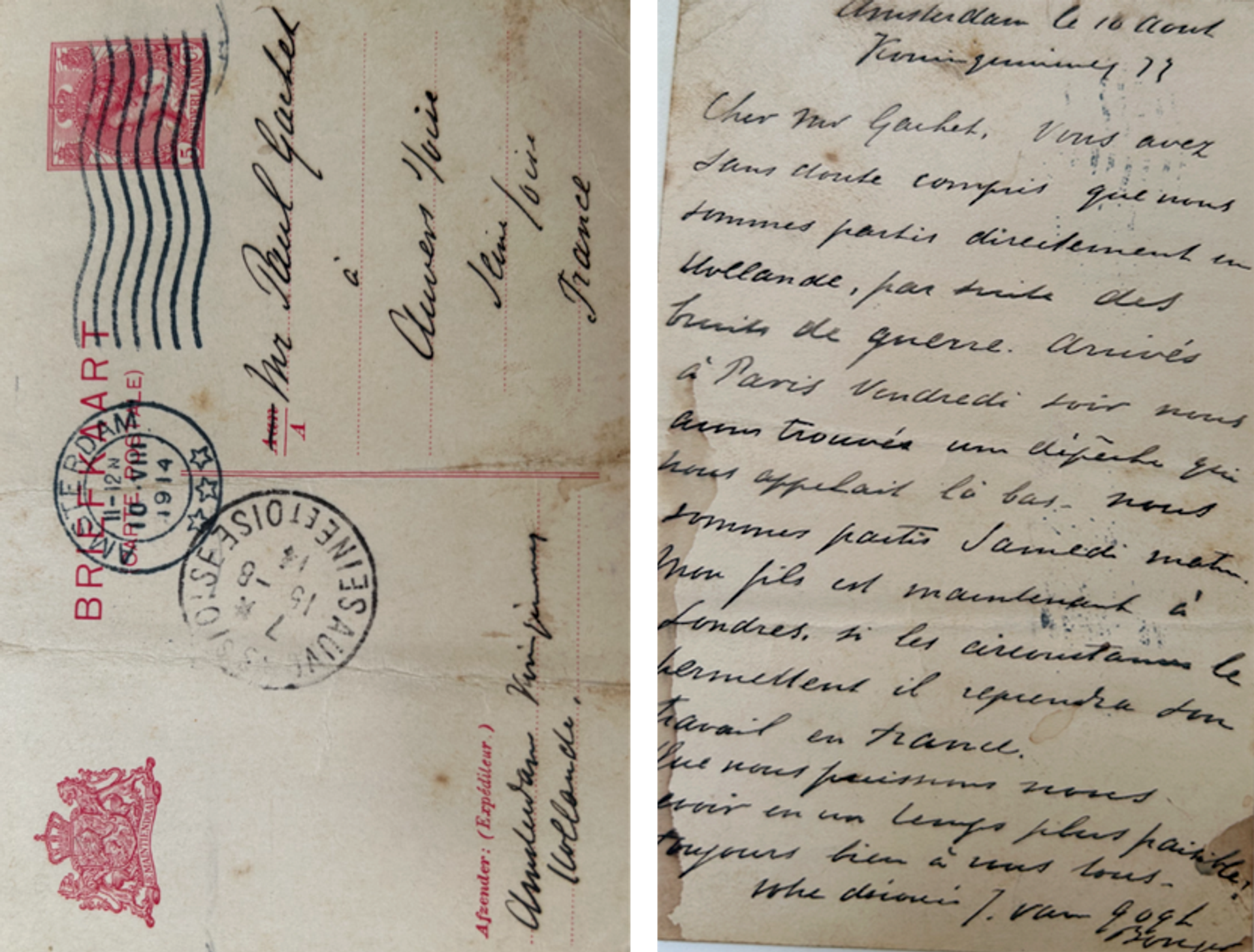
Postcard from Jo Bonger to Gachet Jr, 10 August 1914
Gachet Archive
Jo Bonger, Vincent’s sister-in-law, sent a postcard to Gachet Jr from Amsterdam on 10 August 1914. This was just two weeks after the start of the First World War. Bonger had been in Paris and hurriedly left for the neutral Netherlands the day before posting her card. She ended her brief message: “May we see each other again in more peaceful times.”
6. Bonger's biography
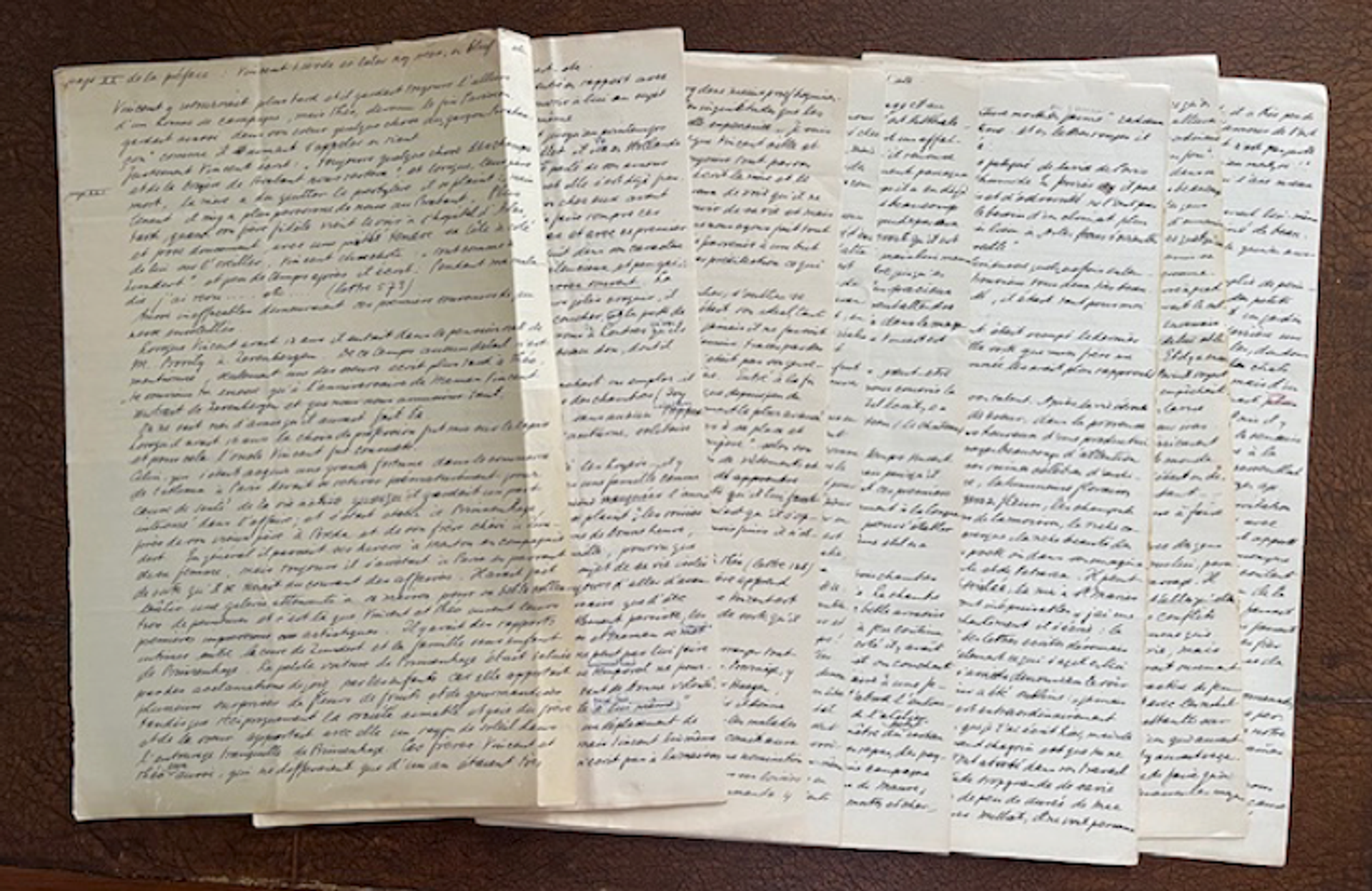
French translation of Jo Bonger’s Dutch introduction to Van Gogh’s 1914 published letters
Gachet Archive
In 1914, Bonger wrote a very important in-depth introduction to the artist’s published letters. This represents the most detailed account of Van Gogh’s life by someone who had known him. Originally written in Dutch, the Gachet Archive includes a French version of Bonger’s published text, prepared by an unidentified translator probably in the 1920s.
7. Newly qualified
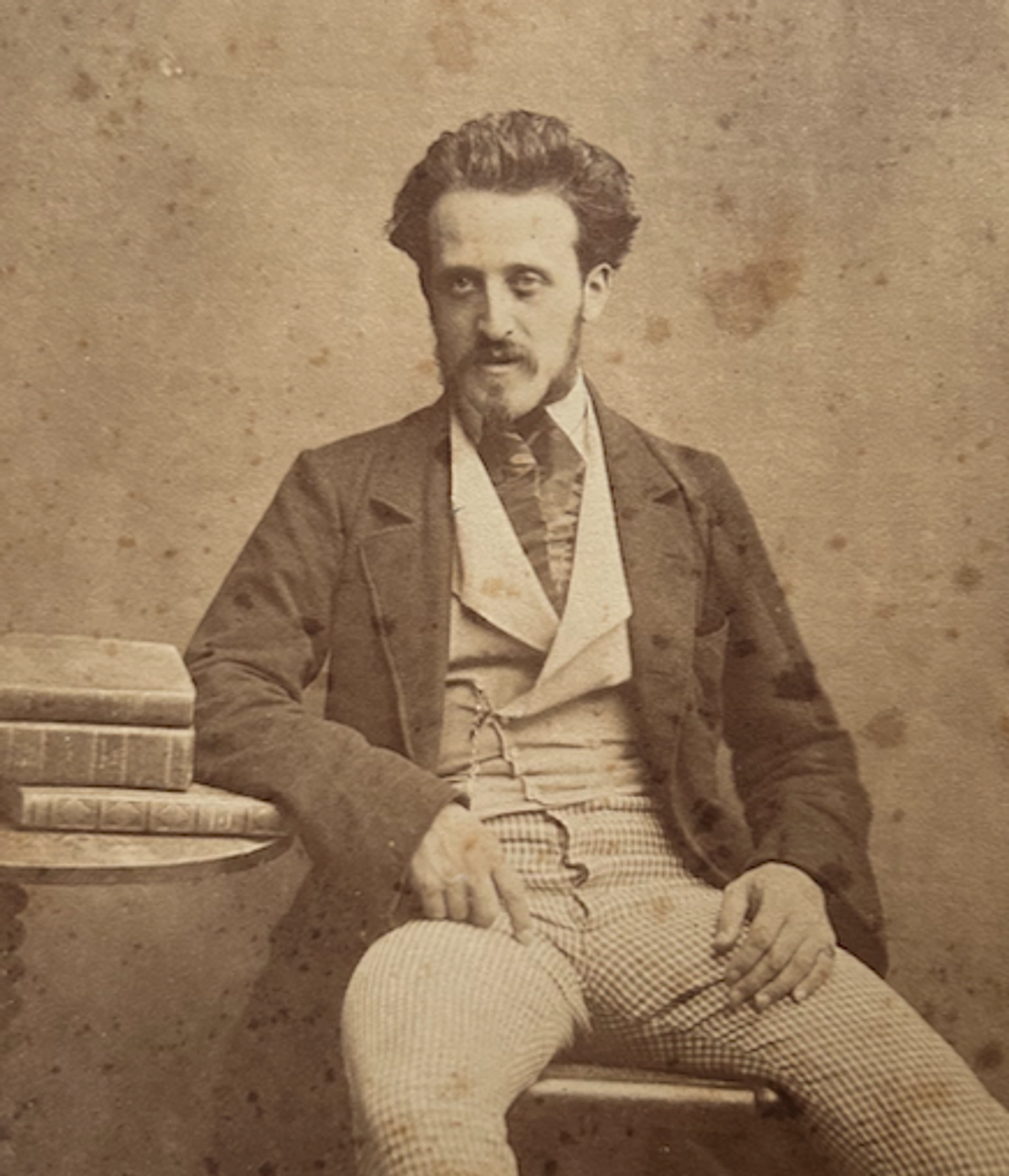
Photograph of Gachet (1858)
Gachet Archive
This unpublished photograph of Gachet, aged around 30, was taken in 1858, just after he had qualified as a doctor. For a brief period that year he served as an intern at the Charenton asylum, in the southeastern outskirts of Paris. This experience must have helped him to better understand Van Gogh, who had arrived in Auvers from the asylum at Saint-Rémy-de-Provence.
8. Portrait with cap
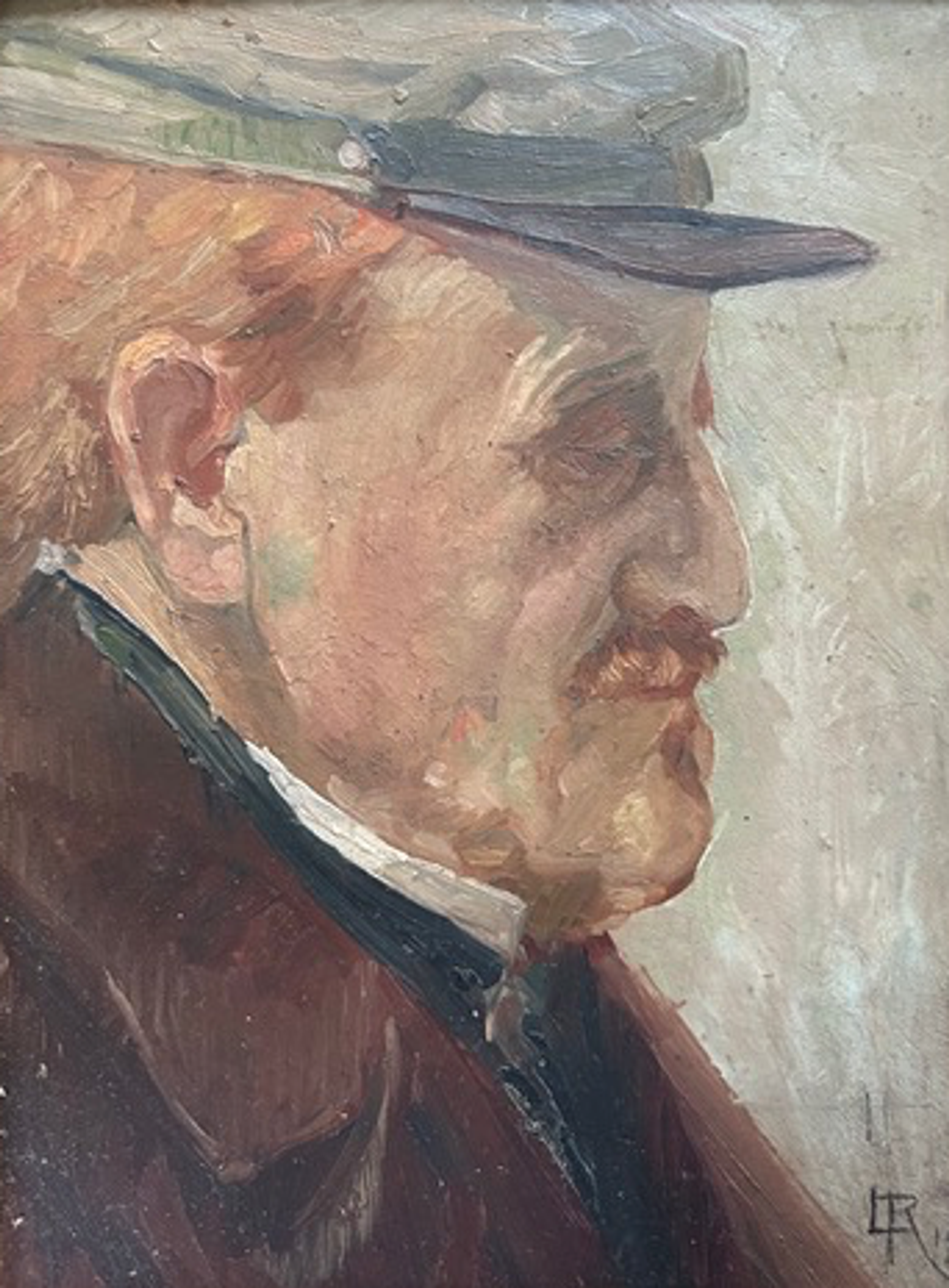
Léopold Robin’s Portrait of Dr Gachet (1903)
Gachet Archive
This profile portrait of Gachet, reproduced here in colour (likely for the first time) was painted in 1903 by his artist friend Léopold Robin, when the doctor was aged around 75. Gachet wears a cap similar to the one that he has in Van Gogh’s pair of 1890 portraits.
9. Father and son
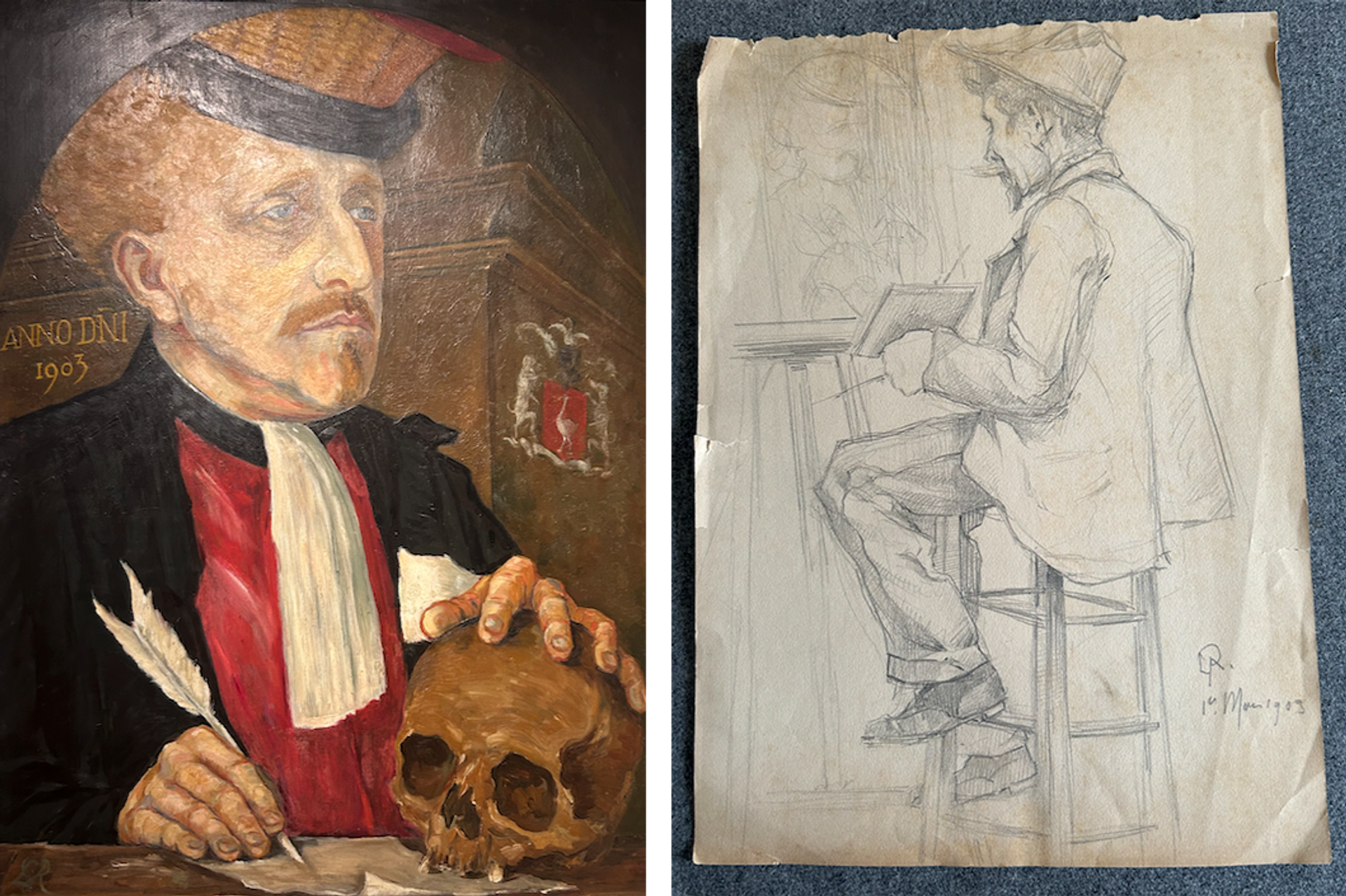
Gachet Jr’s completed oil portrait of Paul Gachet and Léopold Robin’s sketch of Gachet Jr painting a portrait of his father, which can be seen on the easel (both 1903)
Edmée Dorléans, collection of her father, Yves d’Auvers (oil portrait) and Gachet Archive (Robin sketch)
The Gachet Archive includes a sketch by Robin depicting Gachet Jr perched on a stool, in the act of painting a portrait of his elderly father. The finished oil portrait is currently on display at the Maison du docteur Gachet in Auvers, in the exhibition Gachet, the Talent of Father and Son, the Collection of Yves d'Auvers Revealed (until 2 August).
10. Jumbled sale
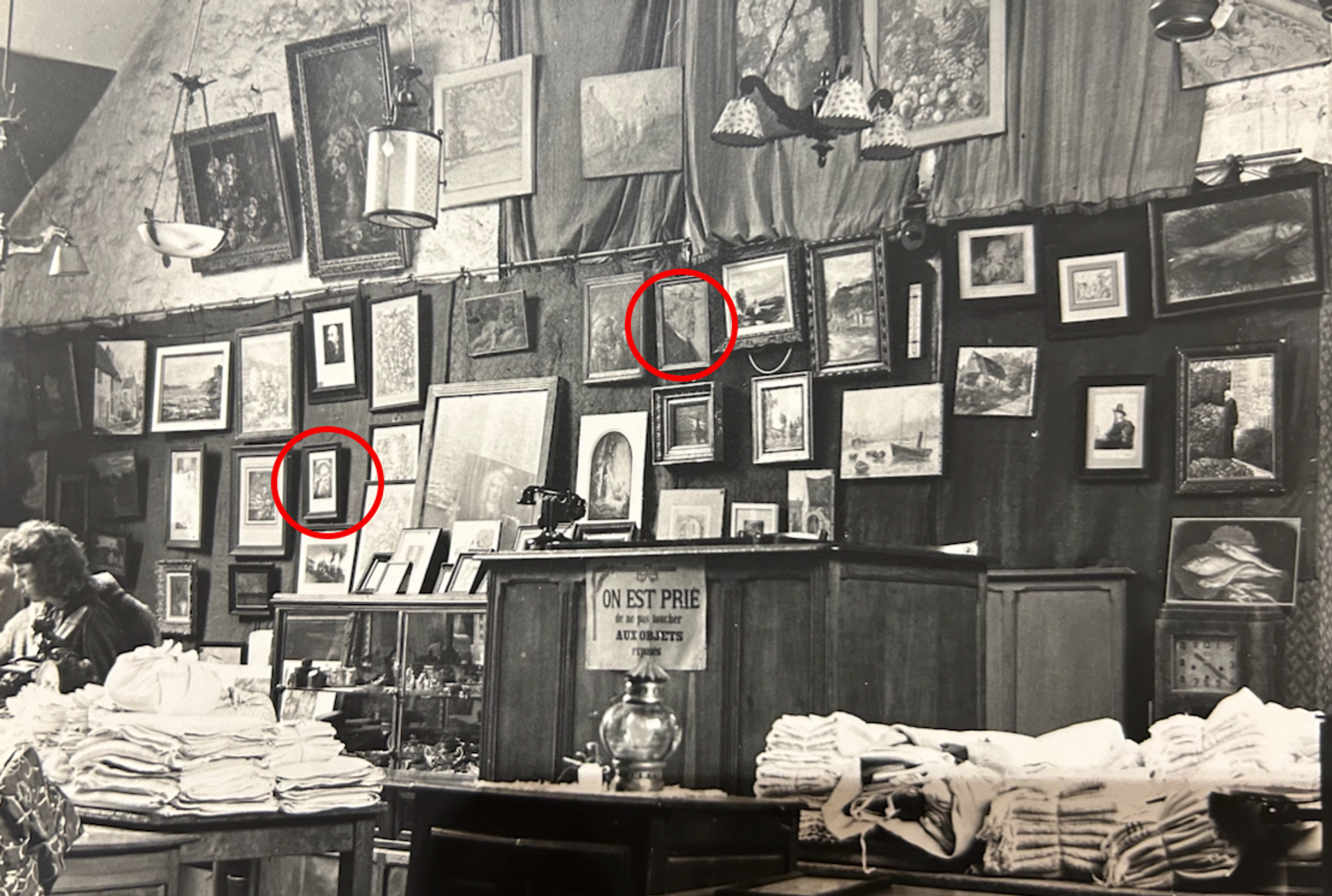
Photograph of the auction after the death of Gachet Jr, held by André Dhiver at the Hôtel des Ventes, Pontoise on 9-10 March 1963: the Robin Portrait of Dr Gachet (1903) and Van Gogh’s etched Portrait of Dr Paul Gachet (June 1890) are circled in red
Gachet Archive
Following the death of Gachet Jr in 1962, an auction of his effects was held in the nearby town of Pontoise on 9-10 March 1963. The presentation was chaotic, as can be seen in this likely previously unpublished photograph. With virtually no publicity, the resulting prices were low. Among the items offered was Van Gogh’s etched Portrait of Dr Paul Gachet (June 1890). The earlier owner of the Gachet Archive was fortunate to have purchased some of the key items in the 1963 sale, including the Robin portrait of the doctor and Gachet's sketch of Van Gogh on his Deathbed.
During his lifetime, Gachet Jr gave most of the numerous paintings and drawings by Van Gogh and Cezanne which he had inherited from his father to the Louvre (they are now at the Musée d’Orsay). There is therefore no work by Van Gogh himself in the Gachet Archive.
Another archive of documents was sold by Gachet Jr to the Paris dealer Georges Wildenstein in 1962; these are now at the Wildenstein Plattner Institute in New York and are available online. The owner of the newly emerged Gachet Archive is holding onto their collection and has not yet made any long-term plans.
Sadly, Gachet’s medical notes do not survive, which would have told us so much about Van Gogh’s demise. But the Gachet Archive, with more than 500 items, does provide a unique insight into the artistic milieu in Auvers.