

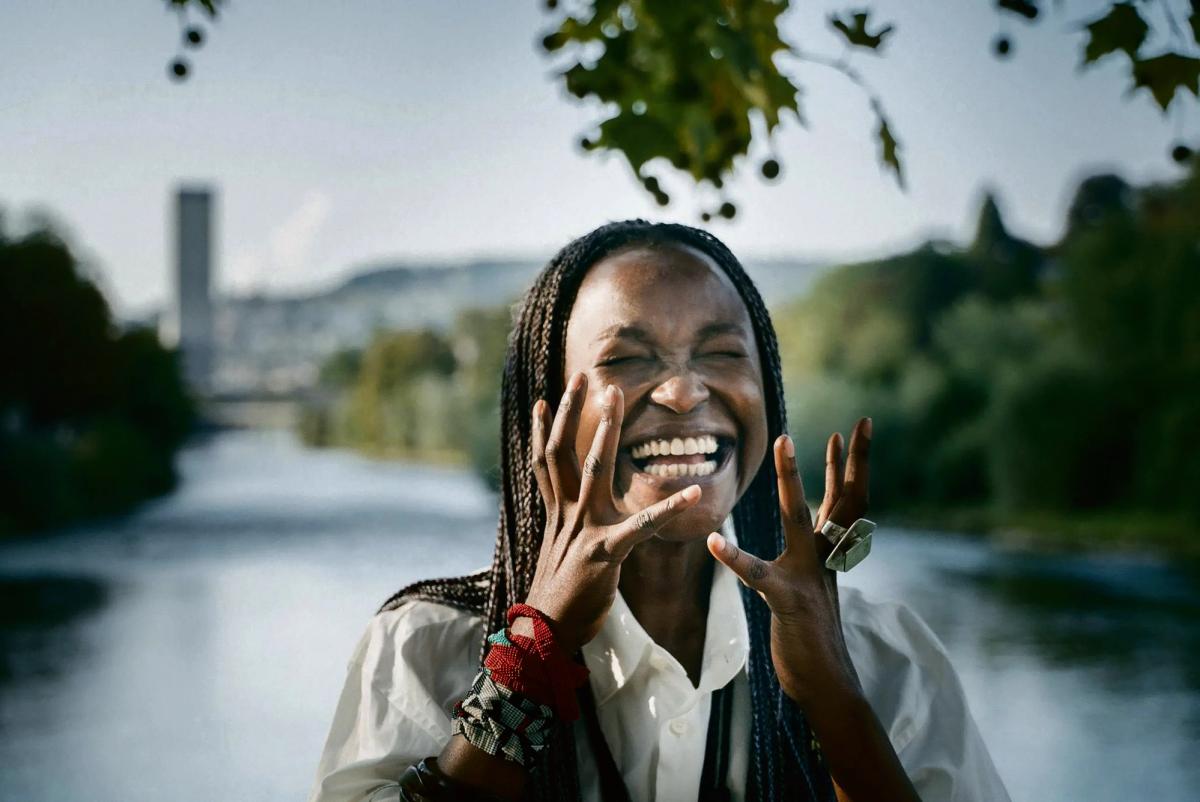
In an interview for Art Basel’s website in 2020, the late Cameroonian Swiss curator Koyo Kouoh described why she first decided to visit the fair. “As a young art professional, I was eager to know how things worked, how things looked, and what kind of exchange you could have at an event like Art Basel, so I went out of curiosity,” she said. “It was impressive to see the scope of the operation and the excitement, the exuberance, and the craziness of it all.”
As a young art professional, I was eager to know how things workedKoyo Kouoh
Before her death in May last year, Kouoh had been working on what is perhaps the most prestigious job for a contemporary art curator, the Venice Biennale (her plans were posthumously carried out by her team), and was one of the most respected figures in the art world. But when she visited Art Basel for the first time in 2001, she described feeling “very detached”, as she believed “an art fair is not an ideal space to experience art”. But over time she came to enjoy the fair, returning almost every year towards the end of her life. “It’s very nice to meet friends and colleagues, catch up around a meal, walk through Unlimited, and attend some of the Conversations programme,” she said.
Collaborative fellowship
Kouoh’s long-term relationship with Art Basel—which led her to join the jury for the inaugural Art Basel Awards last year—and her regard for the fair as a place for convening and conversing inspired a newly launched fellowship in her memory. The Koyo Kouoh Fellowship is a programme to support emerging curators, writers and cultural practitioners by bringing them to the Basel fair.
Funded by Art Basel, the fellowship has been developed in collaboration with Raw Material Company, a centre for art, knowledge and society that Kouoh founded in Dakar in 2008. The fellowship—which covers travel to Art Basel in Switzerland, a stipend for the trip, visa support and a mentorship programme—will run for three years, with a jury selecting a new fellow each year.
“We have a huge deal of respect for who she was and what she did,” says Vincenzo de Bellis, Art Basel’s chief artistic officer and global director of fairs. “[Kouoh is] one of the most important figures in the art world of the last two decades and she also played an important part in the launch of the Art Basel awards, so we wanted to do something in her memory.”
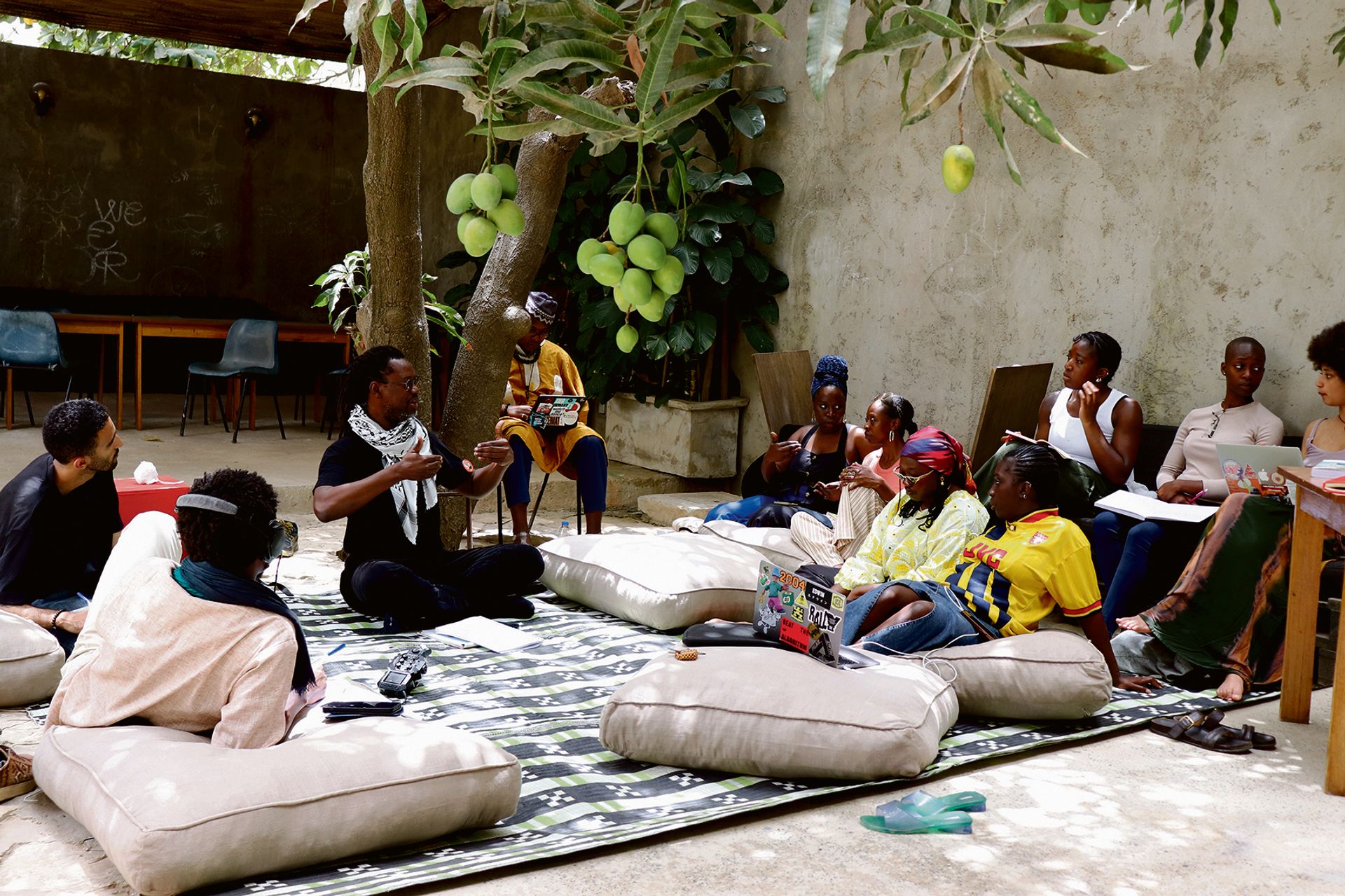
An Académie session at RAW Material Company in Dakar, which was founded by Kouoh in 2008 © Kerry Etola Viderot, 2025, RAW Material Company
The jury for the fellowship is made up of the Senegalese curator Marie Hélène Pereira; the researcher, writer and curator Rasha Salti; the Nigerian artist Otobong Nkanga; and Greer Valley, the head of curatorial affairs at Zeitz Museum of Contemporary Art Africa (Zeitz MoCAA) in Cape Town. For the inaugural fellow, candidates who had recently taken part in Raw Material Company’s Académie or Zeitz MoCAA and the University of the Western Cape’s Museum Fellowship Programme, both of which Kouoh established, were considered. From next year, the team plans to launch an open call for the fellowship, and there are also ongoing discussions to extend it beyond its current three-year stint.
“What we wanted to do [with the fellowship] is to really trigger someone’s practice and perspective when it comes to being in Basel and experiencing Art Basel,” says Fatima Bintou Rassoul Sy, the programme director at Raw Material Company. “We wanted to choose someone who has a level of maturity to understand the dynamic in place there, and that will have a sense of criticality. Someone who will like the experience, but who is able to distance [themselves] from it and really look at it as it is, in a wider perspective.”
Strengthening connections
The inaugural fellow is Aisha Aliyu-Bima, a Nigerian curator, writer, researcher and photographer with a focus on African contemporary art. She currently serves as the director of arts at the African School of Economics in Abuja and has recently been appointed the curator of Abuja Art Fair.
This will be Aliyu-Bima’s first time in Basel and first time at an Art Basel fair. “I am very excited about it,” she says. “It was extraordinary being a student of Kouoh and studying in the institution that she founded [at Raw Material Company’s Académie], learning her way of working and her curatorial practice. So I think going to a city that she lived in, and seeing an institution that she worked with, is going to be a tremendous experience.”
De Bellis says that Aliyu-Bima will have meetings with members of the Art Basel team, including himself, the Art Basel in Basel director Maike Cruse, the Unlimited curator Ruba Katrib and the curator of the Parcours section Stefanie Hessler. She will also have the opportunity to meet external curators, artists, gallerists and collectors.
“I’m looking forward to gaining experience and connections that will strengthen the art space that we’re building in Abuja,” Aliyu-Bima says. “I think over the past couple of years, there’s been a lot of great work being done in the art scene in Abuja, and I think we just need to bolster that and expand how accessible it is to the greater art world. That’s something that I’m really seeking to achieve.”
It’s important for me as a young African curator to really understand [...] this systemAisha Aliyu-Bima
Aliyu-Bima adds that she is interested to learn more about the art market at what is widely considered the premier commercial event of the art world calendar. “I think it’s important for me as a young African curator to really understand and see where the money moves in this system because, whether we like it or not, as long as we participate in it, those conversations are going to have to be had about the [art market] systems that we build back home [in Nigeria].”
Aliyu-Bima says that she has already received opportunities because of her fellowship. She recently wrote an article for the Art Basel website and was invited to speak on the Venice Biennale edition of the radio station Radio GAMeC.
“The best thing that could happen is that in a few years’ time, [the fellows] will do an interview and will say how fundamental this week was for them,” De Bellis says. “That’s actually the spirit that really drives all the awards—we want, certainly, to award people for what they’ve done, but also we want to think about what they would do with that award in the future. That sense of responsibility and willingness to do something for the best of the entire ecosystem is what drives both the awards and the fellowship.”