

Today, as Art Basel opens to First Choice VIPs, almost 200 of the 232 galleries in the fair’s main section will unveil some surprise works as part of the new Basel Exclusive initiative: pieces omitted from the usual pre-fair preview PDFs and press announcements that have become ubiquitous.
Iwan Wirth, the president and co-founder of Hauser & Wirth, sees the move as an attempt to revive “the element of surprise” that was once inherent to art fairs but has been largely lost “with the increasing professionalism of collectors, their advisers and technology”. There are the collectors, Wirth says, “who want to do their homework, want to choose beforehand, they don’t want to be rushed”. But equally—and perhaps increasingly—Wirth adds: “There are those who say, ‘I’ve got a collection, but I’m coming [to a fair] to discover and to be surprised, and if I see something I like, I might pull the trigger’.”
This initiative helps to restore that sense of anticipation of visiting a fairPatrizia Sandretto Re Rebaudengo, collector
One such collector is Patrizia Sandretto Re Rebaudengo. “Basel Exclusive brings back a sense of discovery that has gradually been reduced in recent years, as lots of major works are sold before [the fair opens],” says the Turin-based Sandretto, who visited her first Art Basel in 1992. “I think that this initiative, reinforcing the value of being there in person, helps to restore that sense of anticipation of visiting a fair in the 1990s or early 2000s.”
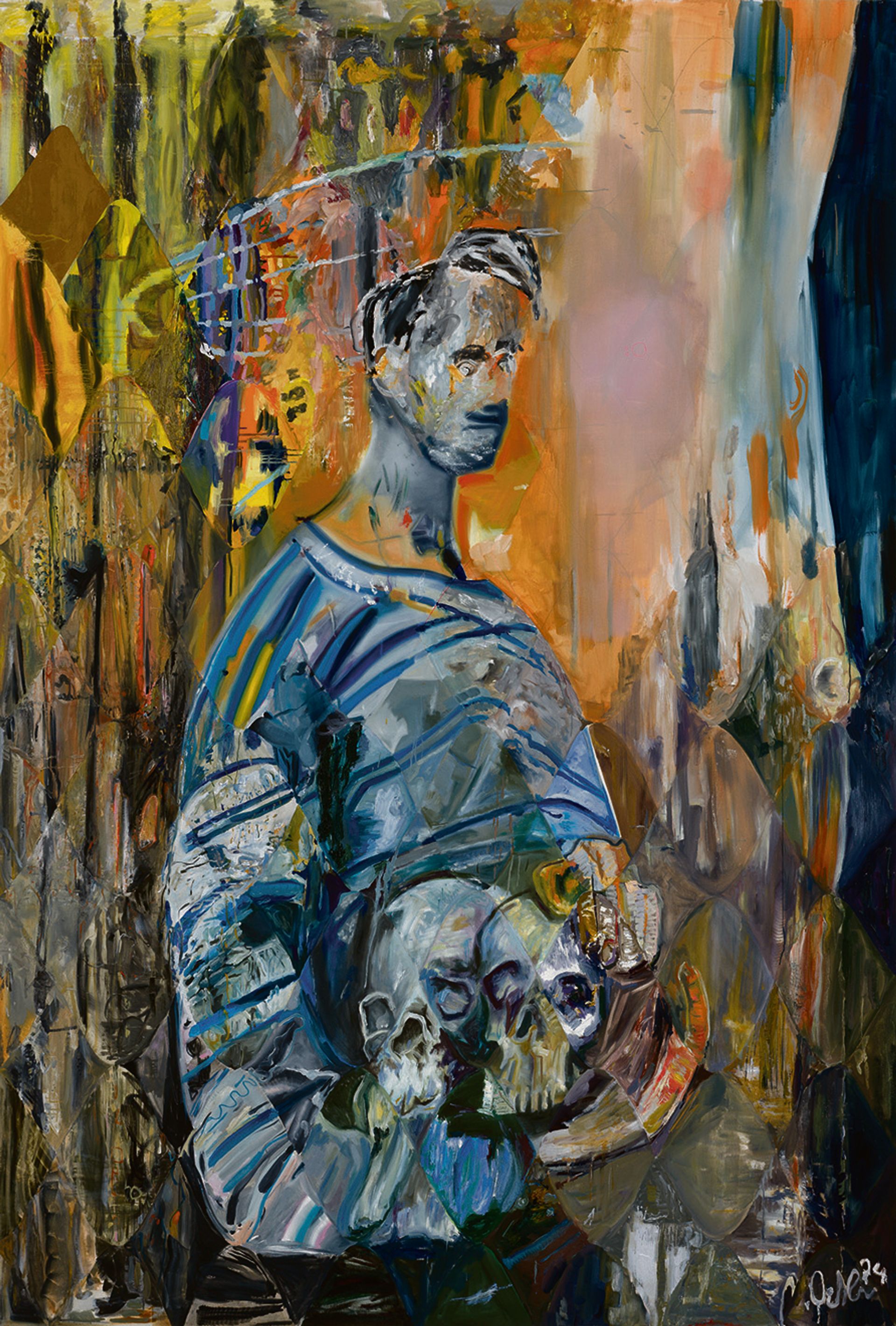
Gagosian is showing Albert Oehlen’s Untitled (2026). Almost all of the galleries in the main section are participating in the new initiative Photo: Annik Wetter; © Albert Oehlen; courtesy of Gagosian
Maike Cruse, the director of Art Basel in Basel, says the aim is to “heighten anticipation and reinforce the value of being physically present at the opening of the fair. I think every one of us is overwhelmed by the information we receive every day digitally; this is a way of lightening that load.”
Many works chosen for Exclusive “are where the physical encounter really matters”, Cruse says. She lists two examples: an altarpiece by the Mexican artist Frieda Toranzo Jaeger shown by Trautwein Herleth, where viewers can touch and open doors within it, and a sculpture by the Indonesian Brazilian artist Dan Lie, presented by Barbara Wien. “[Lie is] an artist who works a lot with insects and flowers,” Cruse says. “The works often smell; you can only truly experience them when you see them in real life. So, those are very good examples of works that are really perfect for Basel Exclusive.”
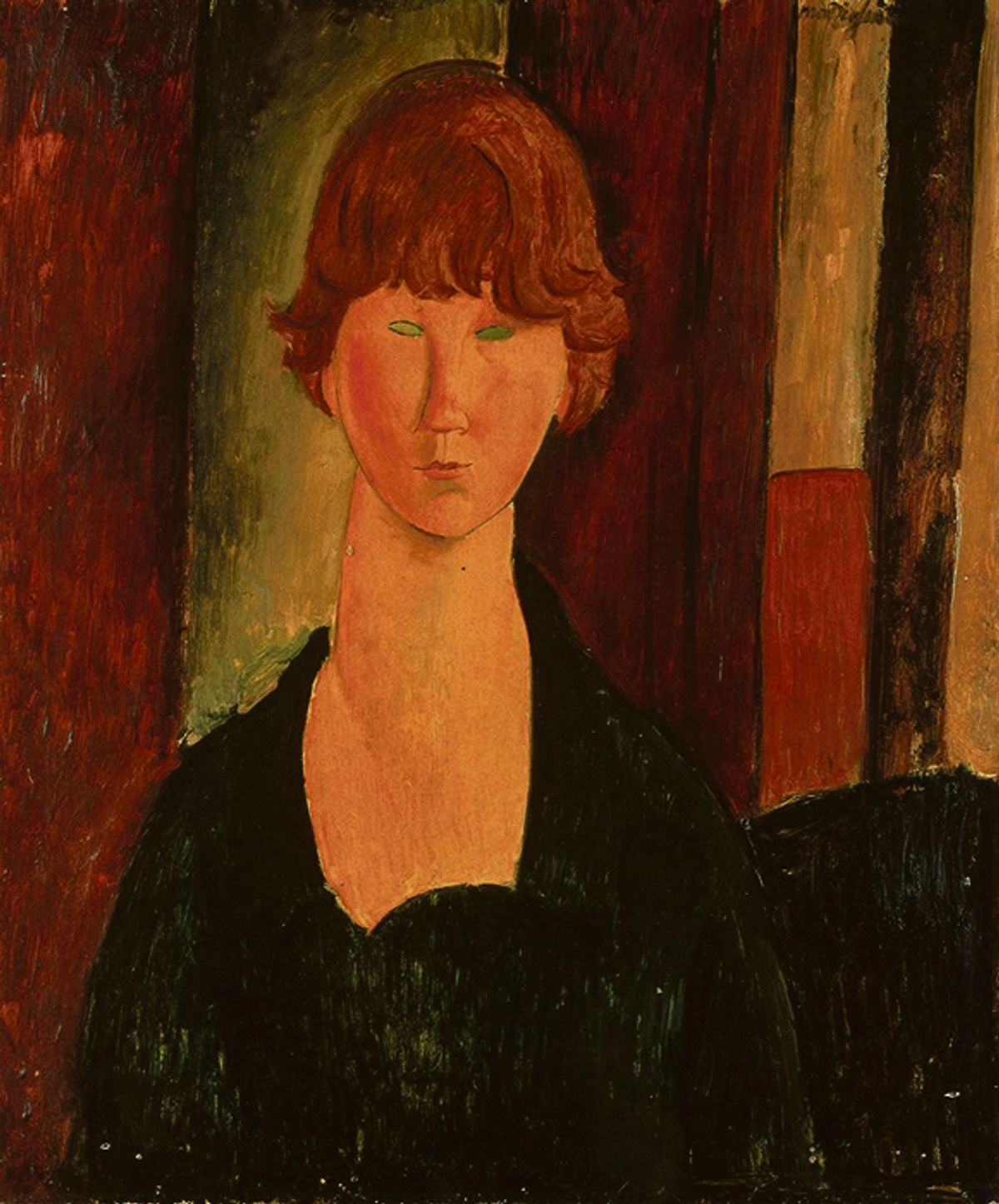
Among the secondary-market highlights that Cruse picks out are an Alexander Calder sculpture shown by Tina Kim, a Gerhard Richter painting at Sies + Höke and a 1910 painting by Wassily Kandinsky exhibited by Landau Fine Art. Other big names include an Amedeo Modigliani oil on canvas, titled La Bouquetière (1919-20), at Pace di Donna Schrader Galleries.
Of course, another tier of discretion still exists and some works will never be seen on the fair floor at all; Cruse confirms that Art Basel still operates its private viewing rooms at all five of its fairs. These spaces can be hired by galleries to show high-value works to select clients away from crowds—an option that Wirth says is frequently used by his gallery.
To some extent, Basel Exclusive represents a cognitive reframing of a long-time logistical reality. “Generally speaking, we always have some new artworks that will only get photographed in Basel, therefore they’re not on our previews anyway; they leave the studios too late,” says Sadie Coles, the founder and owner of the eponymous London gallery. “So, for the primary galleries, this is something that is happening anyway, but this is a way to make that public and make a positive out of it.”
A case in point, in 2023, Sadie Coles HQ devoted its stand to a solo show of paintings by the Los Angeles-based painter Laura Owens, including a site-specific wallpaper painting. “The entire booth was last minute; we had absolutely no images or information at all before the fair, so that’s a good example of how this new initiative fits into that practice,” Coles says. As part of Exclusive this year, Coles will present a just-completed painting by Owens, Untitled (2026), and a new work by the US artist Arthur Jafa, an oil and silkscreen on canvas titled SYD IS AS SAD AS SID IS (2026).
It is the original model of an art fair, that moment of surprise, energy, excitementIwan Wirth, Hauser & Wirth
Hauser & Wirth has also unintentionally shown some major works at fairs at the last minute, without pre-fair hype, Wirth says, mentioning Gerhard Richter’s Abstraktes Bild (1987), sold for $23m at Art Basel in Paris last year, and Kazimir Malevich’s Suprematism, 18th Construction (1915), exhibited at the Paris fair the year before and sold soon afterwards for a price “well into eight figures”, according to a spokesperson. “We were running late with logistics and we said, ‘Okay, we’re going to turn this into an advantage and we won’t reveal it until we’re there’,” he says. Almost every late addition in Paris was successfully sold, Wirth says. “It is the original model of an art fair, that moment of surprise, energy, excitement,” he says. “Some people don’t want to be surprised that way, but others do.”
Value for the time-poor
At Art Basel, Hauser & Wirth’s Exclusive work is a 1946 painting by Philip Guston, titled The Courtyard, which has come from an American collection and never previously been on the market. “It’s a genesis piece because it reveals Guston’s themes and ideas that he would go on exploring in depth,” Wirth says. “It’s the pinnacle of his early figurative work.” (The gallery would not provide a guide price.)
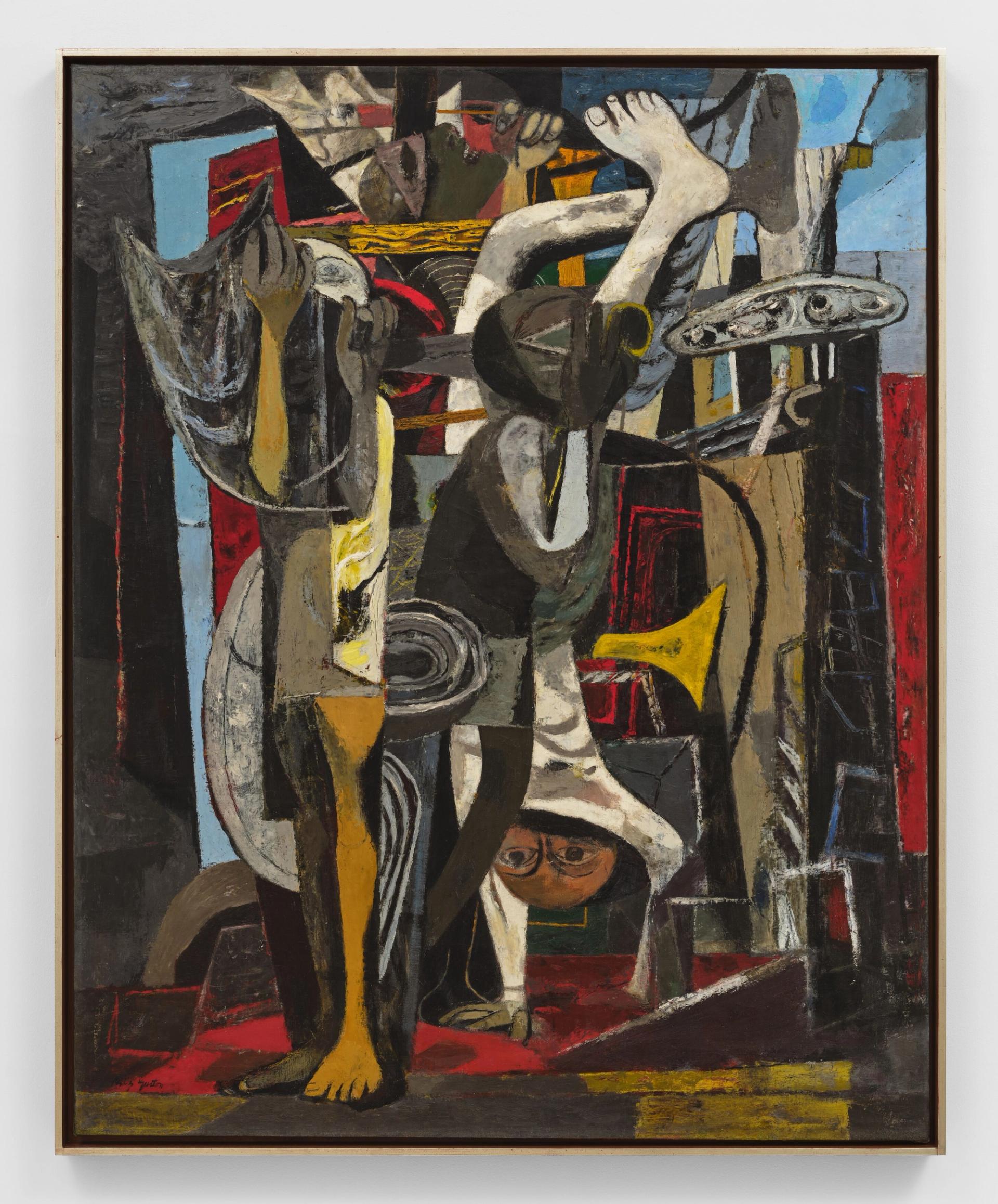
Philip Guston The Courtyard (1946)
© The Estate of Philip Guston. Courtesy the Estate and Hauser & Wirth. Photo: Thomas Barratt
Millicent Wilner, the managing director of Gagosian, echoes Wirth’s thoughts: “We always like to hold back some surprises, so the Basel initiative lines up with this approach.” For Exclusive, Gagosian will show a monumental new self-portrait by the 71-year-old German painter Albert Oehlen, which stands almost 3m tall. (The gallery declined to disclose a price.) Time-poor collectors are “understandably judicious with their time”, Wilner says, “and the number of competing fairs on the global calendar means that each fair has to offer value and an appeal that is distinctive to its location.”
Basel Exclusive is one of numerous initiatives launched by fairs to combat this inevitable calendar fatigue. “The fundamental problem is volume and frequency,” says the London-based art adviser Emily Tsingou. “With fairs proliferating and compressed ever closer together in the calendar, collectors are forced to prioritise—and this has consequences at both ends: galleries struggle to bring fresh material to each event, while collectors find it difficult to engage with every fair at the same level of commitment.”
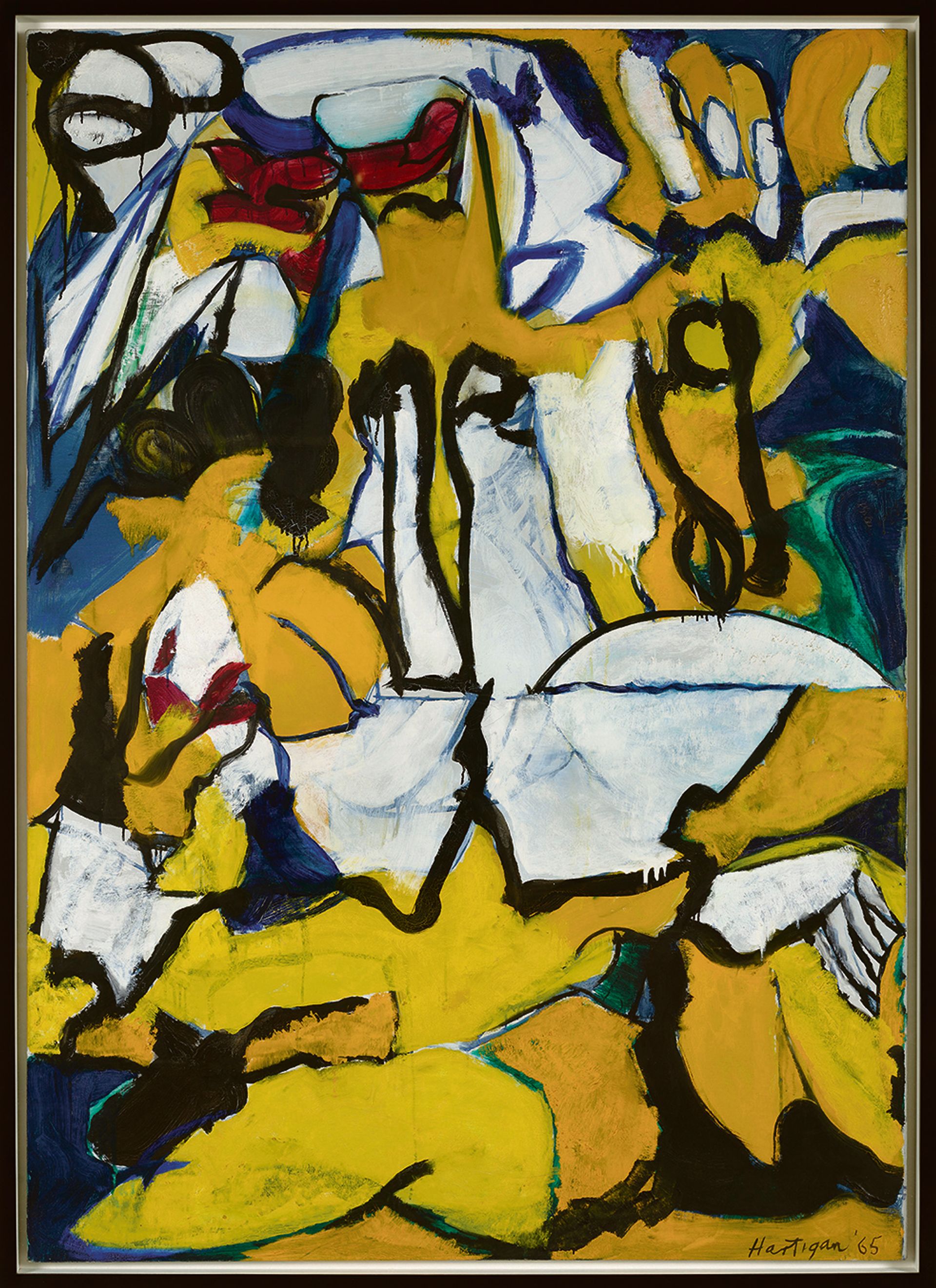
Grace Hartigan’s Wedding Day (1965), priced at $750,000, has been brought by Art Basel first-timer Berry Campbell © Estate of Grace Hartigan; dourtesy of Berry Campbell, New York
Tsingou has noticed a mixed reaction to Basel Exclusive among her clients, a split that is in part generational. “A significant number of collectors—and advisers alike—have become entirely comfortable receiving material digitally and making their initial, and indeed final, selections that way; this is particularly true of younger collectors,” she says. “Conversely, a more seasoned group remains more oriented towards the physical experience of discovering a work in person on the fair floor.”
Dominique Lévy, the co-founder of Lévy Gorvy Dayan gallery, thinks Basel Exclusive is “courageous—an original way to make Art Basel a bit more special for the people who are attending”. The predicament facing art fairs of staying fresh and attracting collectors in person—especially in a time of global geopolitical tensions—is their biggest challenge, Lévy says, and solutions should “include hospitality, larger cultural events and experiential elements”, as well as adapting to an “evolving art market”. Lévy Gorvy Dayan’s Exclusive work is a 1963 nail work by Günther Uecker, titled Rote Fahne.
One first-time Art Basel exhibitor is the New York-based gallery Berry Campbell, which has chosen for Exclusive a 1965 oil on canvas titled Wedding Day by the American Abstract Expressionist Grace Hartigan, priced at $750,000. Christine Berry, the gallery’s co-founder, says the initiative has piqued the interest of clients, “like going on a scavenger hunt. Who doesn’t love to find out a secret first-hand?” After all, Berry says, fairs today are “not only about the art, but the experience”.