

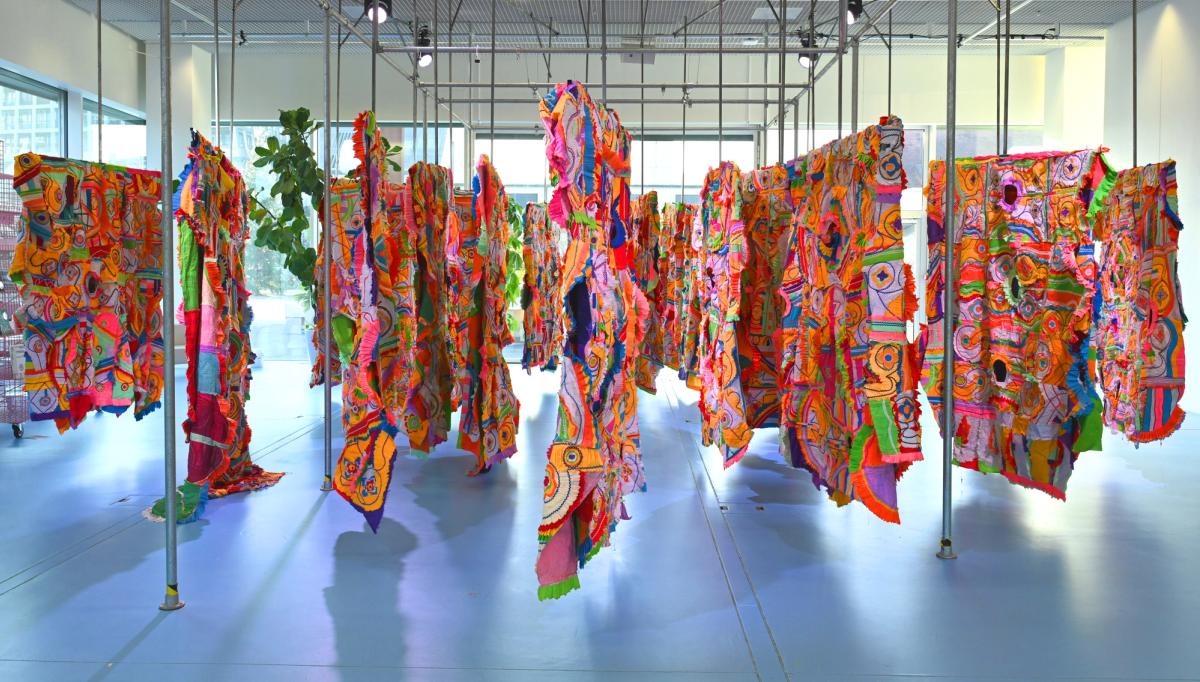
Reverse recycling for African textiles
It’s carnival time over at the Volta fair where the Lisbon-based Perve Galeria is showing Flowing Upstream, an exuberant installation made from discarded costumes worn by revellers at West Africa’s largest carnival—the Ankos Masquerade in Ghana.
The project, drawing on recycled carnival clothing, is the brainchild of the German artist Martin Wöllenstein. “Rather than preserving them as relics or documents, Martin dismantled and transformed the costumes into new textile structures,” says Carlos Cabral Nunes, the director of Perve Galeria.
The result is an “immersive architectural maze” that will no doubt be a fair talking point. Wöllenstein highlights that “by transporting discarded carnival costumes from Ghana to Basel via the Rhine, the project reverses the dominant direction of textile waste flows between the two continents.”
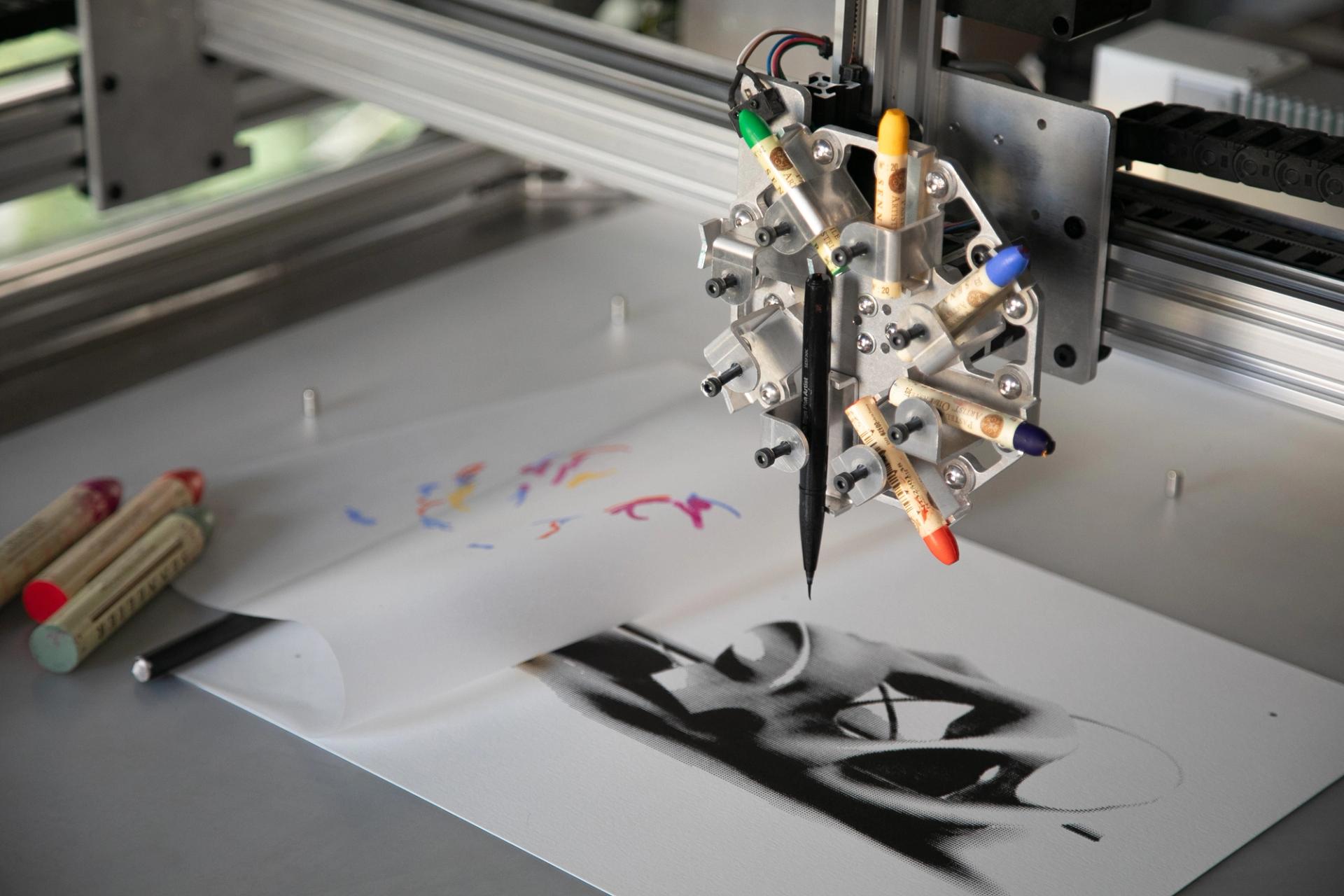
“Let the unpredictable emerge”: William Mapan’s drawing machine hard at work Lucas Ziegler
Fairgoers help machine to get creative
As part of the Zero 10 digital art section at Art Basel the artist William Mapan is presenting Paysages Plausibles: Dances on Shadows, featuring a live installation whereby visitors generate a unique composition on the fair floor via an algorithm devised by Mapan.
Hugo Pouchard, a cultural strategist who works with Mapan, describes the method behind the machinery: “design the rules, then let the unpredictable emerge,” he says. Pouchard adds: “William establishes the system and its parameters, but the algorithm generates works, iterations of which William has no control, letting unexpected forms and compositions emerge.” Follow the algorithm, kids.
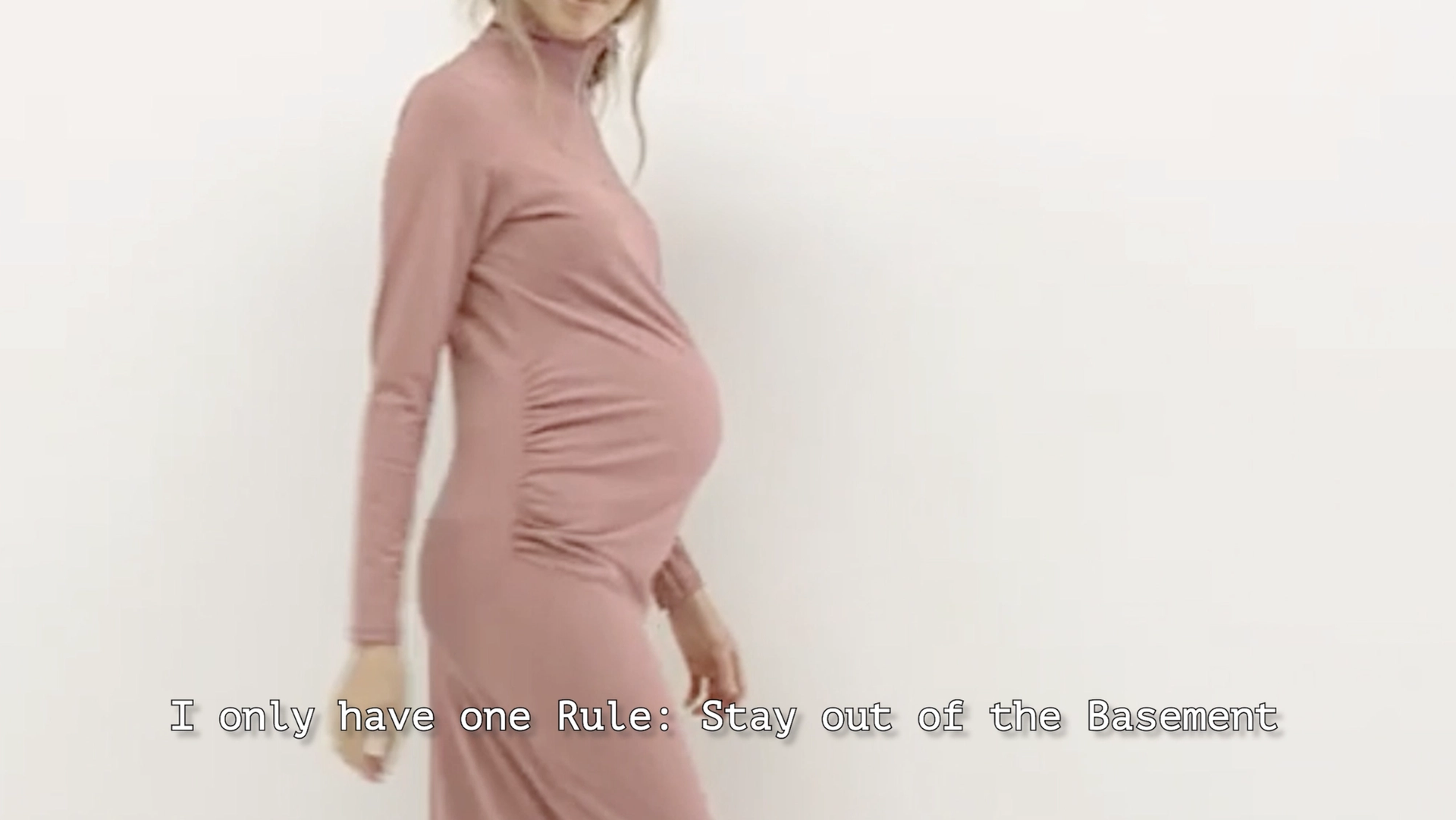
Phantom pregnancy: Erin Calla Watson’s video Maternity features models sporting prosthetic bellies Courtesy of the artist and Ehrlich Steinberg, Los Angeles
Motherhood, but not as we know it
Visitors to the Liste art fair in Basel will encounter a very different take on childbearing thanks to the Los Angeles-based artist Erin Calla Watson. Her new video Maternity features “found clips of female models wearing prosthetic pregnancy bellies for fast-fashion e-commerce websites”, says a statement from Ehrlich Steinberg gallery.
Watson tells us that her subtitles on the video are inspired by rather unusual reference points. “Malina [a novel by Ingeborg Bachmann] explores the relationship between a female writer and two men [and explores] fragmentation and desire. I’m also interested in these community subcultures, such as the concept of the ‘sad-boy’, which proliferated in the early internet era and represented intense emotional identification.”
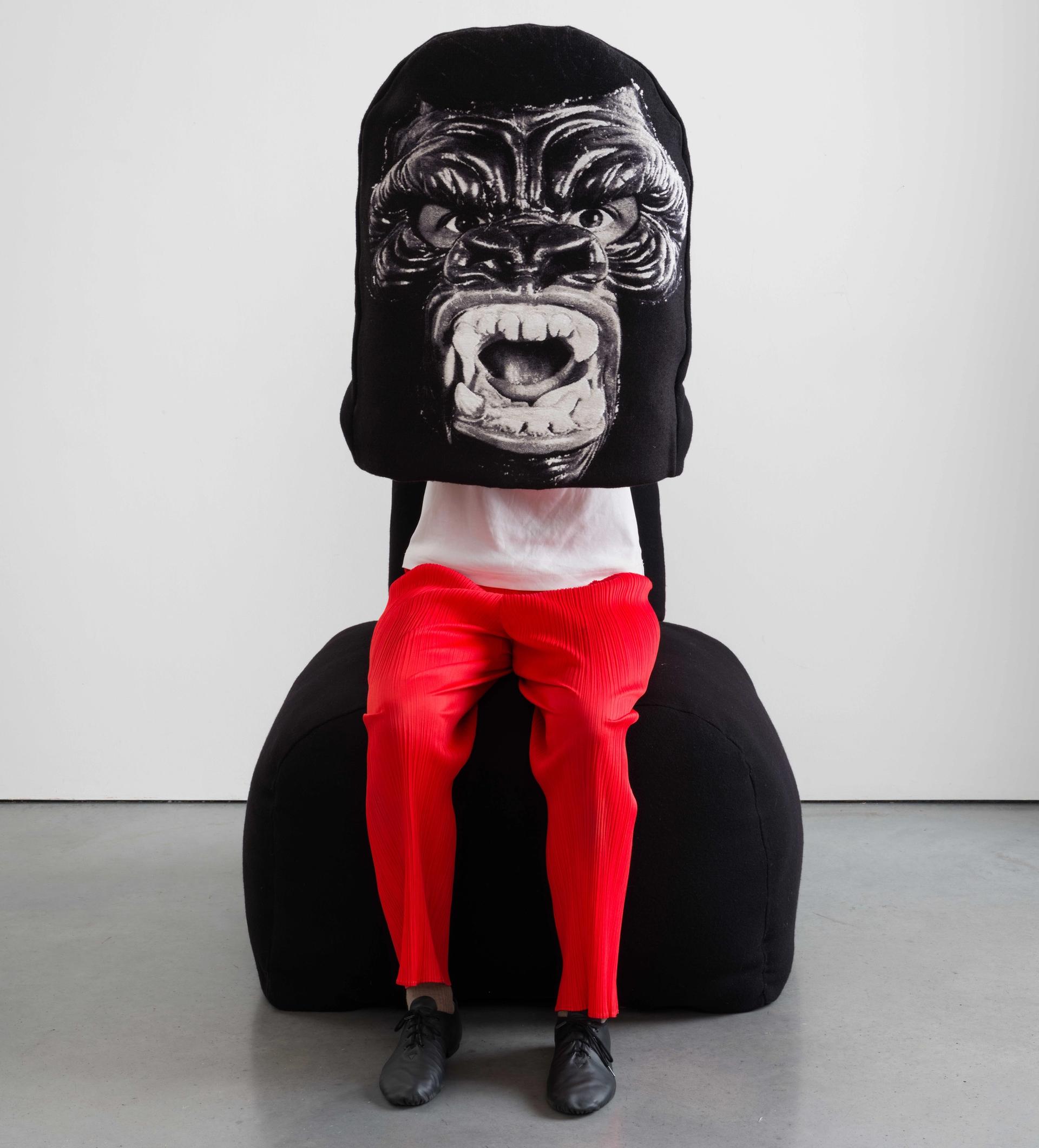
Hidden talents: a performer in Goshka Macuga’s Exhibition M: A Re-enactment Photo: Angus Mill; courtesy of the artist and Kate MacGarry gallery
Artist’s performance tells the story of museums
The Unlimited section of Art Basel always features some head-spinning works, and this year is no exception. One of the more enigmatic pieces comes courtesy of the Turner Prize-nominated artist Goshka Macuga. Exhibition M: A Re-enactment is a live performance that creates a dialogue around the history and future of museums, according to a statement from Kate MacGarry gallery. The three characters in the piece include the French novelist André Malraux; the first director of New York’s Museum of Modern Art, Alfred H. Barr Jr.; and Macuga herself. A spokesperson adds that the work aims to collapse “temporal and institutional boundaries while framing the museum as a site of continual reinterpretation.” Intriguing...
Fair gives Switzerland a (population) boost
The recent referendum, which asked Switzerland’s citizens to limit the country’s population to 10 million, is the talk of Basel. In the public vote held last weekend, nearly 55% of participants voted against and 45% voted for, with a turnout of 60% . The current population is 9.1 million, 27% of whom are not Swiss citizens. One curator at Basel airport pointed out though that “the number of art world people rolling up this week will probably tip the figure over 10 million”.