

The Glasgow art scene has taken a considerable battering this year. January saw the permanent closure of Glasgow CCA (Centre for Contemporary Arts) followed by what is still an ongoing battle to save the arts hub Trongate 103 in the face of a threatened fourfold rent hike by the property arm of Glasgow Council. (Although a plan is now apparently being drawn up to secure its future.) Then there is the knock-on effect of shrinking budgets at the arts venues managed by Glasgow Life, plus the devastating sucker punch delivered to the city when, in March, a mysterious fire broke out in a vape shop and gutted the landmark Union Corner building that adjoins Central Station.
All of which makes Glasgow International (GI) an especially welcome means to celebrate and highlight the enduring vivacity of the city’s art ecosystem and its ability to connect with artists worldwide. But alongside the global clout of Scotland’s largest biennial festival of contemporary art, GI Director Helen Nesbit is also especially keen to ground the festival in Glasgow’s working class communities and, as she puts it in her introduction to the programme, “to shine a light on what is already here”.
To underline this connection to its location, GI 2026 is premiering a new series of special projects which take the form of commissions developed with two organisations known for their long history of working within the city’s communities. Platform is based in the low-income Easterhouse neighbourhood in the north east of Glasgow, and for GI is premiering Fire Stories, a series of workshops with local residents. These will culminate with two community performances on 19 and 20 June which take as their starting point the Craigallian Fire, a legendary lochside campfire which burned continuously throughout the 1920s and 30s, tended by communists, radicals and socialists.
This past weekend saw the unveiling of “A Very Human Thing to Do” a three day public programme of play, talks, meals and activities organised by the wonderfully named Rumpus Room, an artist-led initiative based in Govan that works with children and young people on art and social action projects. “In the past GI has missed out by not coming to communities like that, because of the talent and culture and history here—you’re not getting the full picture of Glasgow’s art scene”, says the artist Kiera McLean, who is spearheading Fire Stories.
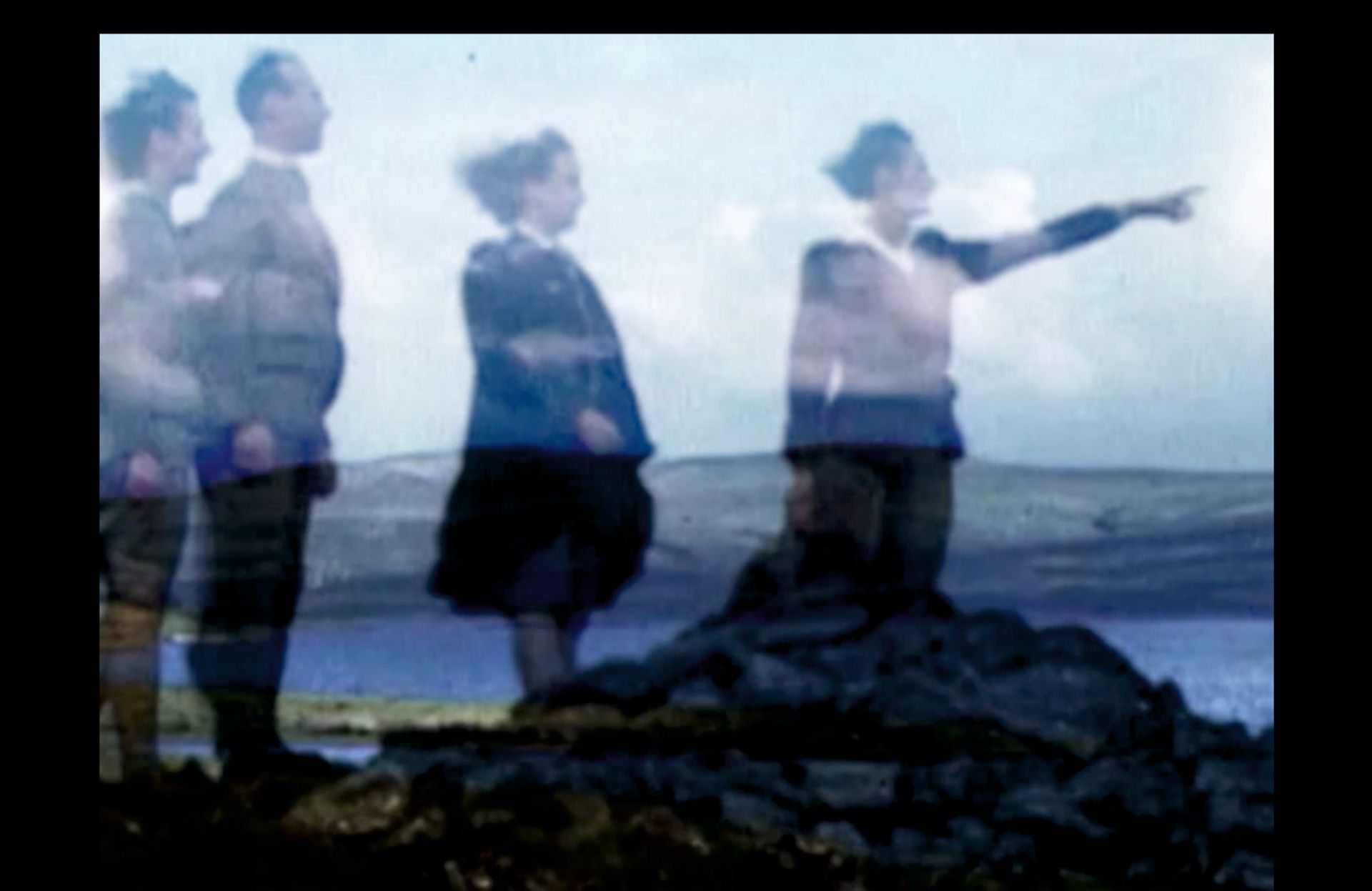
Keira McLean, film still from The Fire That Never Went Out, (2026)
Courtesy the artist and Glasgow International
Like its predecessor, the eleventh GI also has no single theme or title. Rather than shoehorning in a curatorial edict, the festival programme suggests that visitors form “their own connections and resonances”. But such is the quality of projects and programming that this year’s festival feels confident and coherent. There may be no catchy strapline, but there is also no shortage of common and crucial concerns that reverberate through the work by more than 60 participating artists, both local and global. These works occupy more than 30 venues, large and small, permanent and temporary, located across the city.
A highlighting of voices and communities hitherto overlooked or obscured is a core characteristic of this GI. This consideration of the marginalised can take myriad forms and span geographies and generations. Already a widely acknowledged highlight of GI 2026 is the exhibition devoted to the American artist, writer and activist David Wojnarowicz, who died from Aids related illness aged 37 in 1992. Astonishingly, some day this will all be crumbling ruins is Wojnarowicz’s first show in Scotland. It inaugurates The Modern Institute’s new outpost, in a derelict Georgian terrace on the River Clyde that was formerly a strip club.
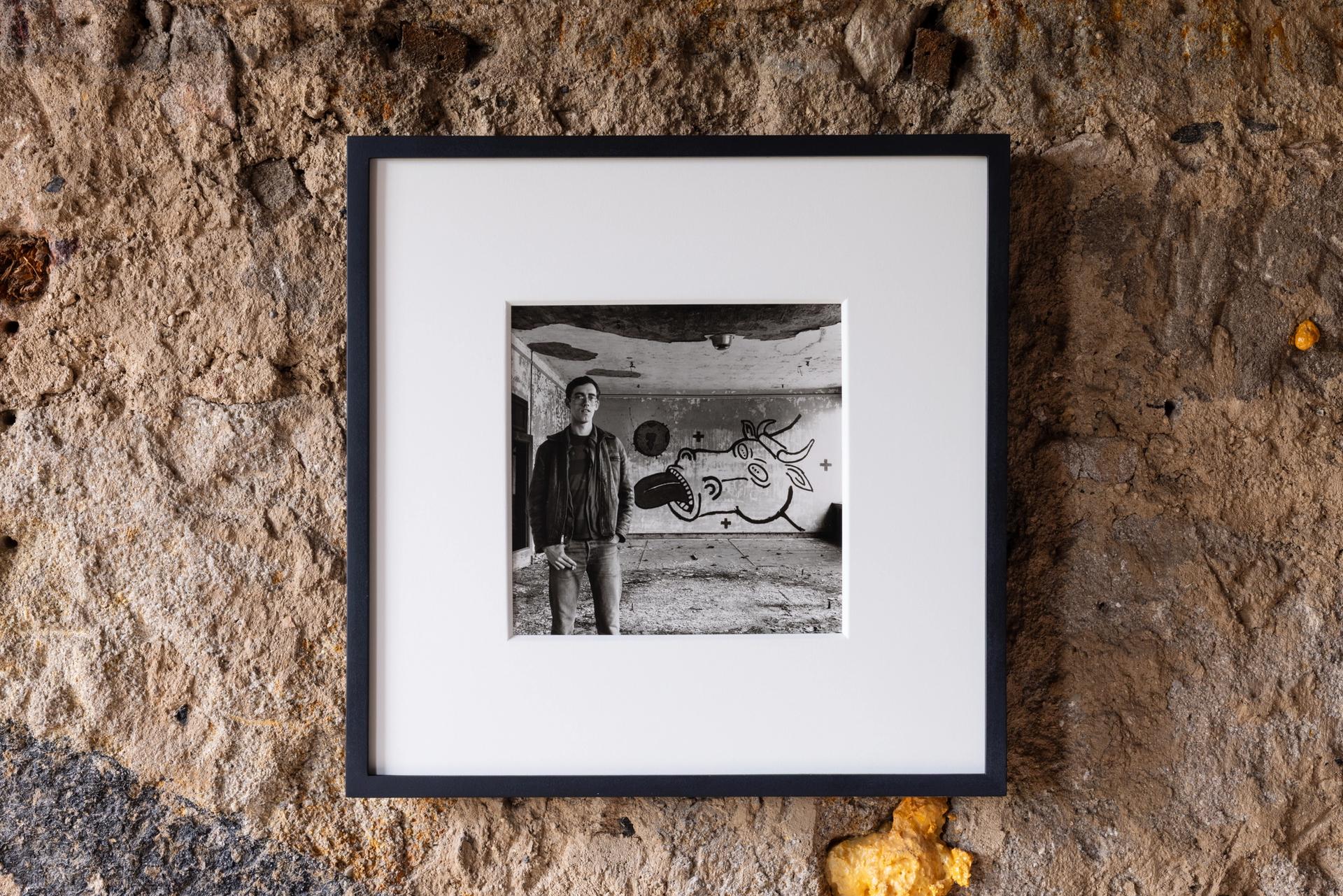
Installation view of some day this will all be crumbling ruins at The Modern Institute, Carlton Place, featuring Peter Hujar, Untitled (David Wojnarowicz with cow mural) (1983)
Photo: Matthew Barnes; Courtesy of the Estate of David Wojnarowicz, P·P·O·W, New York and The Modern Institute/Toby Webster
Ltd., Glasgow
Here photography, paintings and moving image works, which also pay tribute to Wojnarowicz’s friendships with fellow downtown artists including Peter Hujar, Kiki Smith, Mike Bidlo and Marion Schemma, are presented in an atmospherically dilapidated interior. The space powerfully conjures the spirit of the crumbling piers located on the Hudson River that formed such a crucible of creativity—as well as a cruising spot—for New York’s queer underground with Wojmarowicz at its centre in the years running up to the HIV/AIDS epidemic.
Rehana Zaman, film still from Plantation (2025)
Courtesy the artist and Glasgow International
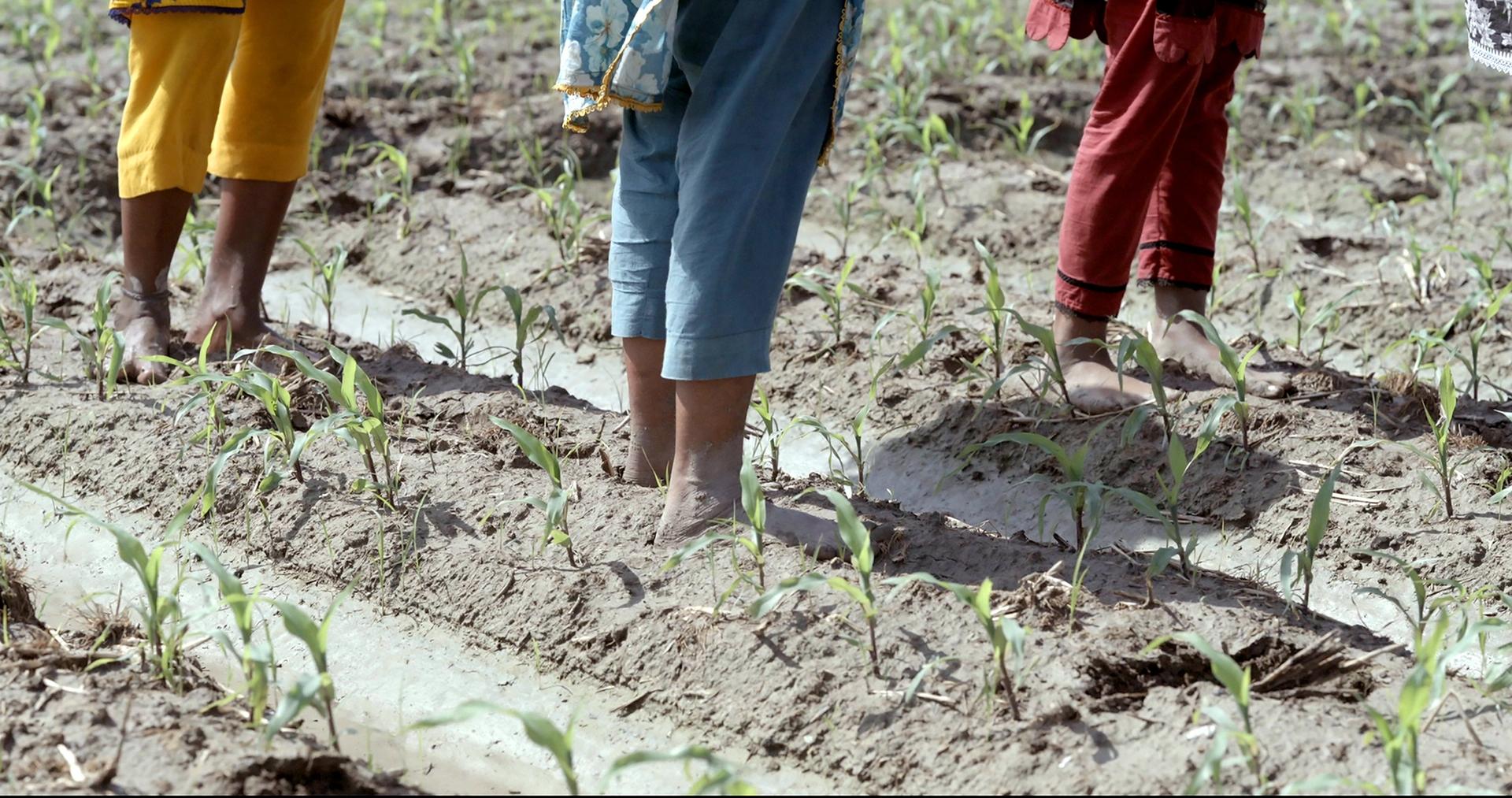
Across town in the cavernous vault of Kelvin Hall, Rehana Zaman’s moving image and sculptural installation Plantation examines the experiences of another grouping that much of society tends to ignore. Two films, one shot in Angus, Scotland and one in Punjab, Pakistan, depict and interview migrant seasonal agricultural workers, sharecroppers, tenants and day labourers as they pick, prepare and transport cash crops on modern industrial farms thousands of miles apart but both still steeped in the extractive, exploitative legacy of the colonial era. At times tender, at times coruscating, both films offer a beautifully shot indictment of the profit-driven processes of agri-business that deplete both land and worker, and taint all of our food consumption. Co-commissioned with Sheffield’s site gallery, Plantation packs a particular punch from being shown in Glasgow’s landmark Kelvin Hall, which formerly hosted exhibitions and trade fairs celebrating the city’s cultural and commercial links to the British Empire.
Jasmine Togo-Brisby, Can you see us now? (2024)
Photo by Max Bull-Crossan; Courtesy the artist and Glasgow International
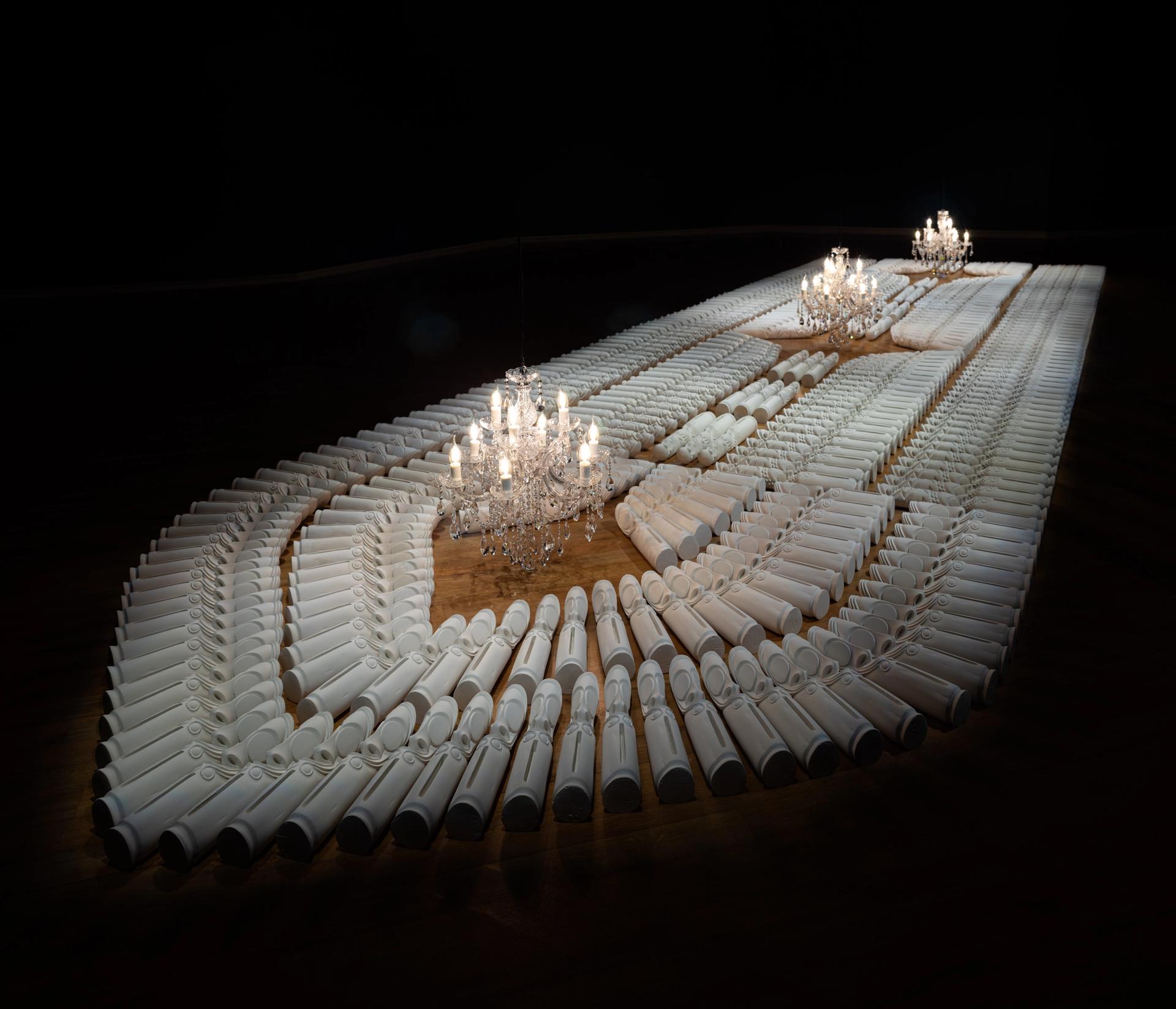
Displacement, enforced labour and the legacy of enslavement are also explored by Australian South Sea Islander Jasmine Togo Brisby in the neoclassical vault of Glasgow’s Gallery of Modern Art (GOMA). Here floorbound sculptural forms made from crow feathers reference the 19th century practice of ‘blackbirding’ whereby Pacific Islanders were kidnapped or deceived into forced labour on Australian sugar plantations; while a tiny archival family photograph owned by the artist forms the starting point for a full sized facsimile of the wooden shack that was home to her displaced Ni-Vanuatu ancestors. The presence of this precarious-looking dwelling is especially resonant within the grand setting of GoMA, which was originally built as the magnificent townhouse of Glasgow tobacco tycoon William Cunninghame, who made his fortune in the transatlantic slave trade. Surrounded by neoclassical opulence, Togo-Brisby’s humble hut stands as a powerful memorial to the lost lineages and undocumented histories of enslaved peoples worldwide.
Naeem Mohaiemen, Through a Mirror, Darkly (2026) installation view, The Hunterian, Glasgow International 2026
Photograph: Eoin Carey; Courtesy the artist and Glasgow International
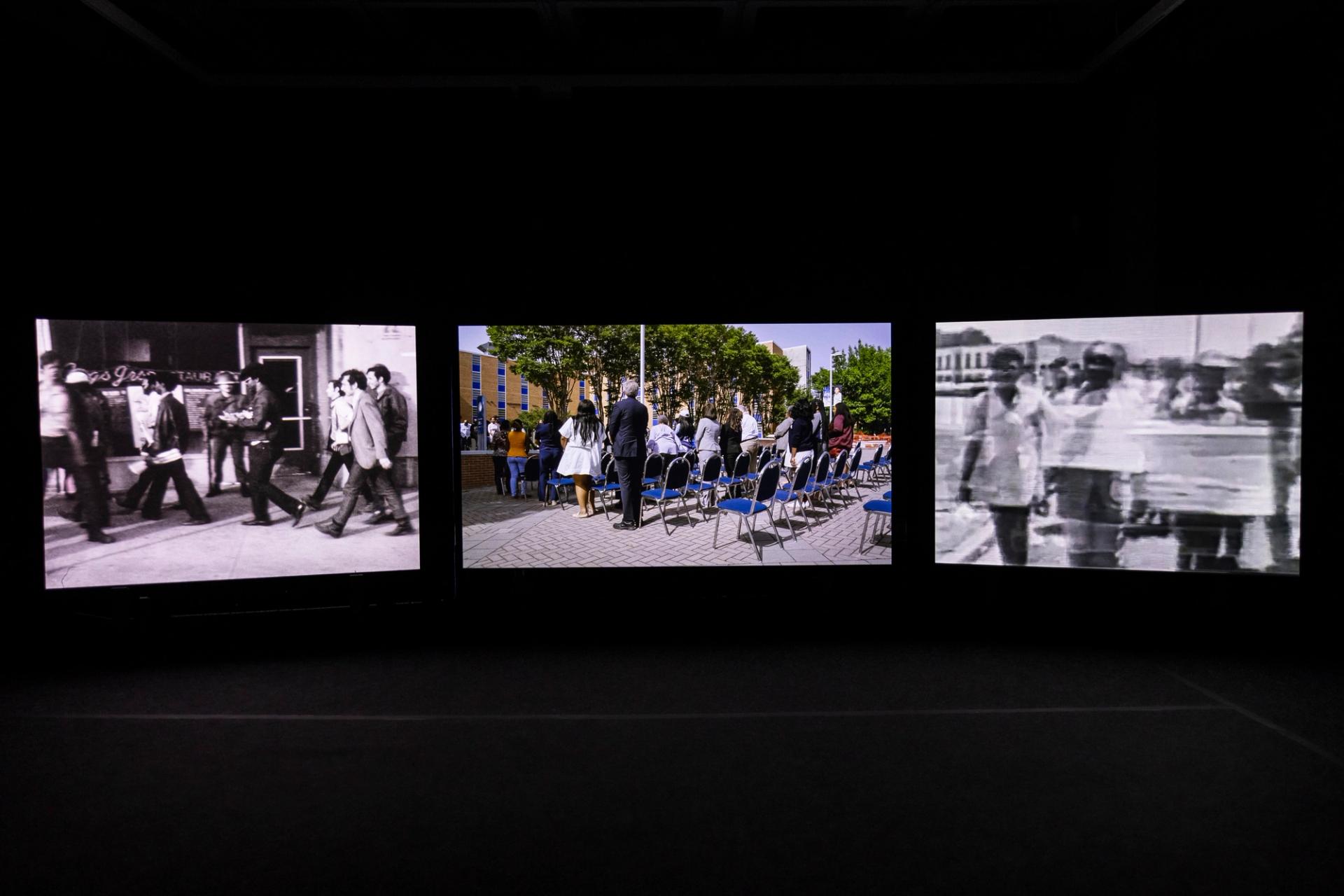
Which histories are remembered and which are sidelined underpins Naeem Mohaiemen’s Through a Mirror Darkly, a film originally commissioned by Artangel and now showing at The Hunterian. Showing across three screens and splicing archive footage with contemporary interviews, it tells the parallel stories of the state shootings in 1970 of students involved in anti-Vietnam and civil rights protests at Kent State University in Ohio and Jackson State College in Mississippi. But while there is an abundance of archival recourses, comment and coverage of “the four dead in Ohio”, as Neil Young called them in his song about the shootings, there is near silence surrounding the two black students killed by police officers ten days later at Jackson State. While Mohaiemen’s film is explicitly concerned with events in the United States during the Vietnam War, it is also ominously topical within the current global climate of campus repression and politically—and financially—motivated warmongering as well as the increasing strictures on public protest being implemented in the UK.
Renèe Helèna Browne, film still of Flat (2026) installation view at The Briggait, Glasgow International 2026.
Photograph: Eoin Carey; Courtesy the artist and Glasgow International
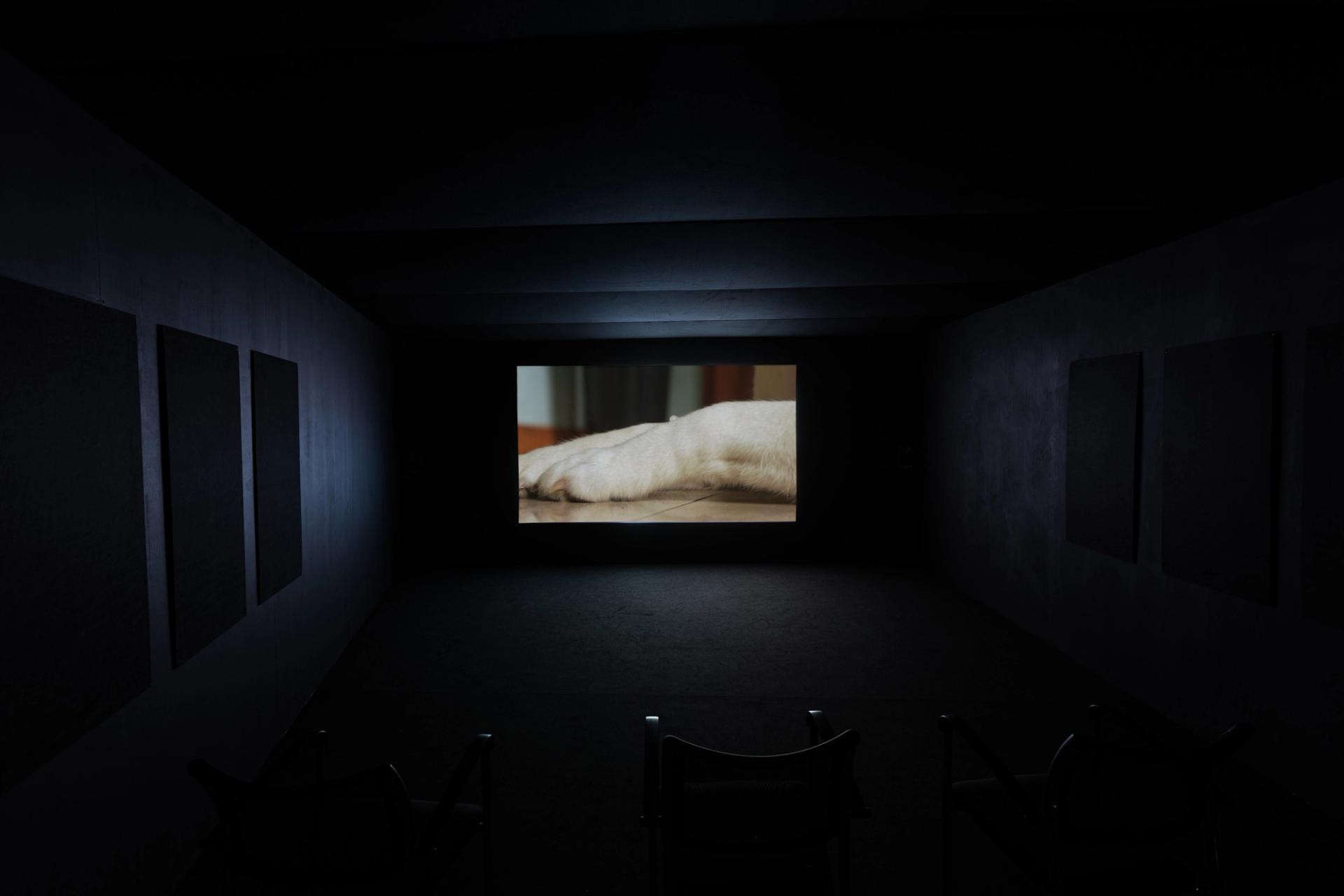
In the face of state indifference sometimes individuals just have to find their own solutions. Renèe Helèna Browne’s powerful and deeply moving film Flat, on show in Briggait, chronicles their elderly uncle as he stoically and singlehandedly designs and builds himself a new dwelling inside a shed in response to his farmhouse being condemned as part of Donnegal’s so-called Mica scandal. But Flat is also about many other things apart from an Irish building materials crisis, as Browne’s tender film touches on intergenerational family bonds, the challenges of old age and the power of self education as well our place in the solar system and resilience in the face of hardship.

Installation view of The Subtle Body at Kinning Park
Courtesy Glasgow International
Kinning Park Complex on Glasgow’s Southside is a site that carries a rich activist history, having been taken over by its community in 1996 following a 55 day sit in led by local mothers. During GI, Kinning Park celebrates its 30th anniversary by hosting The Subtle Body, a show that brings into conversation the archives of Glasgow artist Katy Dove (1970-2015) and Brazilian artist Lygia Clark (1920-1988), both of whom did not receive the attention they deserved in their lifetimes. Dove had a background in psychology and art therapy and in her multimedia creativity combined radical experimentation with a dedication to collaboration and physical gesture. Both Dove and Clark shared interests in bodily knowledge and the power of the subconscious. Brought together, their archives crackle with shared associations. One of the most touching works on show is Dove’s joyous film of dancing primary school children from Easterhouse bathed in her vivid animated projections and also, with happy serendipity it turns out that Dove and her all-female artist band Muscles of Joy also used to rehearse in Kinning Park.
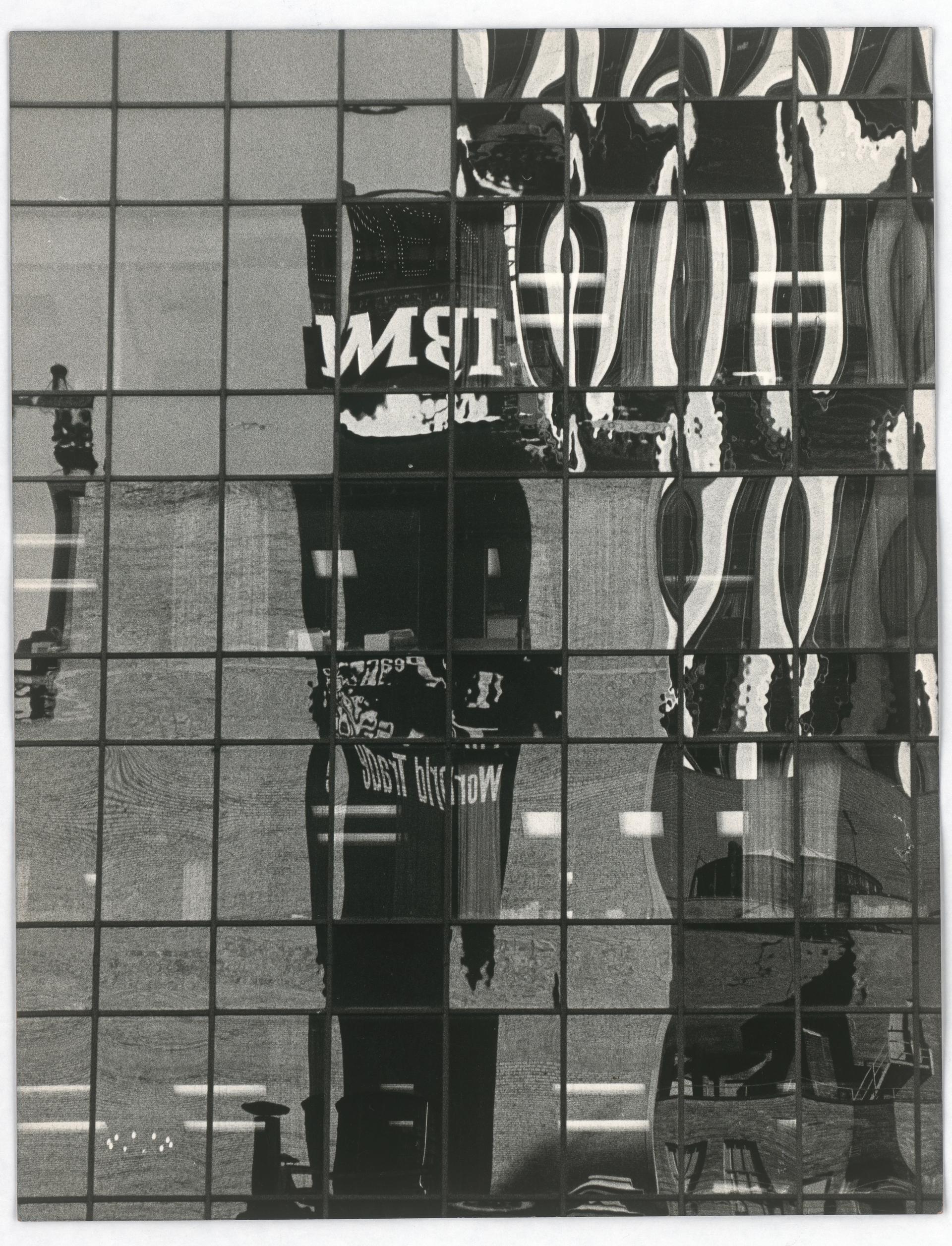
Bettina, Phenomenological New York (1970s)
Courtesy the Estate of Bettina and Ulrik, New York. Photo: Stephen Faught
This inspired pairing is just one example of under recognised women artists given a platform at this GI. Others include the American conceptual artist Bettina Grossman, known simply as Bettina, who lived and worked at the Chelsea Hotel from 1972 until her death in 2021 and whose Finite Structures, a series of interconnected sculptural, photographic and computer assisted animated film works, can be seen in her first UK solo show at Cento Gallery. Another extraordinary figure brought to light is Janet Beat, the pioneering Scottish electronic, elecro-acoustic and musique concrete musician and composer who is now in her ninetieth year and who is beautifully portrayed as the subject of Luke Fowler’s latest film, on show at GLOSS Studios, Florence Street.
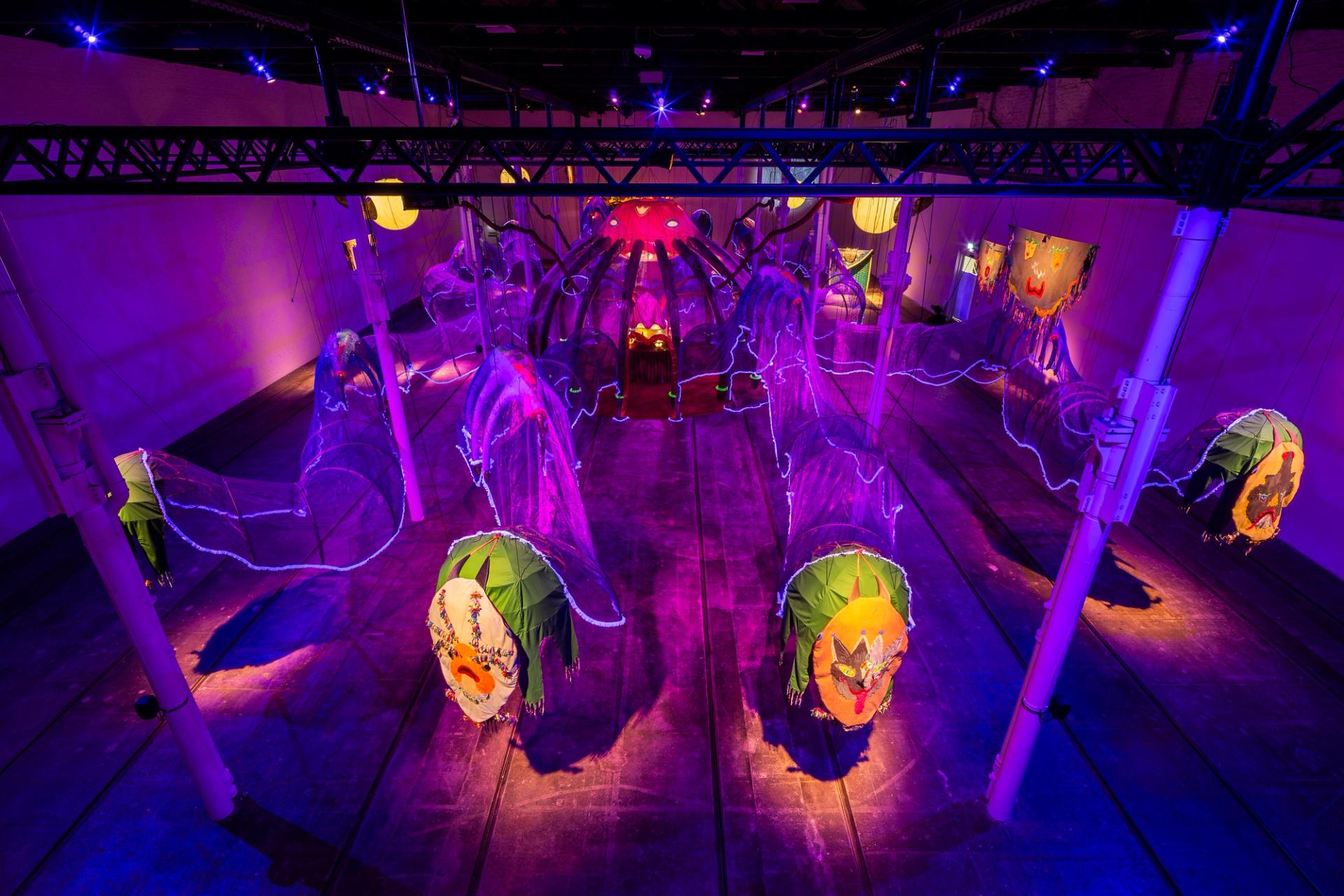
Overall, female empowerment rings out loud and proud throughout this festival. Jill Westwood’s photographs, films and archival materials at David Dale Gallery and Studios present the body as a site of power, trauma, ritual and sexuality in which she is very much the dominant force; while Rae-Yen Song fills Tramway with an extraordinary tentacular gesamtkuntswerk of hand-crafted textiles, blown glass and coloured light that celebrates and combines east and southeast Asian ancestral mythology and Daoist philosophy with forms taken from the microscopic wee beasties inhabiting the pond in her family’s Edinburgh home. Then there are the fabulous giant goddesses created by Anya Paintsil which primp and pose around the walls of Burns St studios which fuse the artist’s Welsh and Ghanaian heritage, drawing on the applique tufting and embroidery Paintsil was taught as a child growing up in North Wales combined with the ancestral Fante tradition of figurative textiles as well as the intricacy of afro hairstyling techniques.
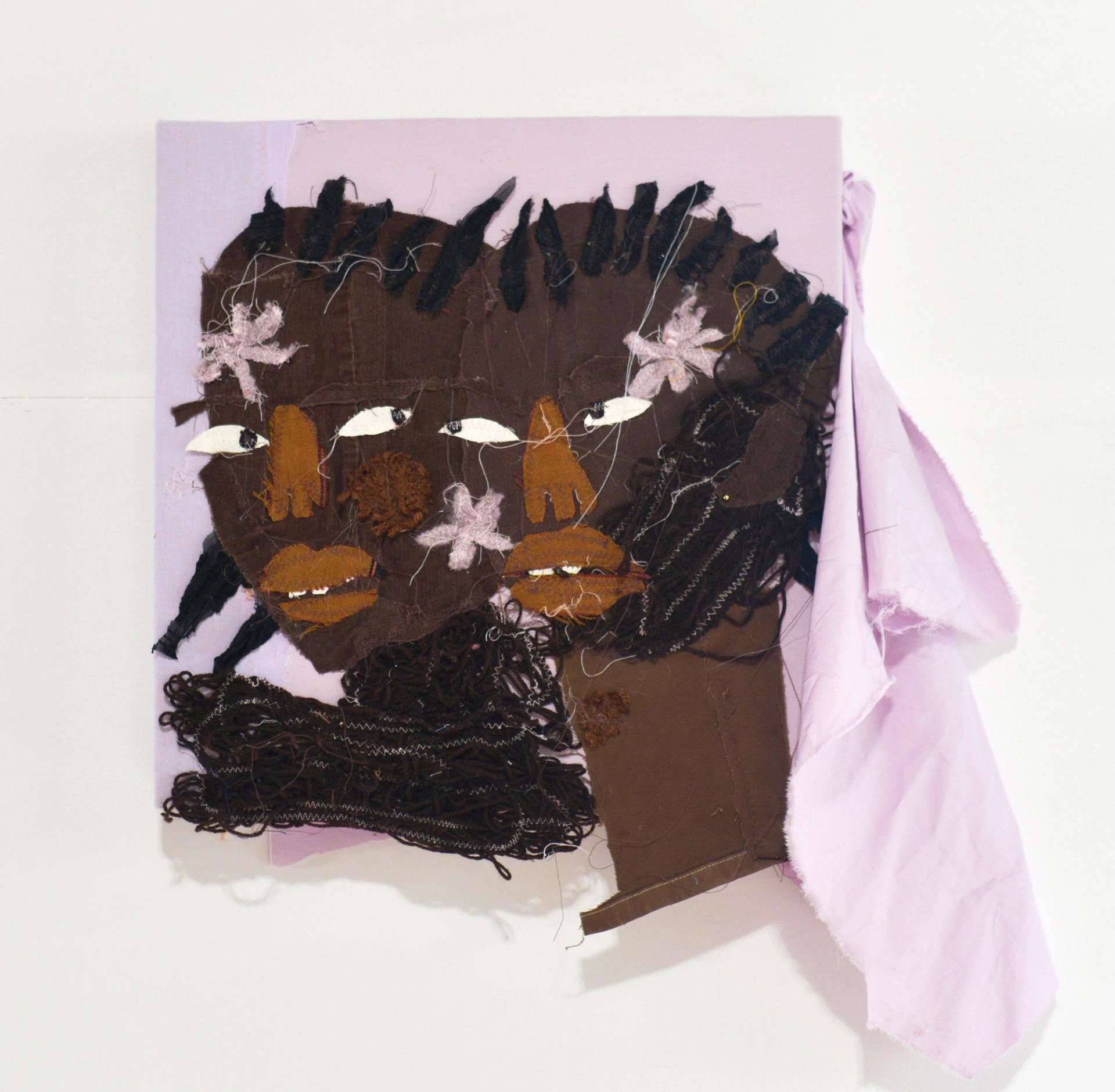
Anya Paintsil, BROTHERS (2025)
Courtesy of the artist and Yavuz Gallery
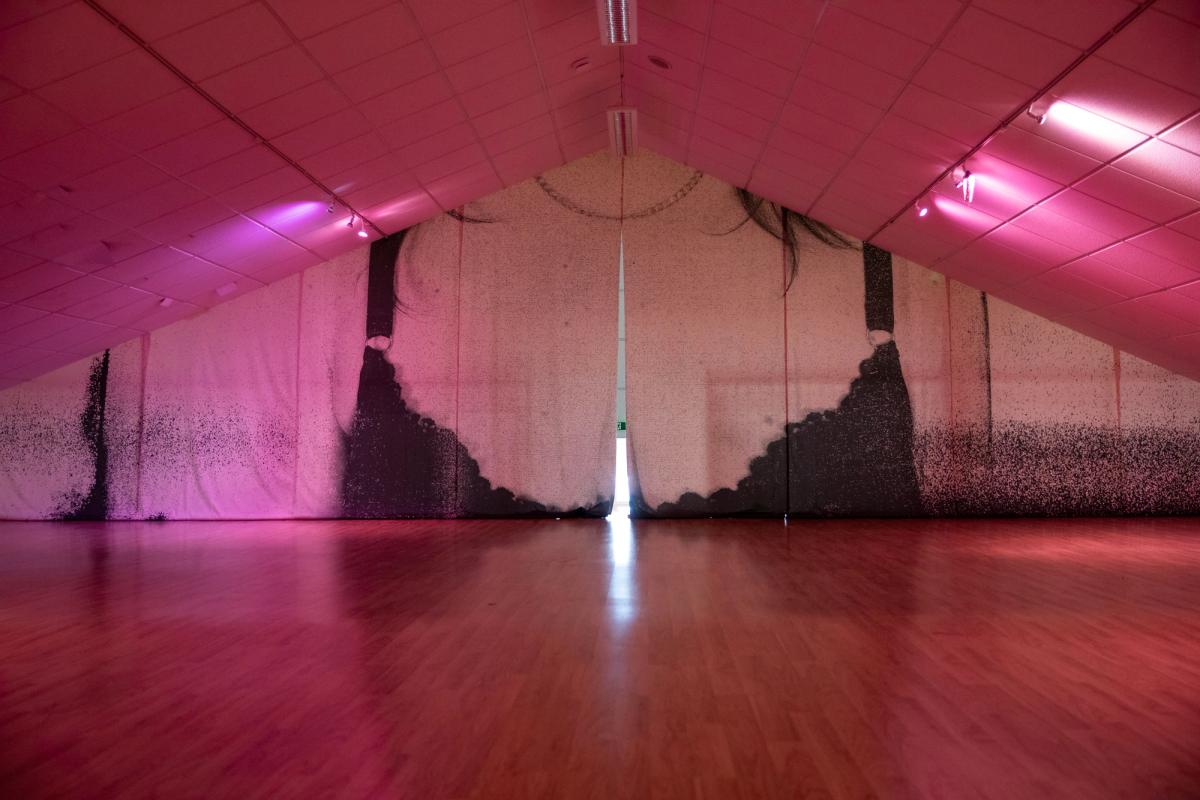
Despite inspiring a gazillion pop songs, there’s been a distinct dearth of artworks dealing with breakups. So all hail Lisette May Monroe who goes where most exhibitions fear to tread - and takes up from where Sophie Calle left off - in a body of work that addresses the intimate pain and trauma of a long term relationship breakup, in this case further compounded by disability and health issues. Glasgow-based Monroe’s Hard Lines at Gulabi Gallery grapples with infidelity, revenge, menopause and the violation of space and trust with an installation of found objects, a moving image work and photographic images. These are all presented with a coolly formal rigour, but this is complicated and the emotional ante upped by the entire show being drenched in hot pink light, while the only way to enter is through a hugely blown up image of the artist’s cleavage.
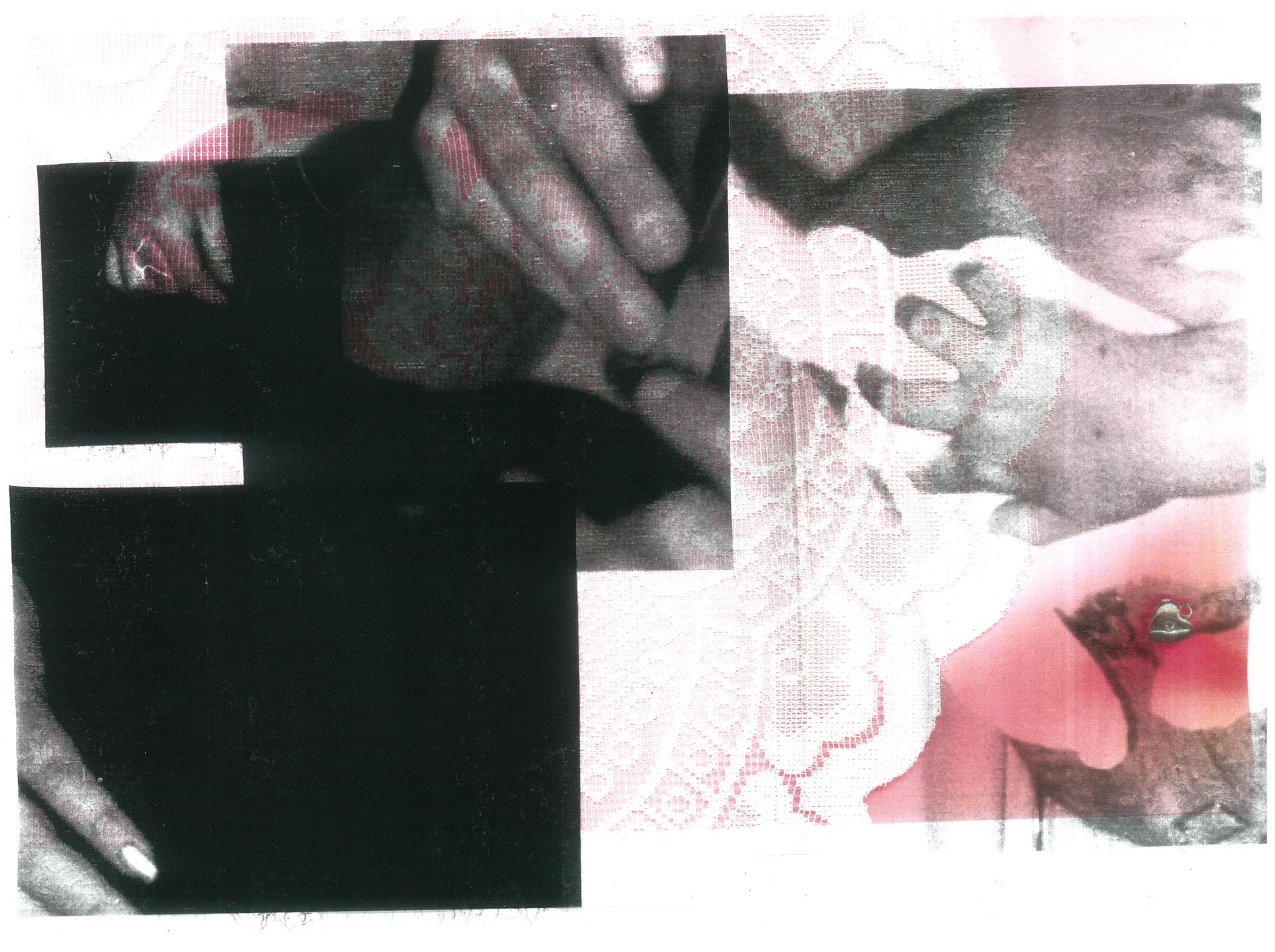
Lisette May Monroe, Hard Lines (2026)
Courtesy the artist and Glasgow International
Hard Lines also takes to Glasgow’s streets with photocopied pink images of the locket that revealed the affair strikingly emblazoned on billboards throughout the city. As Monroe’s film back in the gallery confirms, the object itself now resides in given a watery grave in the River Clyde. This gloriously defiant act of creative revenge is yet more testament of how this most democratic and inclusive of GI’s celebrates the power of art and gives it multiple voices to permeate every part of the city. As Glasgow International 2026 confirms, the Glasgow art scene may be somewhat battered, but it is definitely unbowed.
- Glasgow International 2026, multiple venues across Glasgow, Scotland, 5-21 June 2026