

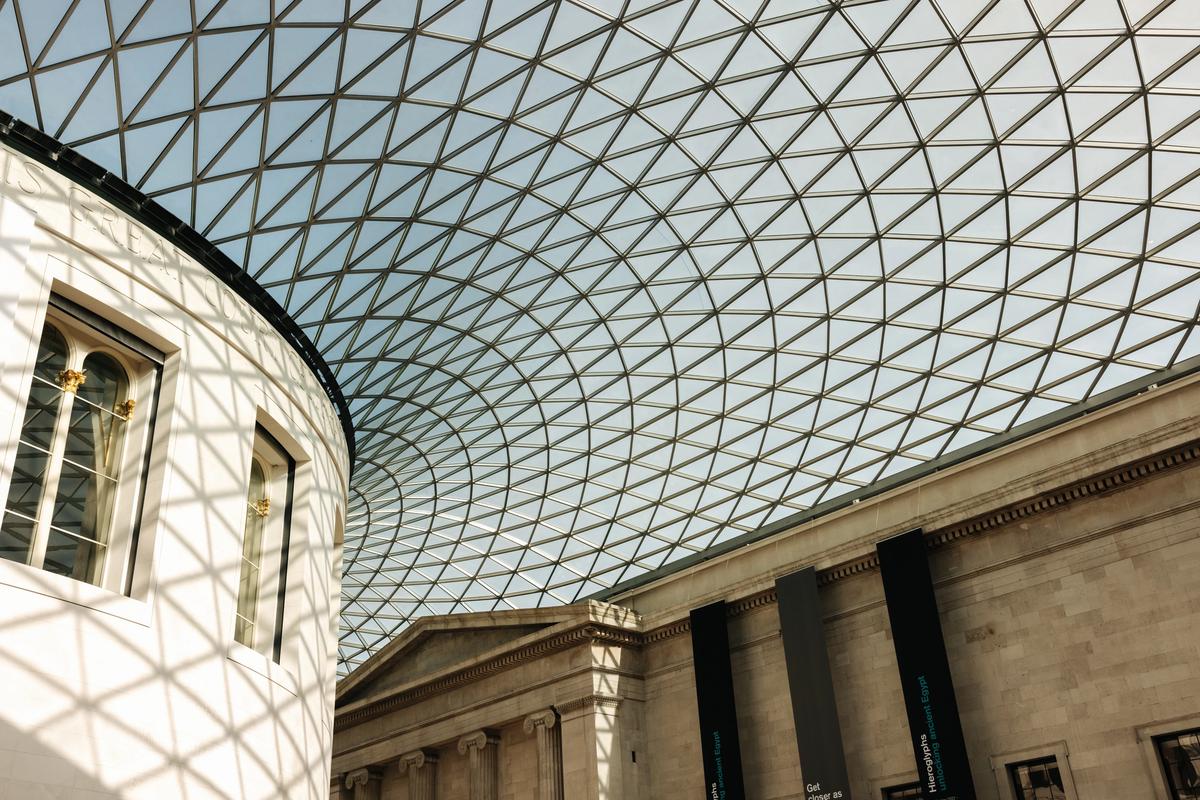
Nicholas Cullinan, the director of the British Museum, has defended the decision to postpone a public talk on Jewish culture, saying that “the answer cannot be to abandon difficult conversations” in “uneasy times”.
The museum postponed a Jewish Culture Month event, scheduled to take place 28 May, due to concerns it would be disrupted by a planned protest. Paul Collins, the keeper of the Department of the Middle East, was due to lead the lunchtime talk on the histories of the kingdoms of Israel and Judah.
Up to 50% of registered attenders were suspected protesters, the museum says. The move was initially criticised by some culture commentators, including the historian Simon Schama, who said on X that it was “absolutely the wrong decision”.
An online description of the event states: “Material remains, monuments, reliefs, inscriptions and documents, shed light on the political, cultural and imperial forces that shaped the region between approximately 900 and 50 BC. Some of the most significant of these objects are preserved in the British Museum."
In an online statement, Cullinan wrote: “A lecture on Ancient Israel and Judah, delivered by a senior curator, ought not to be controversial in one of the world's leading institutions of scholarship. Yet this week it became a flashpoint in a wider national argument about protest, intimidation and the limits of free expression. The event was not cancelled. It was postponed. That distinction matters.” The talk has now been scheduled for early June with details to be published online.
The British Museum faced competing obligations, Cullinan adds, saying that thousands of visitors, including school groups, would have been in the building at the time of the talk. “Those attending the lecture had a reasonable expectation that they would be able to hear it and not unwittingly made a captive audience for another purpose. The curator delivering it had a right to do so without organised attempts to silence them. Balancing those responsibilities is not censorship; it is stewardship.”
He adds: “The deeper issue is one that extends far beyond a single lecture. Across Britain, cultural institutions increasingly find themselves caught between opposing political pressures. The temptation is to interpret every operational decision through the lens of ideology. Yet not every decision is political.”
The Board of Deputies of British Jews, a representative body for the UK Jewish community, announced last year that it was launching Jewish Culture Month, with more than 100 events taking place across the country from 16 May celebrating Jewish history and culture. The Tate, Victoria and Albert Museum and Museum of the Home in London are among the other institutional participants.
Earlier this year the British Museum was mired in controversy after allegedly removing the word “Palestine” from its labels in response to pressure from the advocacy group UK Lawyers for Israel (UKLFI). An investigation by The Art Newspaper discovered that changes to the labels were made prior to the letter that the UKLFI sent to the British Museum in early February. Several scholars interviewed, however, queried the wording used in the new labels.