

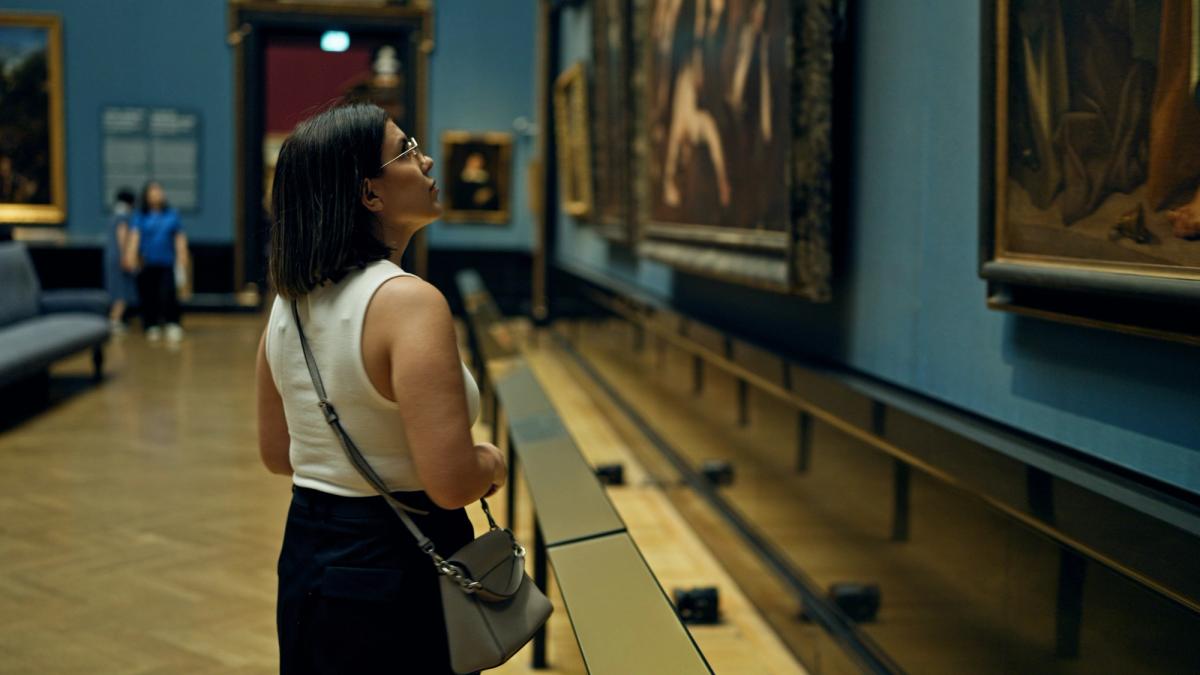
Engaging in arts and cultural activities has been linked with slowing biological aging, a new study has found. The results of the research from University College London (UCL), published in the journal Innovation in Aging on 11 May, shows that participating in arts—such as singing, dancing, painting and crafting, as well as attending art exhibitions and visiting heritage sites, museums and libraries—helps people stay biologically younger. It is the first study of its kind to demonstrate such a connection.
The study of 3,556 adults in the UK used blood samples to analyse epigenetic clocks—which measure changes in DNA as a person gets older—and ascertain people’s biological ages (rather than chronological ages). Survey responses, meanwhile, provided insight into the regularity of participation in cultural activities.
In one test, the biological ages of those who engaged in cultural activities monthly were 0.8 years lower than those who only participated once or twice a year, while those who engaged weekly had a biological age 1.02 years lower.
“Our study found that it’s not just about doing arts regularly, but also about doing a range of different arts activities,” says Daisy Fancourt, the lead author of the research and the head of the Social Biobehavioural Research Group at UCL. “Each type of arts activity—reading, making music, going to cultural performances, visiting heritage sites etc—has different effects on us cognitively, emotionally and physiologically. So engaging in a diverse range of activities—just like having lots of different plants in our diets—is most beneficial for our health.”

The research also found that the relationship between arts engagement and biological aging becomes larger and more important as we get older, Fancourt says.
The study—which suggests that participating in arts and culture is as, if not more, beneficial to biological aging as engaging in physical activities such as running, skiing and yoga—concludes that creative activities should be included in public health strategies. “This research highlights that arts engagement is a health-promoting behaviour. As such, it’s important that we don’t just treat it as a luxury in our lives but an essential,” Fancourt says. “Regular—ideally daily—creative engagement is important to promote, just like we promote 10,000 steps a day or five-a-day of fruits and vegetables.”
These results are the latest in a string of recent studies that aim to prove a connection between art and improved health, such as those undertaken by the Jameel Arts & Health Lab. The UCL’s recent research project is part of a new £3.5m seven-year programme of work funded by Wellcome, led by UCL, to understand the global and molecular impact of arts engagement as a health-promoting behaviour.