

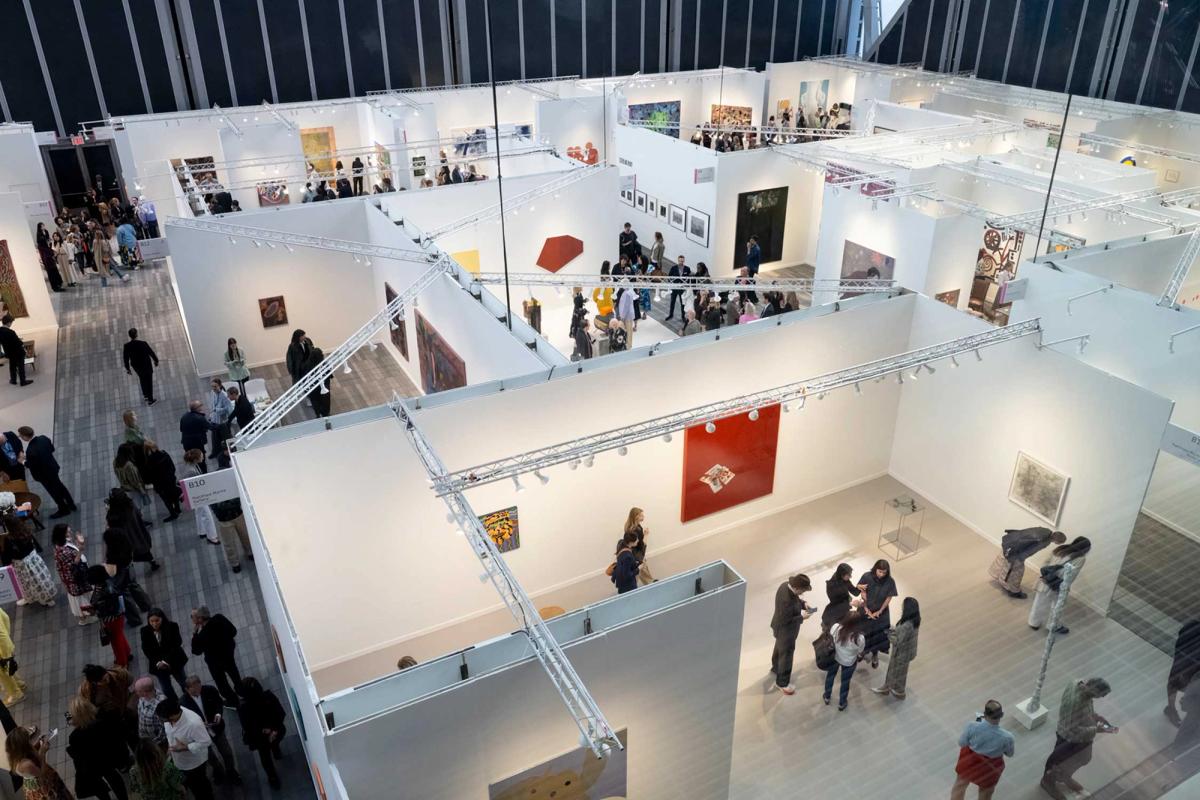
Frieze New York returns with a broader international presence, but the fair remains firmly anchored in its home city, where nearly half of exhibitors have a base.
The 15th edition of Frieze New York (until 17 May) brings 67 galleries from more than 25 countries to the Shed. The fair’s reach continues to expand, particularly with increased participation from Latin America, its organisers note. But the concentration of New York-based galleries underscores the city’s enduring place at the centre of the global art market.
This year’s edition includes several first-time participants, among them Europa, Ulrik and Sargent’s Daughters from New York, Soft Opening from London and W-Galería from Buenos Aires. The fair’s ambitions to include international voices is clear from the large Latin American contingent, with 14 galleries from the region taking part.
“I’ve watched the evolution of the fair over the years,” says Christine Messineo, Frieze’s director of fairs for the Americas. “I’m really proud of how international it feels now. This year, it felt particularly important to foreground that sensibility.” She points to strong participation from Brazil, Argentina and across Latin America as evidence of that shift.
Still, New York remains the fair’s defining context. For the city’s top blue-chip galleries, Frieze New York is a chance to present work on its home turf, in many cases just blocks away from their Chelsea spaces. Recent data underlines the city’s continued dominance in the global art market. The latest Art Basel and UBS Art Market Report, released in March, found that the global market grew by 4% in 2025, to $59.6bn in sales, following two years of decline. The US continues to lead, accounting for around 43% of global art sales, and more of those transactions happen in New York than any other city in the country. That makes Frieze New York and the concurrent gallery programming and fairs surrounding it even more important to the larger art world.
‘Catalytic role’
“Frieze fairs play a catalytic role. There’s this momentum across the city and, in New York specifically, it anchors a much larger cultural moment,” says Samanthe Rubell, Pace Gallery’s president. “There’s this opportunity to demonstrate what your gallery and artists represent, and how they sit within the contemporary landscape and the greatest art city in the world.”
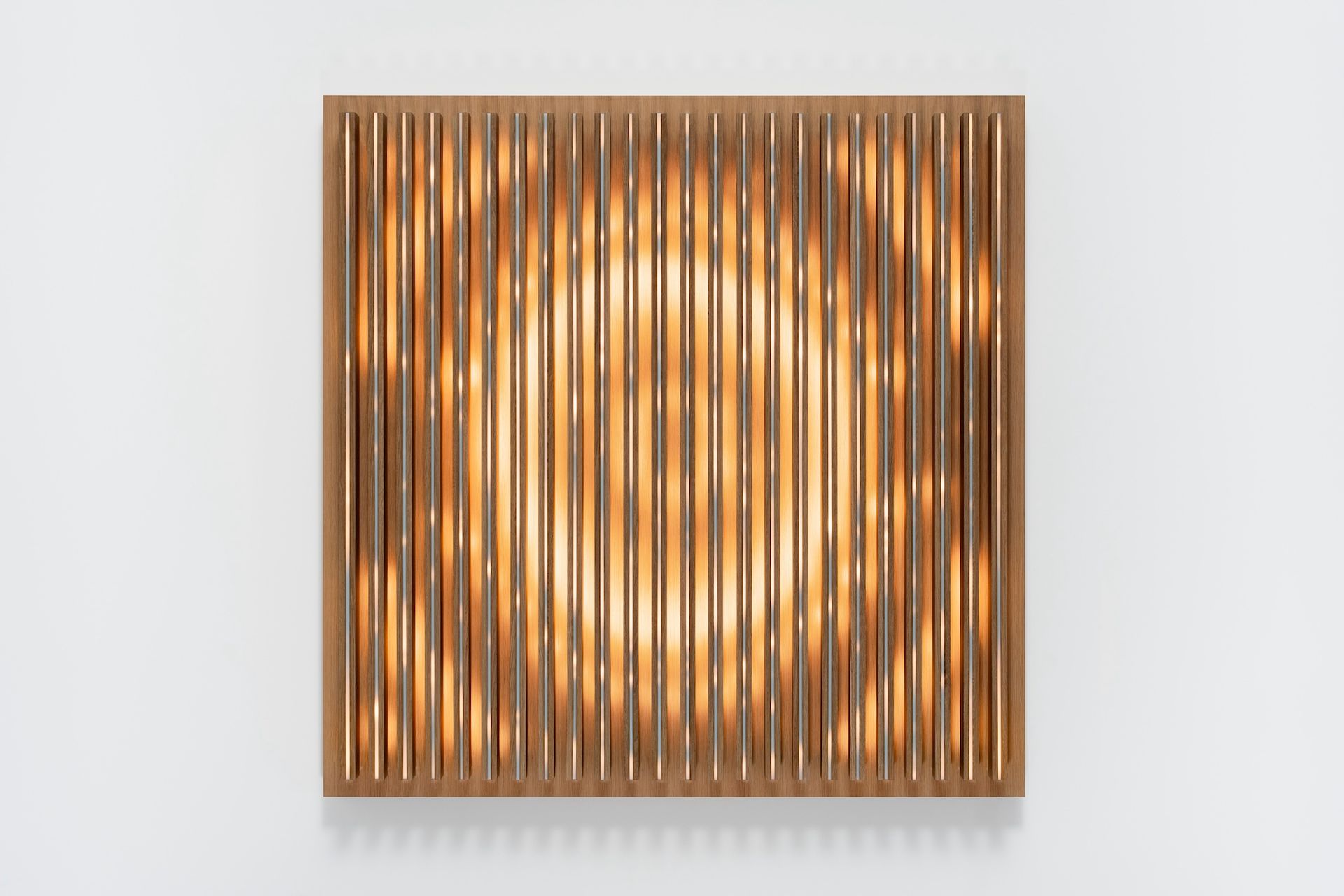
Leo Villareal, Golden Game (Medium) 9, 2026 Courtesy of the artist and Pace Gallery
Pace is showing works by Maya Lin and Leo Villareal at the fair, pairing two artists with strong histories of making public work. Around five blocks south of its Frieze stand, the gallery marks the important week on New York’s art world calendar by opening solo exhibitions dedicated to Emily Kam Kngwarray, Julian Schnabel, David Hockney and Paul Thek.
Collector confidence has improved following several solid auction seasons and reports of strong sales at recent major fairs, even as geopolitical instability, war and tariffs continue to shape larger economic conditions. The market appears to be in a state of careful recovery.
“In the past few months, it’s notably strong, especially heading into Frieze,” Rubell says. “So much of that momentum is being generated from established collectors who went on pause and have come back to the surface, rather than a significant influx of new collectors. The market seems less local and more globally tied together, despite all of the geopolitical uncertainty.”
Alongside its established galleries, Frieze New York continues to position itself as a platform for younger dealers through its Focus sector for galleries founded less than 12 years ago. Among them is Sargent’s Daughters, the Tribeca gallery founded by Allegra LaViola, which makes its debut at the fair this year. The gallery presents a solo stand of sculptures by the Mexico City-based artist Yeni Mao. His practice combines industrial materials with organic references, producing objects that are at once highly finished and viscerally charged.
“His work is metal and has a sort of dark energy coursing through it but is very related to the body,” LaViola says. “So, while the works are at once extremely polished and almost cold in the materials that he’s using, the subject matter is very alive, because he’s constantly referencing the body and our animal nature.”
Strong visibility
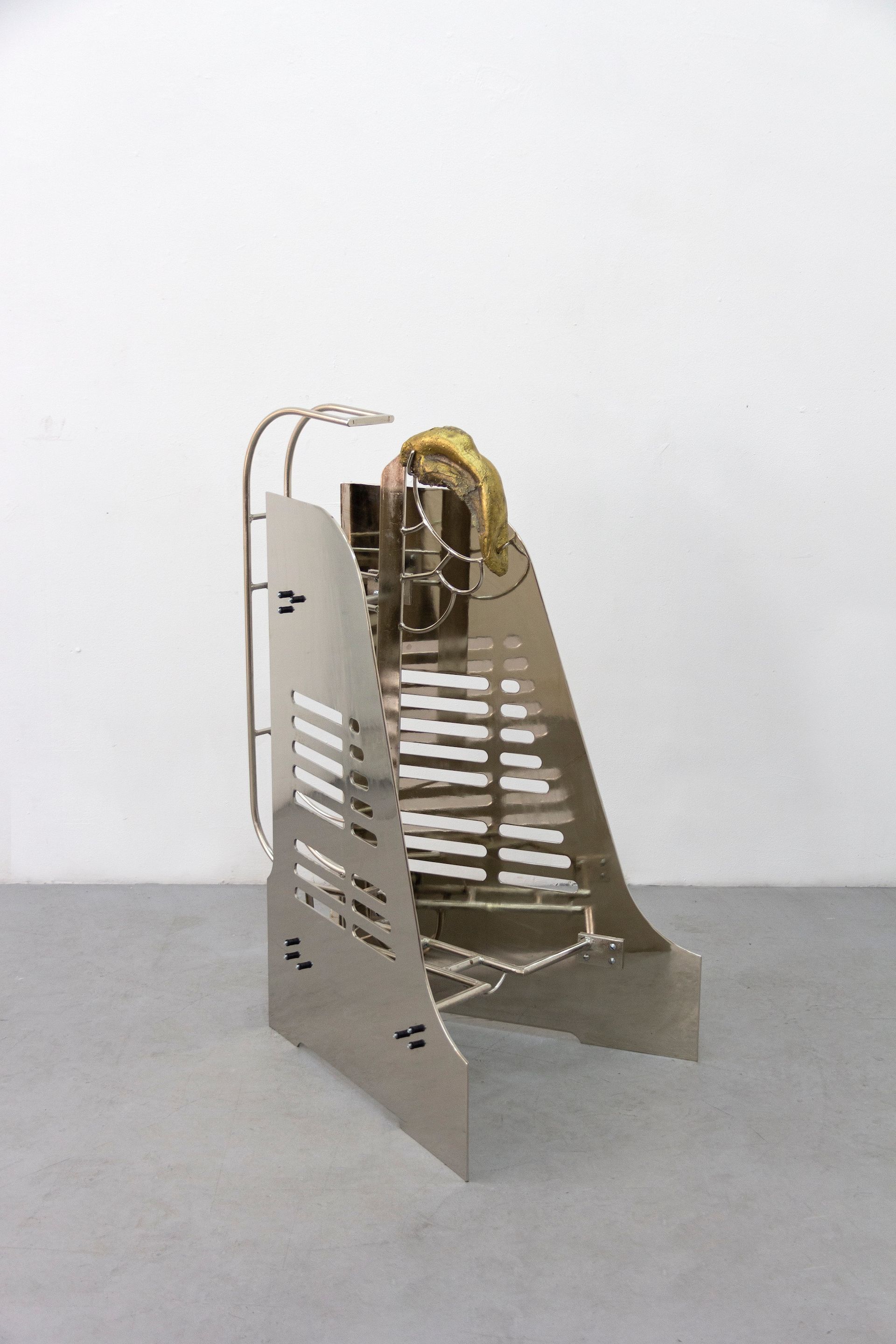
Yeni Mao, fig 46.2 you belong to me, 2026 Courtesy the artist and Sargent's Daughters
One work, incorporating a cast cow tongue, often provokes a strong response in viewers, she says. “The cow tongue is a different size than a human tongue, but your brain kind of recognises it as something, and then as it gradually penetrates your consciousness, you understand that it’s an animal’s tongue. That’s somewhat revolting,” LaViola says. “He is using that inherent instinctual revulsion to disrupt the idea that we are somehow separate from animals.” Works on the stand are priced between $8,000 and $20,000.
For smaller galleries, New York fairs can offer strong visibility and rapid-
fire engagement, even for dealers with a presence in the city.
“There are just people who, despite being in New York, either don’t come to the gallery or come to the gallery and don’t buy anything from a show. But they very often do buy things at art fairs,” LaViola says. “Doing an art fair is always a nice way to reconnect with people in a very short period of time. You have a high volume of eyeballs on the work, and you’re talking to a lot of people. And I think because an art fair does have that commercial element to it, they are thinking about the sales, too.”
Even with the recent signs of momentum in the art trade, the commercial outlooks for Frieze New York, the many concurrent fairs around Manhattan and the marquee spring auctions remain difficult to predict. External factors continue to shape the market in complex ways.
“It’s not as though there’s a crystal ball,” Messineo says. “But if we look at our most recent experience with Frieze Los Angeles, there was a clear sense of resilience and eagerness to engage in the art market.”
- Frieze New York, 13-17 May, The Shed, New York