

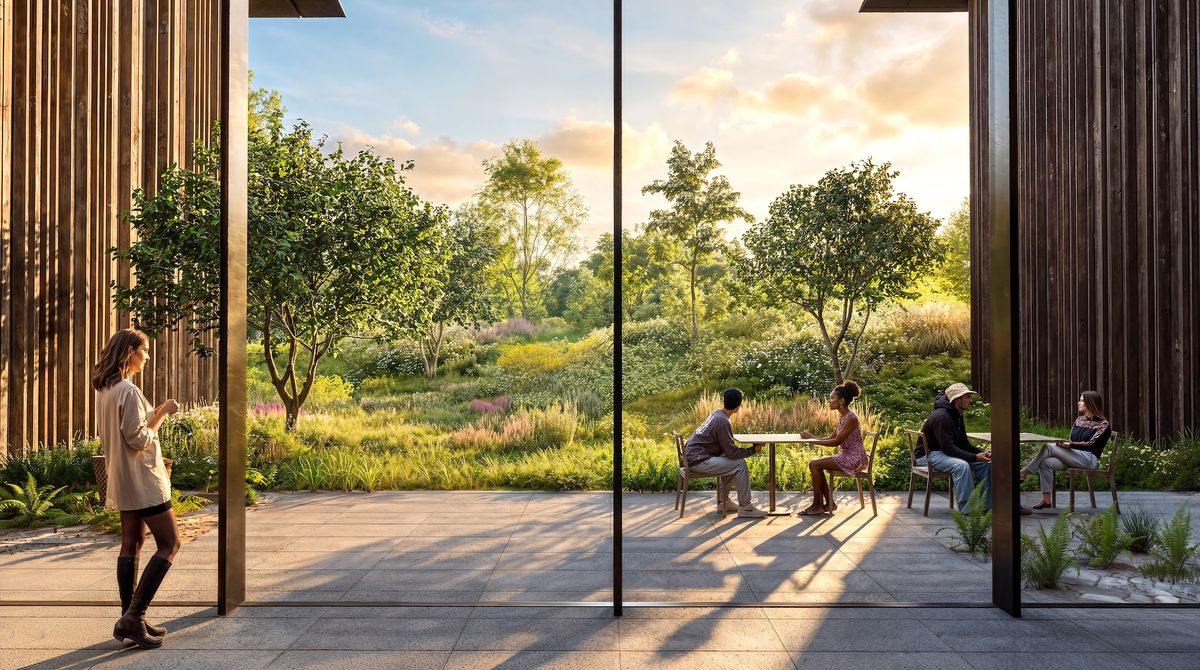
The Brandywine Conservancy & Museum of Art in rural Chadds Ford, Pennsylvania—both an organisation devoted to American art and a land trust founded in 1967—has selected the architecture firm Kengo Kuma & Associates, in partnership with the landscape architects Field Operations and Schwartz Silver Architects, to transform its 15-acre campus into a 325-acre public preserve and garden anchored by two museum buildings.
The estimated $100m project includes construction of a new freestanding 40,000-sq.-ft museum building, expected to break ground next spring and open in autumn of 2029, and renovation of its existing museum, a converted 19th-century grist mill along the Brandywine Creek. A new system of walking trails, to be introduced to land owned by Brandywine but not previously accessible to the public, will connect the two museum buildings in a bucolic ten-mile loop with the original studios of the artists N.C. Wyeth and Andrew Wyeth—two titans of the prominent artist family that has lived and worked in the Brandywine Valley for 130 years.
“We love the idea that visitors will be able to see works by the Wyeth family hanging in the gallery and then just walk over to where a lot of that art was created,” Thomas Padon, the director of the Brandywine Museum of Art, tells The Art Newspaper. The two historic studios, gifts to Brandywine from the Wyeths, are currently open by reservation only and via shuttle bus.
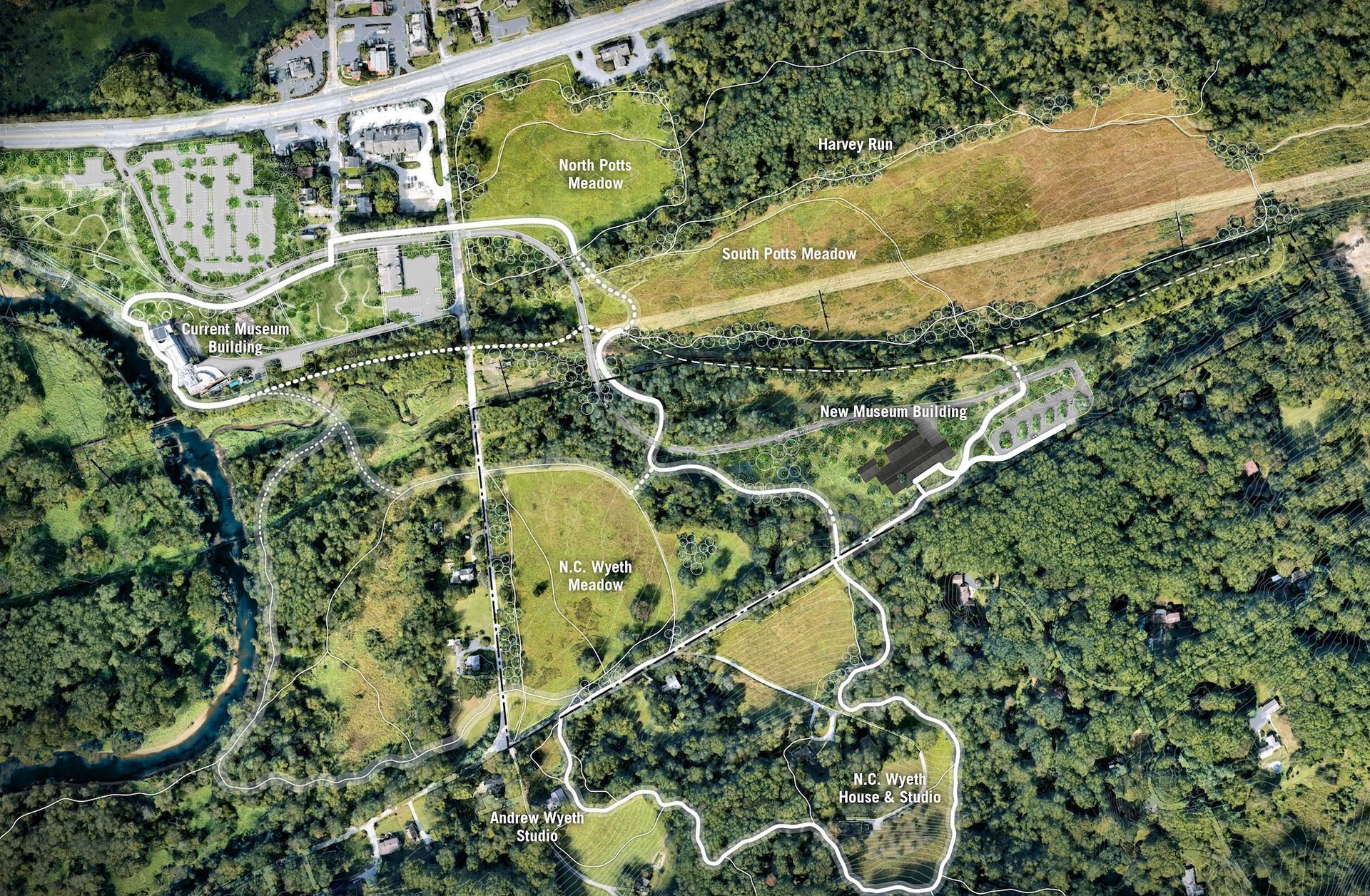
Site plan of the coming Brandywine Conservancy & Museum of Art expansion Courtesy of Kengo Kuma & Associates and Field Operations
To date, Brandywine has raised almost 50% of the project's estimated cost, including contributions from the Wyeth Foundation for American Art and individual Wyeth family members.
Sited on a wooded hillside ten minutes by foot from the current museum, Kengo Kuma's new building is the Tokyo-based partnership’s first art museum designed for the US. It is envisioned as a group of four shed-like pavilions clad in wood and flanking a long central entrance space that yields expansive views of the nature preserve in three directions. From there, visitors will be able explore the adjoining gallery pavilions showcasing the collection rich in landscape, still life, illustration and unparalleled holdings of three generations of Wyeths—including N.C., who bought land in the area with earnings from his successful career as an illustrator, and his children Andrew, Carolyn and Henriette and grandson Jamie.
Brandywine's “mission was so clear connecting landscape and artwork that, for us, it was a missed opportunity if we didn’t put the landscape experience first”, says Balázs Bognár, Kengo Kuma’s partner in charge of the project. His design team found inspiration in a dirt path that Wyeth family members long used to wander through the landscape from the meadows up to the new museum location (this route is preserved untouched in their plan). “We felt this project was not just a physical building but an entire art terrain visitors are coming through,” Bognár says.
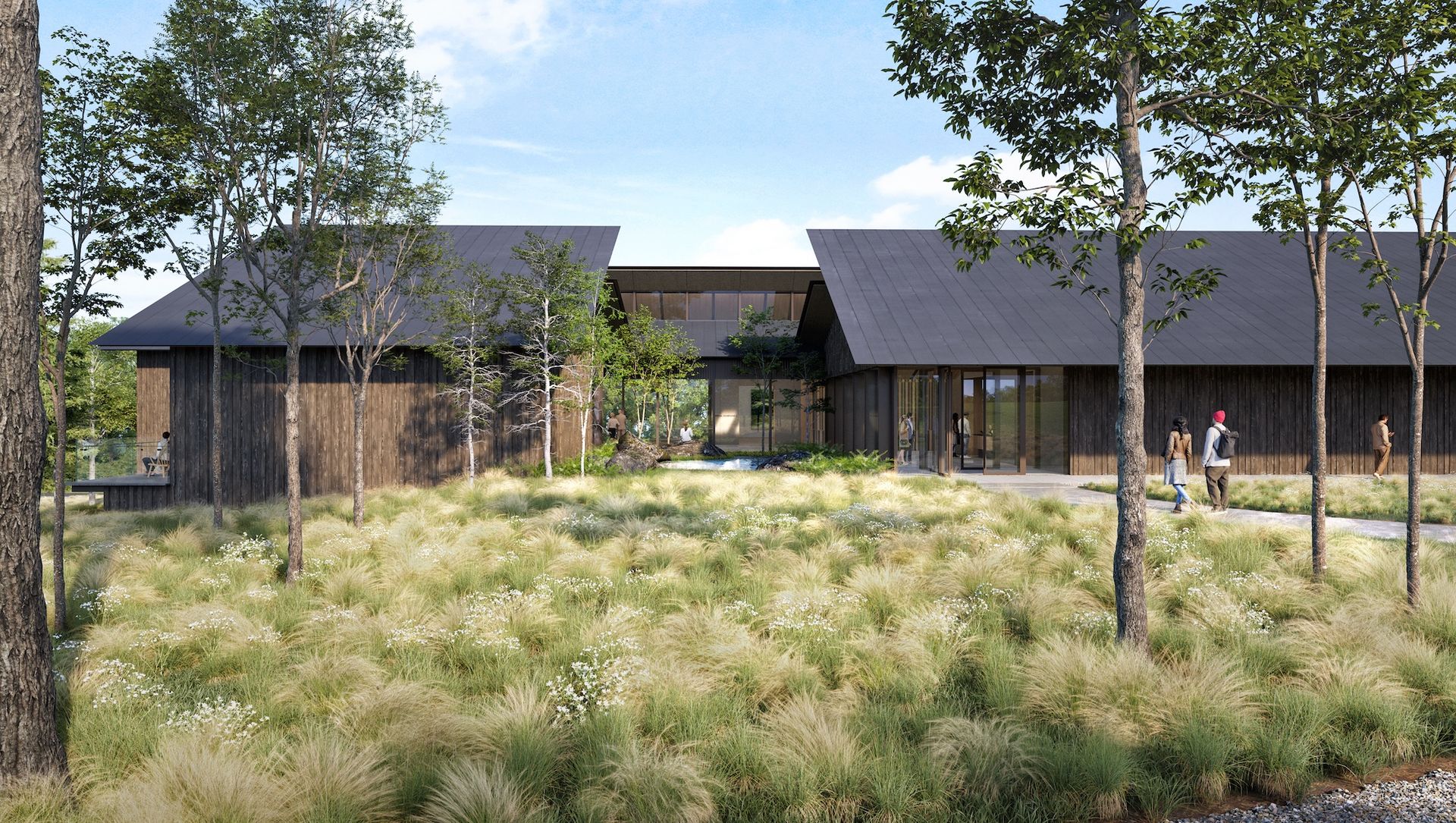
Exterior rendering of the new museum building at the Brandywine Conservancy & Museum of Art Courtesy of Kengo Kuma & Associates and Field Operations
Kengo Kuma was chosen from a pool of 32 architecture firms initially approached, then winnowed to six teams invited to submit full proposals and three finalists for half-day interviews. As a springboard for that dialogue, the design team (including Field Operations and Schwartz Silver) laid out a 15ft-long still life of natural materials they had collected on site, including a couple of railroad spikes. “Their approach and dynamic led the selection committee to a very quick unanimous decision,” says Virginia Logan, the executive director and chief executive of Brandywine, confident that Kengo Kuma would “create the museum building we need, in complete harmony with its surroundings but also reflective of our organizational identity”.
Brandywine aims to increase its current annual attendance of almost 100,000 by at least 20% when the expansion is completed.
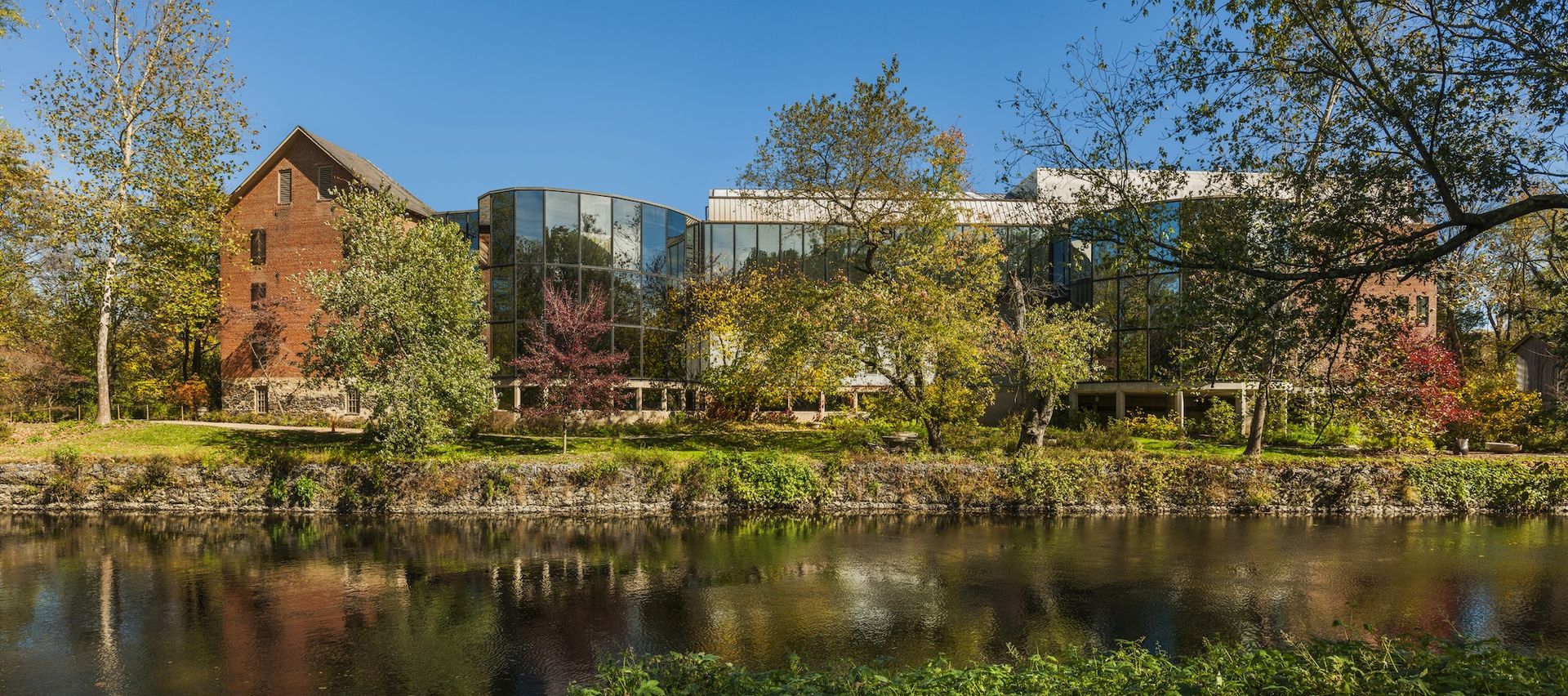
The existing museum building at the Brandywine Conservancy and Museum Photo by Tom Crane
The new building will provide 14,000 sq. ft of flexible galleries. A large space dedicated to landscape will show that collection in depth for the first time, spanning 19th-century figures like Albert Bierstadt and Martin Johnson Heade to contemporary artists such as Dawoud Bey, Wolf Kahn and James Welling. Another substantial space will group all five Wyeth artists in intergenerational conversation, with a smaller gallery spotlighting Andrew—best known for his 1948 painting Christina’s World in the Museum of Modern Art’s collection in New York—to be relocated from the mill building.
“This is a seismic opportunity for us to really show the strengths of our collection,” say Padon, who is excited as well to have two new special exhibition galleries to foster collaborations with other museums. In the mill building, with another 5,500 sq. ft of galleries, an additional space will be converted to highlight Brandywine's conservation work.
“We want people to understand that the Brandywine has these two sides,” he says. “That gallery and a lot of the moments that you’ll have walking on the trails will begin to make the conservancy more visible.”