

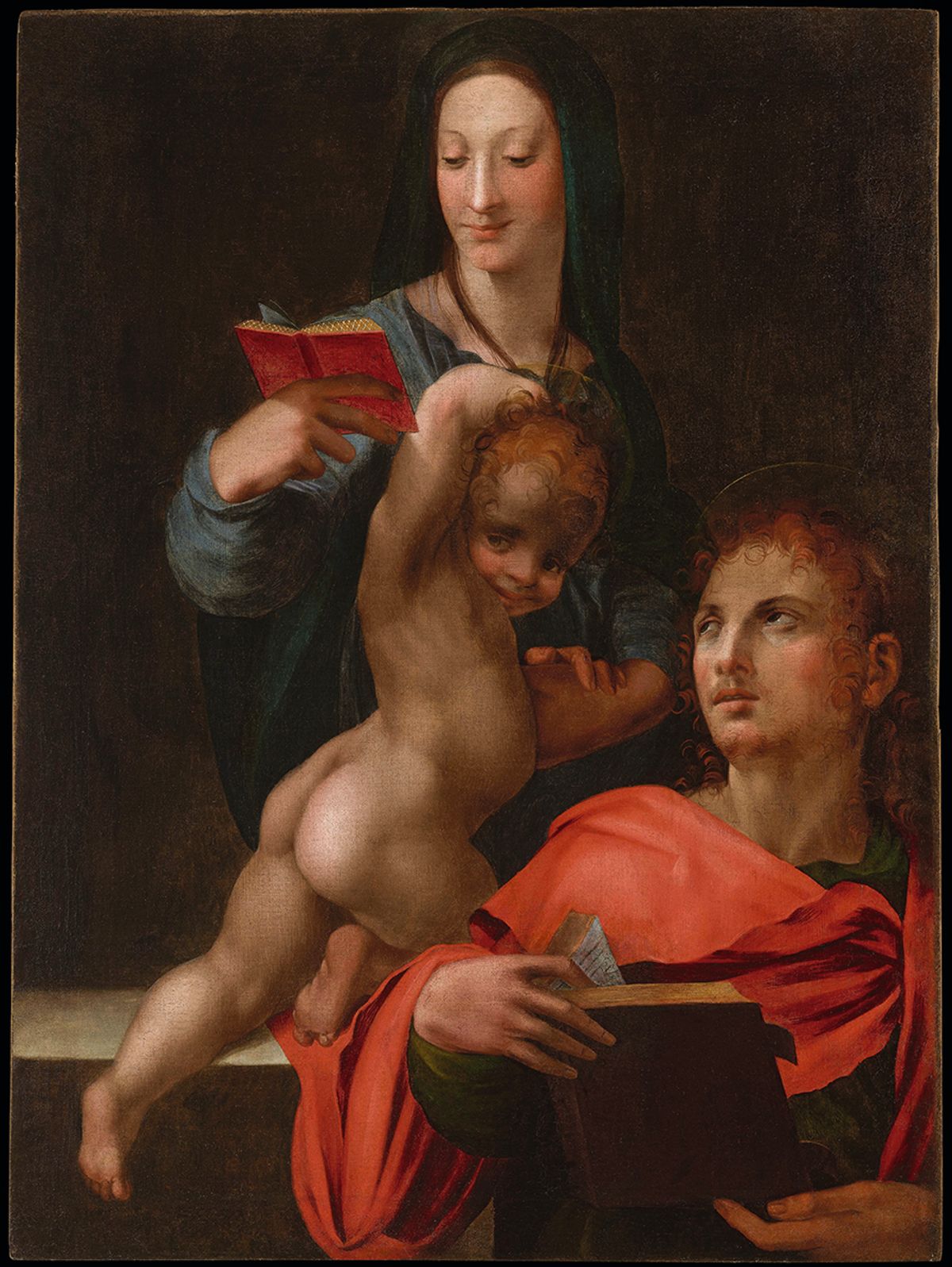
Madonna and Child with Saint John the Evangelist (1512/13) by Rosso Fiorentino
Metropolitan Museum of Art, New York
With an exuberant—and conspicuously muscled—Christ Child at centre-stage, this recently rediscovered painting by the Florentine Renaissance artist Rosso Fiorentino (1494-1540) is Mannerism at its peak. Thought lost for centuries, the oil on canvas was painted by Fiorentino when he was just a teenager. Recent cleaning revealed the more sober figure of Saint John the Evangelist, previously hidden beneath overpaint, which identified it as the painting mentioned in Giorgio Vasari’s Lives of the Artists. Paintings by Fiorentino are rare, numbering only about two dozen.
“With his unusual placement of figures and daring postures, Rosso transforms a familiar devotional type into a charged encounter that draws the beholder into a complex interplay of seeing, feeling and believing,” says Max Hollein, the Met’s director and chief executive officer.
Goblet (around 1581) by Hans Rappolt I
Siegerland Museum, Siegen, Germany
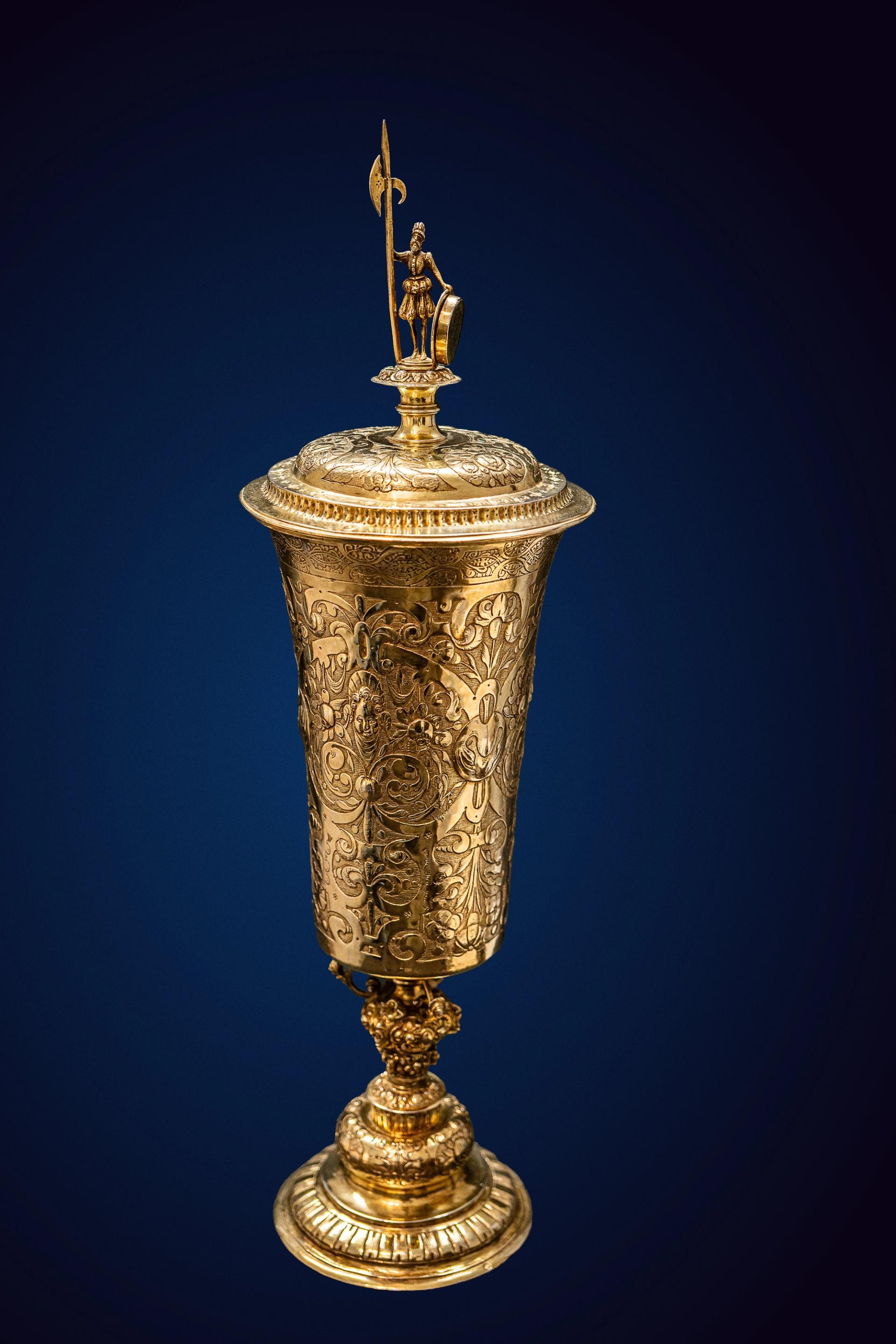
Goblet (around 1581) by Hans Rappolt I, Siegerland Museum, Siegen, Germany Courtesy of Siegerland Museum, Siegen, Germany
Nuremberg was at the vanguard of goldsmithing in the 16th century, exporting elaborate courtly showpieces such as this virtuoso silver gilt goblet made by Hans Rappolt I (1554-1625). Standing 48cm high, the goblet bears the arms of Valentin von und zu der Hees the Younger, whose ancestral seat was in Ferndorf in the Siegerland region, on the inside of the lid. The goblet is exceptional for its detailed decoration: fruit, grotesque masks and birds of paradise. It later entered the collection of the Rothschild banking family, where it stayed until its sale in 2019.
“The acquired goblet is not only of outstanding artistic quality, but also, outside of Dresden, the only work by the Nuremberg goldsmith Hans Rappolt I accessible to the public in Germany,” says Christine Regus, the secretary general of the German Federal Cultural Foundation, which supported the acquisition with a donation of €75,000.
Wandering Beggars (2022) by Salman Toor
National Gallery of Art, Washington DC
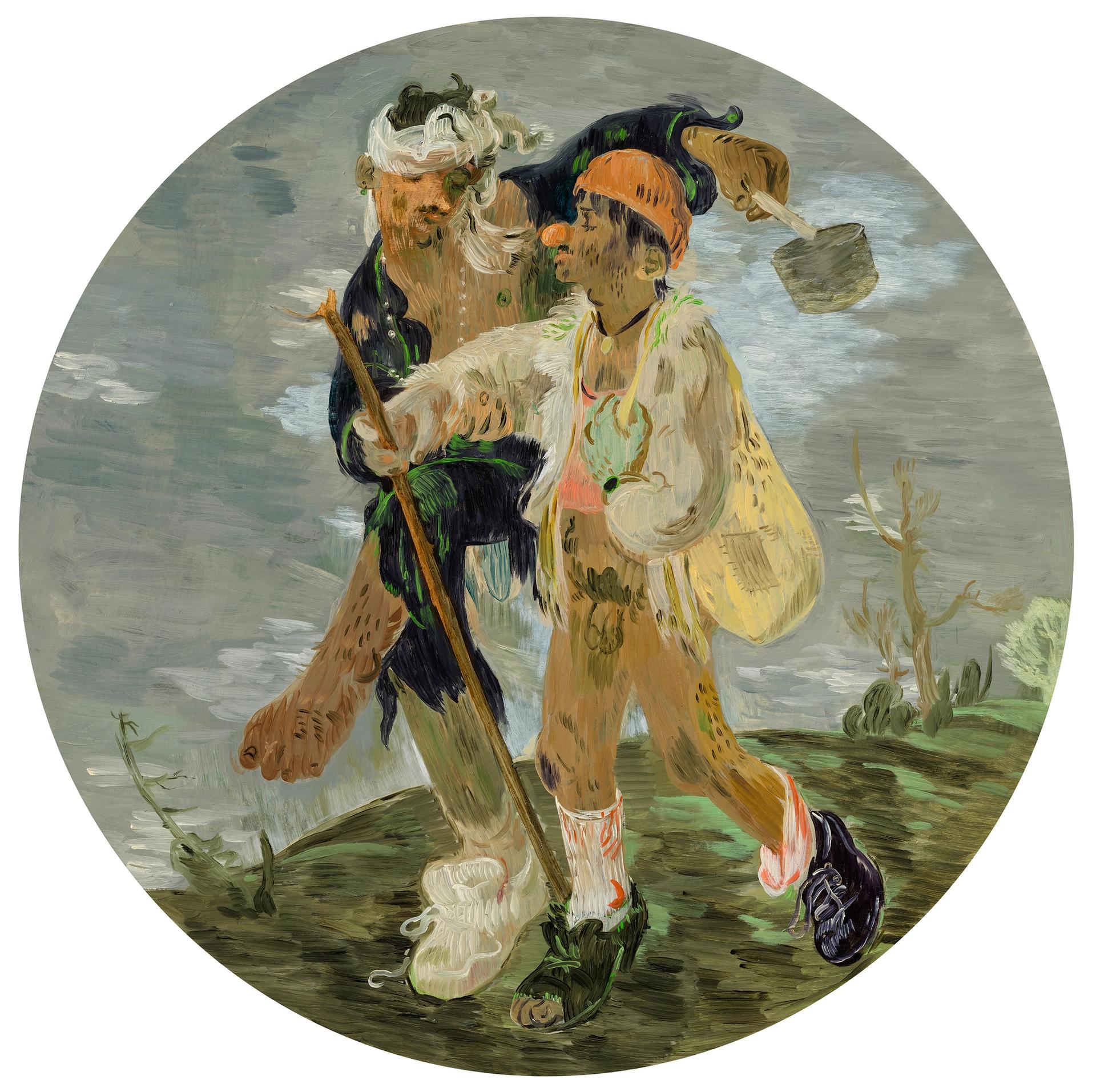
Wandering Beggars (2022) by Salman Toor. National Gallery of Art, Washington DC National Gallery of Art
This circular oil by Salman Toor is the first by the New York-based, Pakistan-born artist to enter the National Gallery of Art’s collection, donated by the Bronzini-Vender family. Wandering Beggars takes its inspiration from two early 20th-century works which depict solitary figures, immigrants or those on the margins of society, consistent themes in Toor’s work: The Sower (1888) by Van Gogh, which hangs in Amsterdam’s Van Gogh Museum; and Picasso’s Family of Saltimbanques (1905), which is also in the NGA’s collection.
Toor’s star has risen since his first major museum solo show at the Whitney Museum in 2020-21. His first European solo show is due to open at the Courtauld in London in October.