

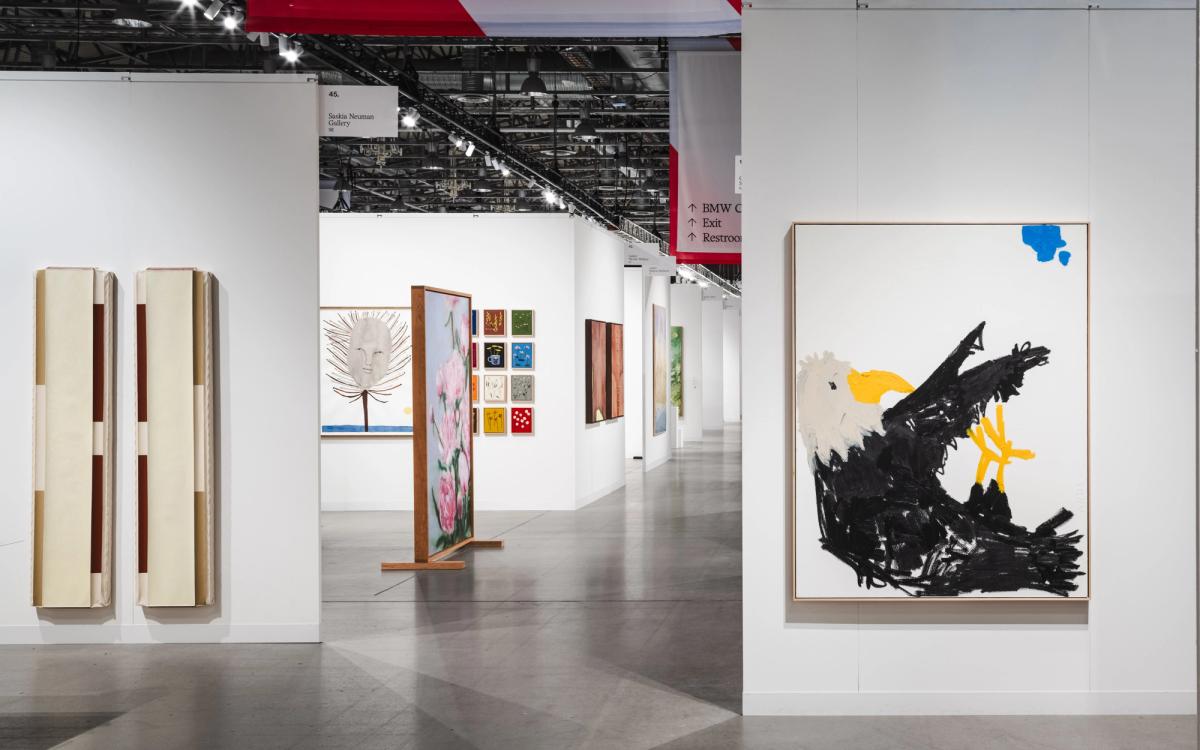
Stockholm, the Sleeping Beauty of European capitals, awakens from its slumber this week. The 20th edition of the Market Art Fair for Modern and contemporary art opens in a new waterfront venue in the Frihamnen docks area of the Swedish capital (until 26 April).
This year 54 dealers, mostly from the Nordics, are participating alongside a handful of international galleries from the United States and the United Kingdom such as London-based Anthony Wilkinson gallery and albertz benda of New York.
Crucially, the fair expanded its reach last year by opening applications to galleries without existing Nordic ties, says a fair statement. Asked about the fair’s aspirations—does it want to be the main Nordic regional fair?—Sara Berner Bengtsson, the fair director and chief executive, says: “It is the periphery that now feels essential. Regional fairs are not second-tier—they can be high-quality, focused, and business-like. We will never be as big as Frieze but I think, as this year's edition proves, international galleries can show artists here whom they would otherwise present at those larger fairs. They should feel able to do that in Stockholm.
“So market-wise and quality-wise with galleries, we want to be at that level because we have the collectors, the interest, and the institutions. I think what also draws galleries here is our social scene and sense of community… Market Art Fair now feels like an international fair, but Stockholm-sized. Or, as one of the artists put it: it feels like a big fair but cosy. We take this as a huge compliment. I think 54 galleries is a really good size, but the golden number would be around 70.”
Some dealers raised qualms about the new fair location—the trade centre Magasin 9—particularly its accessibility. But the established Swedish gallerist Magnus Karlsson vouches for Market as a commercial and academic anchor. “One [of our aims] is to support the Swedish art scene; I think it's an important meeting point for colleagues, artists, lecturers and museums so it creates a hub, which is essential,” he says, adding that there's always “a new crowd that comes [to the fair], creating a starting point for somebody who people who have a fresh interest in art”.
Karlsson's gallery is showing works by the Finnish artist Petra Lindholm who has created a series of “textile paintings” priced between SEK 28,000 (+VAT) and SEK 170,000. Most of the works have sold with two works replaced on the stand today (24 April).
Dealers agree that the fair is an essential platform for bringing their artists to the attention of Scandinavian audiences. Galleri Haaken of Oslo is causing a stir at the fair with its presentation of dystopian large-scale Brueghel-esque works by Munan Øvrelid including Echoes of the Goat (2026, SEK 400,000). “The fair is getting better,” said gallery director Fredrik Nergaard. “It is important to introduce our artists to collectors from the region.” The gallery is also showing a series of canvases by Astrid Nondal, priced at SEK80,000 each (prices are stated on labels—"it’s good to be transparent”, adds Nergaard).
Another talking point is a series of new works by the high-profile Icelandic-Danish artist Ólafur Elíasson presented by i8 gallery of Iceland. This group (The reverse side of reality, with a dark ring) includes paintings and sculptures that “continue the artist’s longtime investigation of light, colour, perception, and optical phenomena,” says a gallery statement.
Works available include a sculpture entitled The rare metallic plant (2026) which is constructed from stackable, space-filling modules and inspired by the natural systems behind the growth of crystals (€195,000). A series of eight paintings made using a single pad of watercolour paper and alcohol inks (The transformative space just before now, 2026) is priced at €125,000. Börkur Arnarson, the gallery owner, said that by the end of the VIP preview (23 April), he had “placed five works” by Eliasson.
Galleri Helle Knudsen of Stockholm said meanwhile that all of the cartoon-esque sculptures by Moa Holm Niklasson had sold, including Synvinkel (2025-26, €1,500), along with several works by the painter Karin Wikström. “We don’t set prices too high for our emerging artists; we want them to have a price journey,” said the gallery’s Sara Röder.
So could Stockholm, fuelled by cornerstone events such as Market, really become a regional art powerhouse? Much has been made about Sweden’s “silicon valley” status; the country is home to companies such as Klarna, iZettle and Spotify while Joel Hellermark, the founder of the AI platform Sana Labs, is a keen art buff, having contributed to the Stockholm Design Lab monograph.
“I definitely think there is new wealth being created here in Sweden. If they could allocate a little [of their wealth] for art, then it is really going to become interesting and be really good for the galleries,” adds director Berner Bengtsson. There also appears to be a swell of emerging galleries—20% of participating galleries have been established within just the last five years, adds the fair statement. The international art market has meanwhile slowed down in the past three years. “But I think Sweden has been surprisingly steady [market wise],” adds dealer Magnus Karlsson.
Three To See during Stockholm Art Week
Three Sisters: Three Practices, Eva Livijn Art Space (until 26 June)
The gallerist and collector Eva Livijn’s apartment has been transformed into a showcase for art by three Swedish sisters—Emma, Johanna and Sofia Bjurström— who “bring their practices together under one roof”. The siblings draw on a fascinating family archive; Sofia builds monuments from wooden blocks emblazoned with images of her grandmother while Emma’s semi-abstract paintings are inspired by a series of archival letters.
Family-For Better or Worse, Sven-Harrys Konstmuseum (until 13 September)
The taboo topic of families, and how fraught and difficult they can be at times, is tackled in this extensive exhibition featuring works by artists such as Lena Cronqvist, Marianne Lindberg De Geer and Maria Miesenberger. Stand-out pieces, including a bizarre sculptural depiction of the madness of motherhood by the Swedish sculptor Cajsa von Zeipek (Covered in Me, 2023), throw light on the nurturing unit that shapes us all.
Ingela Ihrman, Nocturnal Games, Bonniers Konsthall (until 14 June)
A giant otter giving birth and a flying privet hawk moth are among the sculptural characters in the wonderful world created by Swedish artist Ingela Ihrman. “Under a moon that resembles a cheese, in a time that balances on the edge between technological hubris and apocalyptic despair, Ihrman formulates a longing to venture into the dark corners and feelings that lie there,” writes the exhibition curator Caroline Malmström.
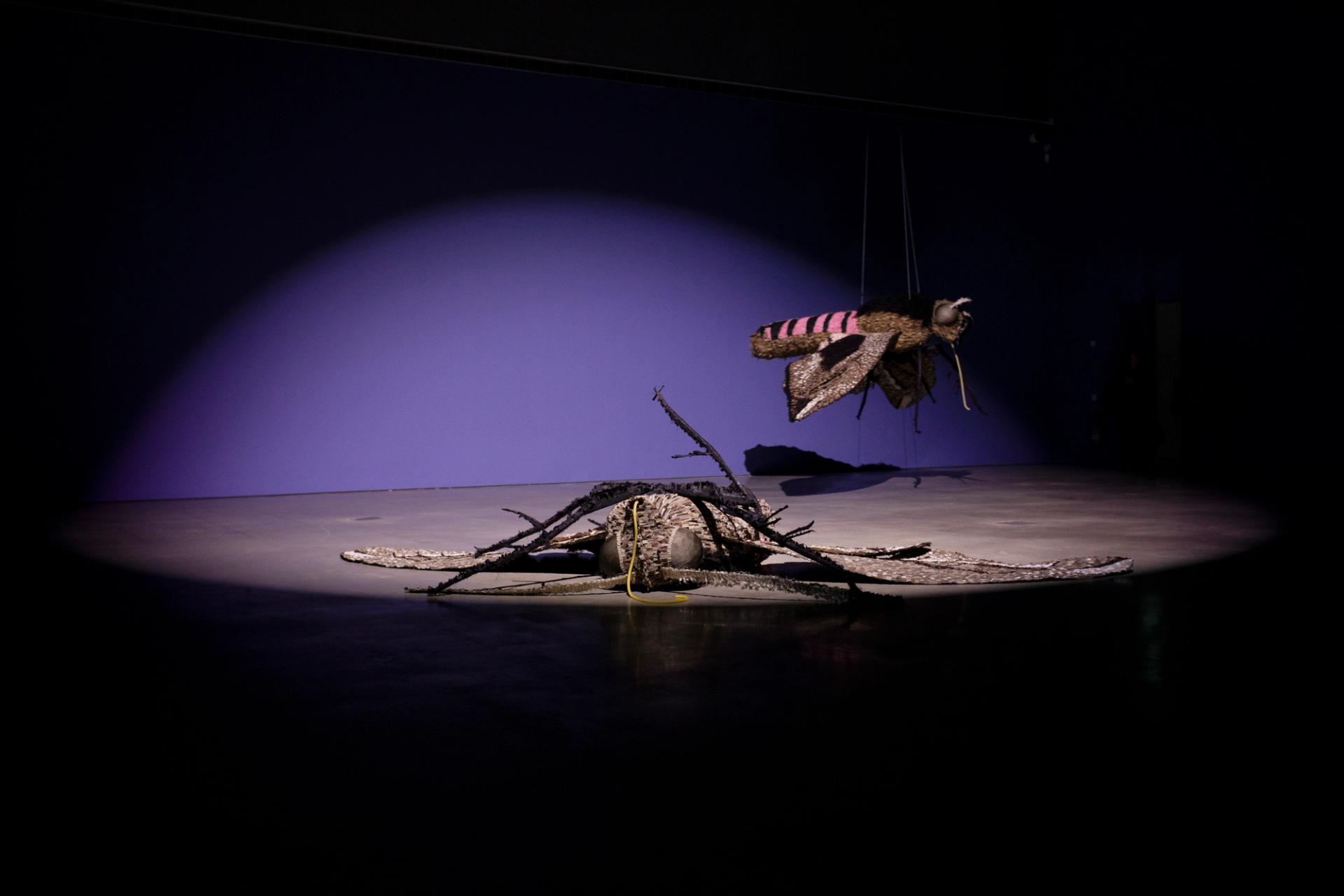
Ingela Ihrman, Nattens lekar (2026)
credit: Bonniers Konsthall/Weronika Bela