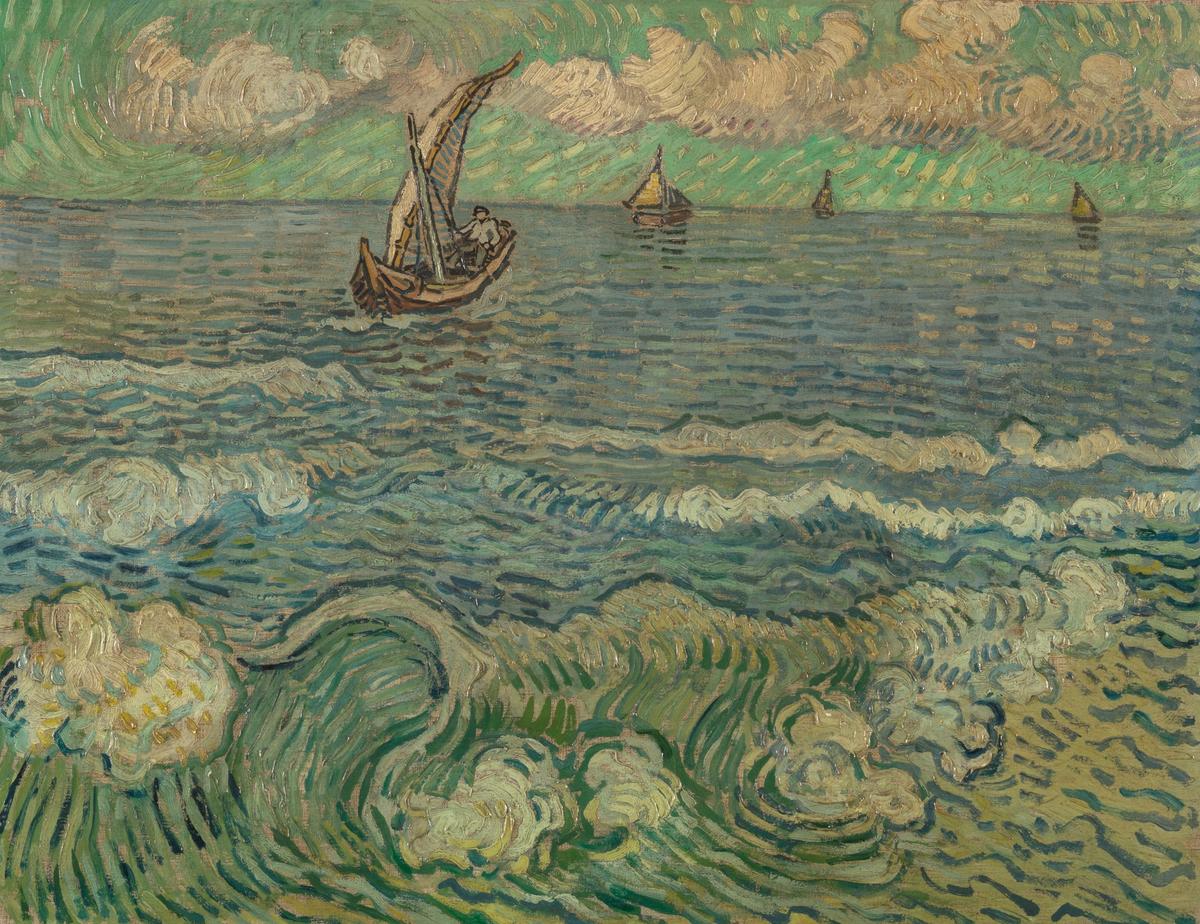

Museums normally hide any fakes deep in their vaults, but the Kröller-Müller Museum in Otterlo has just put their false Van Gogh, Seascape at Saintes-Maries-de-la-Mer (1925-27), on display. This intriguing presentation, on until 21 June, coincides with a Dutch-language podcast recounting how its museum founder Helene Kröller-Müller acquired what turned out to be a forgery.
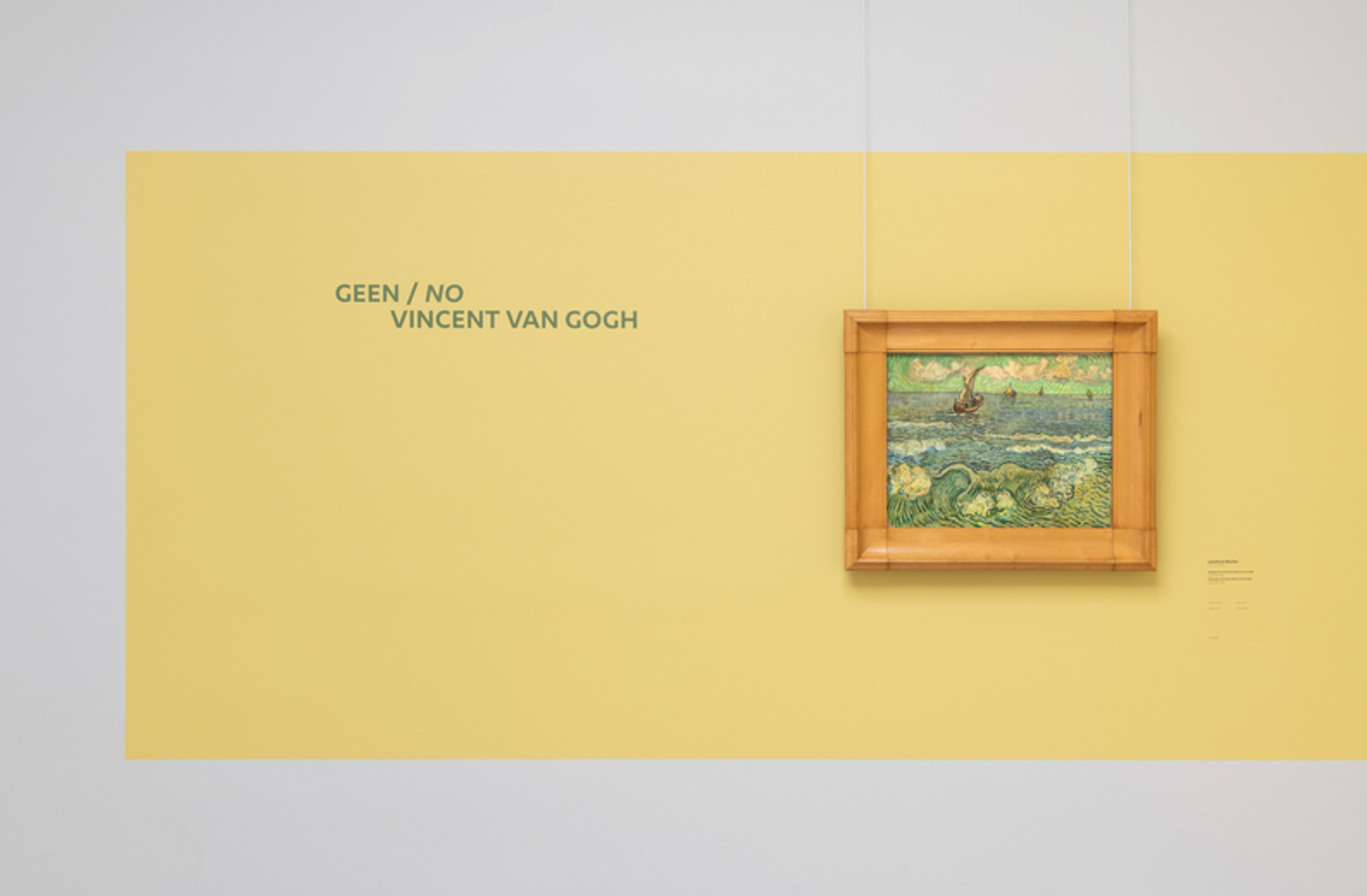
The display of the fake Van Gogh (until 21 June)
Kröller-Müller Museum, Otterlo
Kröller-Müller, the greatest early 20th-century collector of Van Gogh’s work, bought the painting Seascape at Saintes-Maries-de-la-Mer in December 1928, on the recommendation of her art advisor H.P. Bremmer. It came, via a gallery in The Hague, from the Berlin dealer Otto Wacker, apparently for the equivalent of $18,000.
The painting was said to have been done during Van Gogh’s short visit to Saintes-Maries-de-la-Mer, a fishing village in the Camargue just 40 kilometres south of Arles, where he was then living.
This sojourn in the first week of June 1888 was the only time that the artist saw the Mediterranean, and it made a deep impression on him. Vincent wrote about the sea, telling his brother Theo that it has “a colour like mackerel”. Its surface was constantly changing: “You don’t always know if it’s green or purple — you don’t always know if it’s blue — because a second later, its changing reflection has taken on a pink or grey hue.”
Right from the start of Kröller-Müller’s acquisition, several art historians and critics began to express doubts about the authenticity of the painting. In January 1930, Seascape at Saintes-Maries-de-la-Mer was downgraded by Jacob-Baart de la Faille, author of the catalogue raisonné of Van Gogh’s work. He wrote: “It is a very beautiful work, but not by Van Gogh.” There followed several years of intense debate, with De la Faille at one point changing his mind.
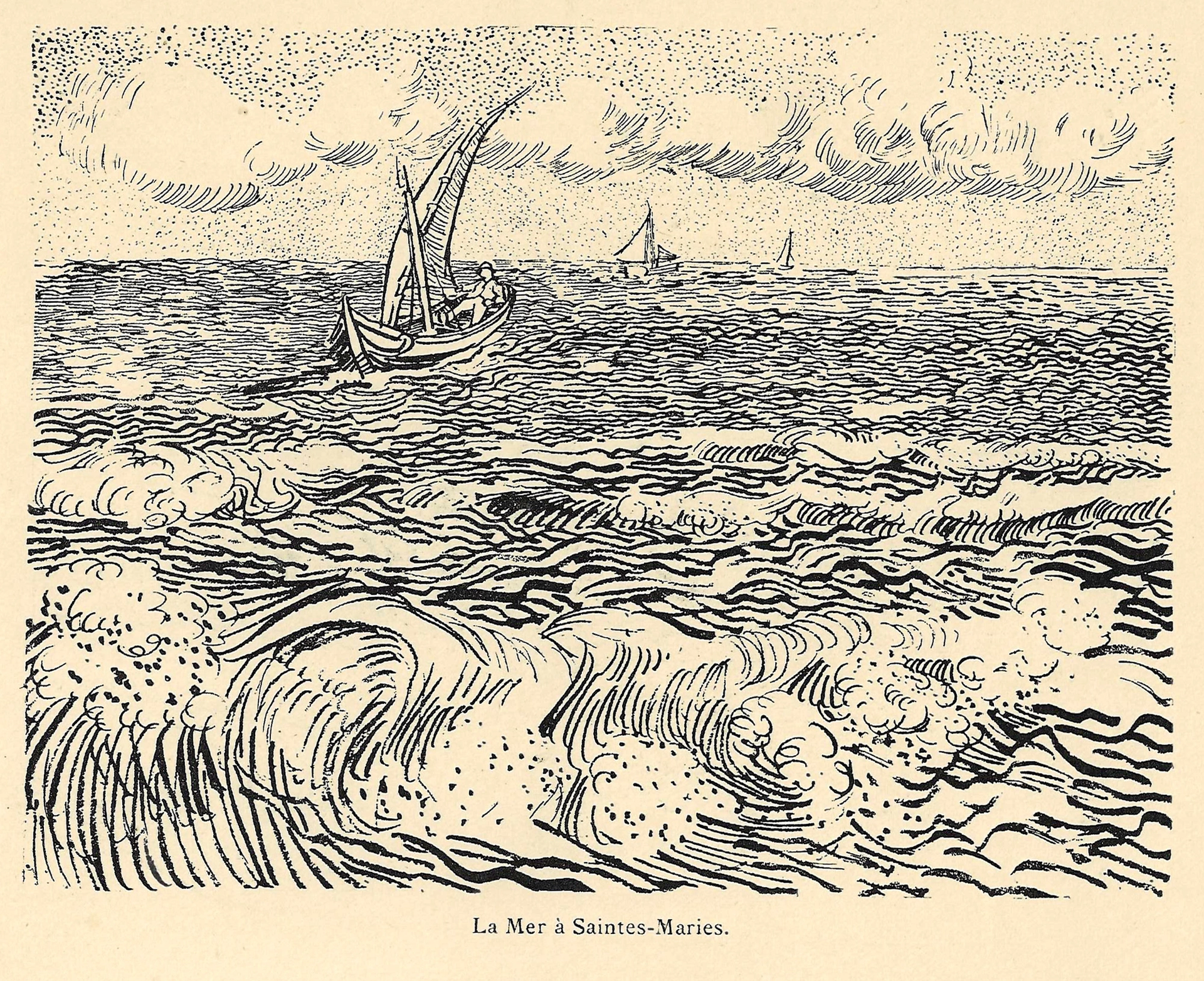
Van Gogh’s La Mer à Saintes-Maries (June 1888)
Private collection, reproduced in Emile Bernard, Lettres de Vincent van Gogh (Paris, 1911), p. xlix
It became increasingly clear that the forged painting was made after an authentic Van Gogh drawing, which had been been published in 1911 by the artist Emile Bernard and was then on display at Wacker’s gallery in 1927. In 1932, Wacker was ultimately brought to trial and found guilty of fraud for the sale of a large group of fake Van Goghs.
The Kröller-Müller Museum finally took Seascape at Saintes-Maries-de-la-Mer off display in 1947. Apart from loans to two Dutch exhibitions in 1947-49, a travelling show on fakes in four venues in England in 1986-87, and the museum’s 2006 presentation on Bremmer, it has otherwise always remained in storage.
The museum now believes that the picture was painted by Wacker’s younger brother, Leonhard. Renske Cohen Tervaert, the museum’s curator, points out that: “Neither the use of colour nor the short brushstrokes match the other works that Van Gogh painted on his visit to the Mediterranean. The style of the fake is superficially slightly closer to his work of a year later, when he was living in the asylum near Saint-Rémy-de-Provence.”
Van Gogh's style in June 1888, when he visited the fishing port, can be seen in the authentic painting Seascape near Les Sainte-Maries-de-la-Mer, now at Amsterdam’s Van Gogh Museum. A few grains of sand embedded in the paint confirm that this work was painted on the beach.
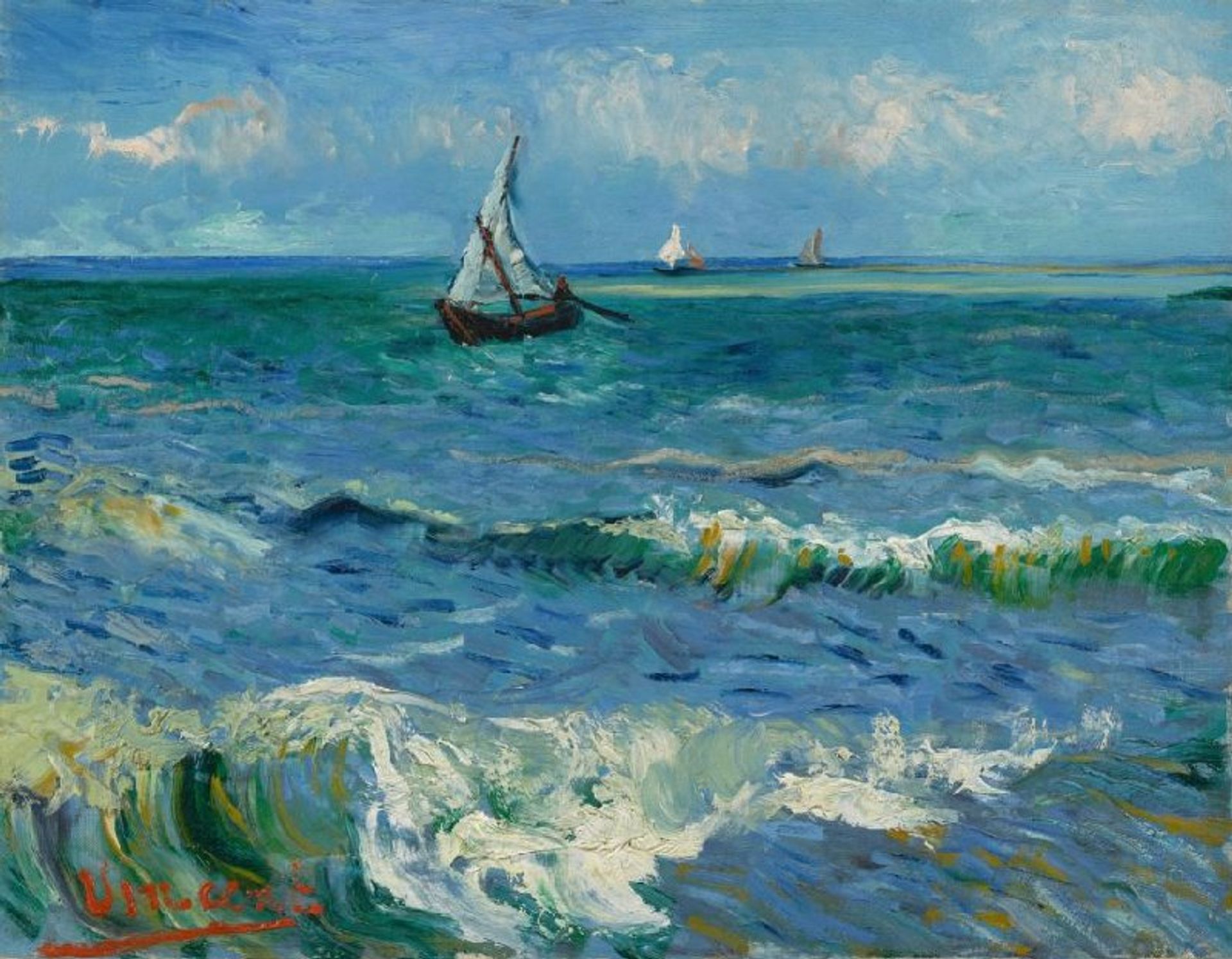
Van Gogh’s Seascape near Les Saintes-Maries-de-la-Mer (June 1888)
Van Gogh Museum, Amsterdam (Vincent van Gogh Foundation)
Although the Wacker seascape is a fake, its frame has an authentic value. In 1910, Kröller-Müller began to commission distinctive wooden frames with slightly raised square corners for her Van Gogh paintings. These were designed by the noted Dutch interior decorator Jacob van den Bosch in an early Art Deco style.
Virtually all the historic Van den Bosch frames were discarded in the 1950s, but, because the seascape had by then been downgraded, it was kept in store in its earlier frame. In 2003 the museum decided to reframe all of its Van Gogh paintings with replica Van den Bosch frames, using the forged seascape’s surviving frame as a template.
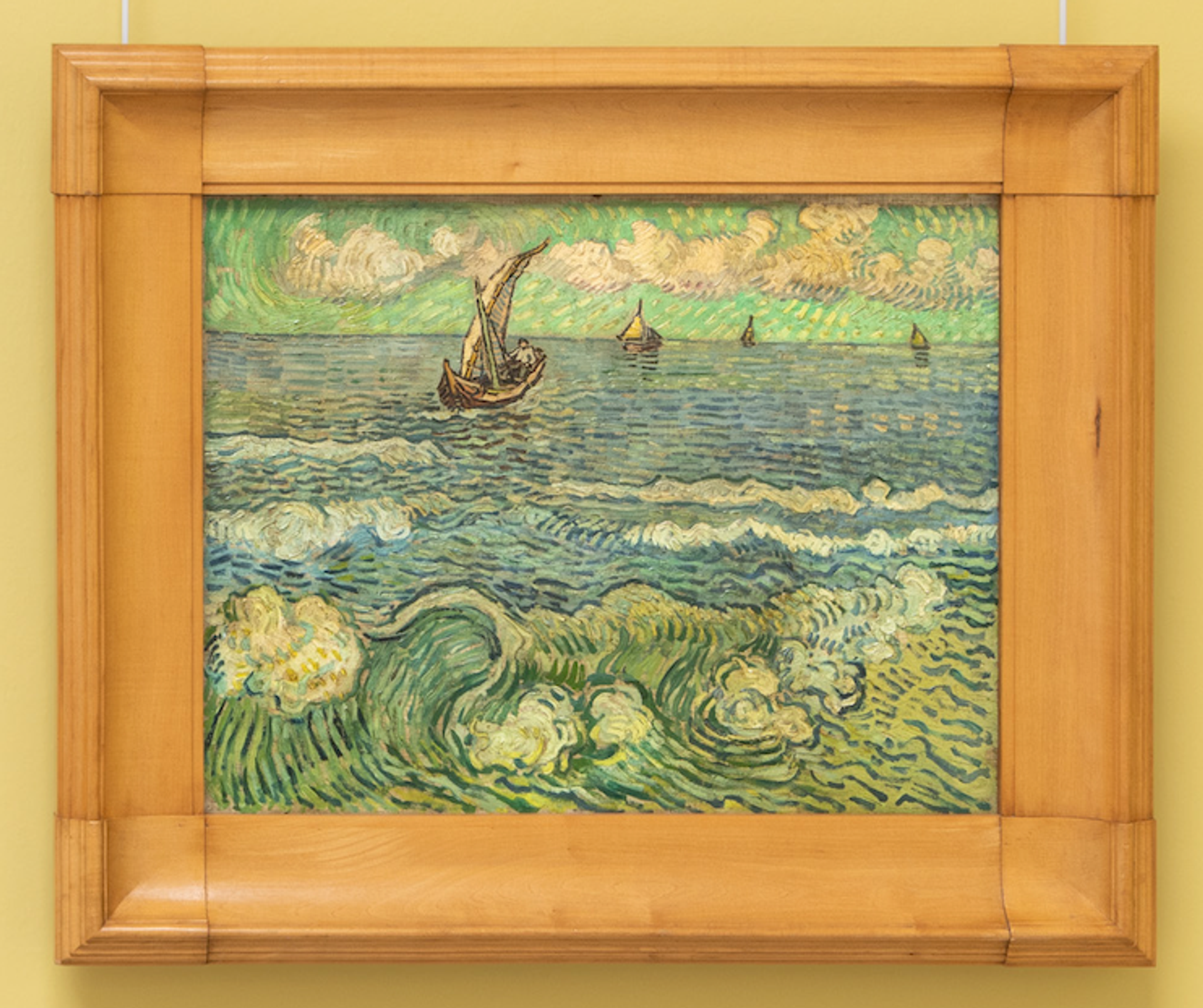
Seascape at Saintes-Maries-de-la-Mer in its early Van den Bosch frame
Kröller-Müller Museum, Otterlo
Despite the purchase of Seascape at Saintes-Maries-de-la-Mer, Kröller-Müller was remarkably successful in her Van Gogh acquisitions. Her museum holds the second largest Van Gogh collection in the world, with 88 paintings and 182 works on paper.