

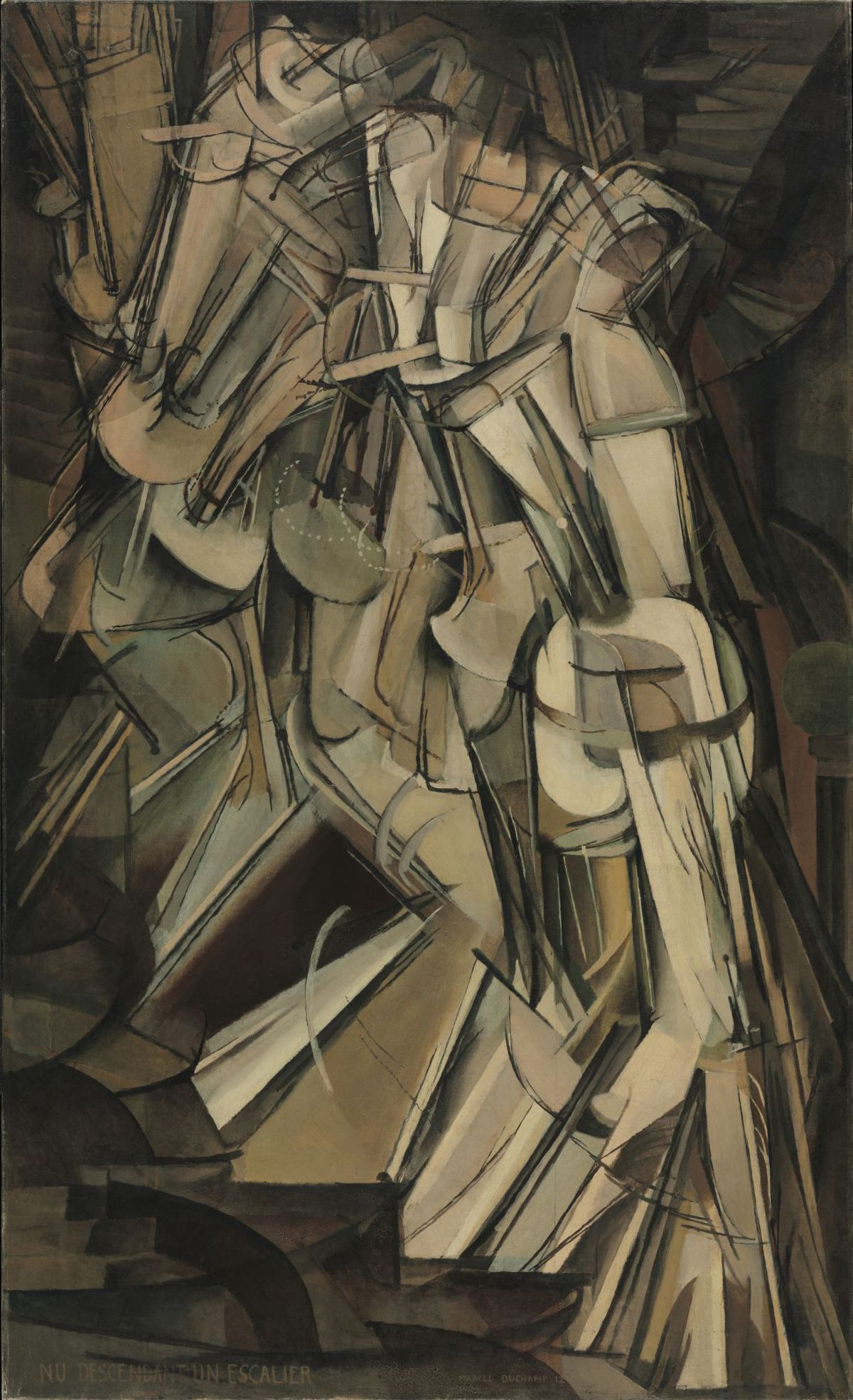
It is 53 years since the last major US survey of Marcel Duchamp (1887-1968). So, despite his ubiquitous influence, an exhibition at the Museum of Modern Art (MoMA) in New York this month is long overdue. It is being organised by MoMA and the Philadelphia Museum of Art—the same venues as the previous legendary show, curated by Anne d’Harnoncourt and Kynaston McShine.
But why has it taken so long for there to be another exhibition? “Time flies is one short answer,” says the co-curator Ann Temkin, who devised the show with MoMA’s Michelle Kuo and Matthew Affron from the Philadelphia Museum of Art. “For a while, the 1973 show was a fairly recent event. And then you blink and it’s the end of the 2010s.” That was when the process of developing the exhibition began, only to be interrupted by the pandemic. It was an “appropriate Duchampian delay”, Temkin suggests, referring to the artist’s reticence and lengthy processes, like the eight years he took to not quite finish one of his masterpieces, The Bride Stripped Bare by Her Bachelors, Even (The Large Glass) (1915-23).
The exhibition will reflect the loops and the reiterations, the false starts and loose ends of a singular career. It will do so through an apparently simple idea: chronology. As Kuo explains, Duchamp “not only made works, but remade them in a kind of maniacal way”, with replicas made by him and others. “Some of the earliest works no longer exist, including readymades that literally were mistaken for just an ordinary household object and so were thrown away.”
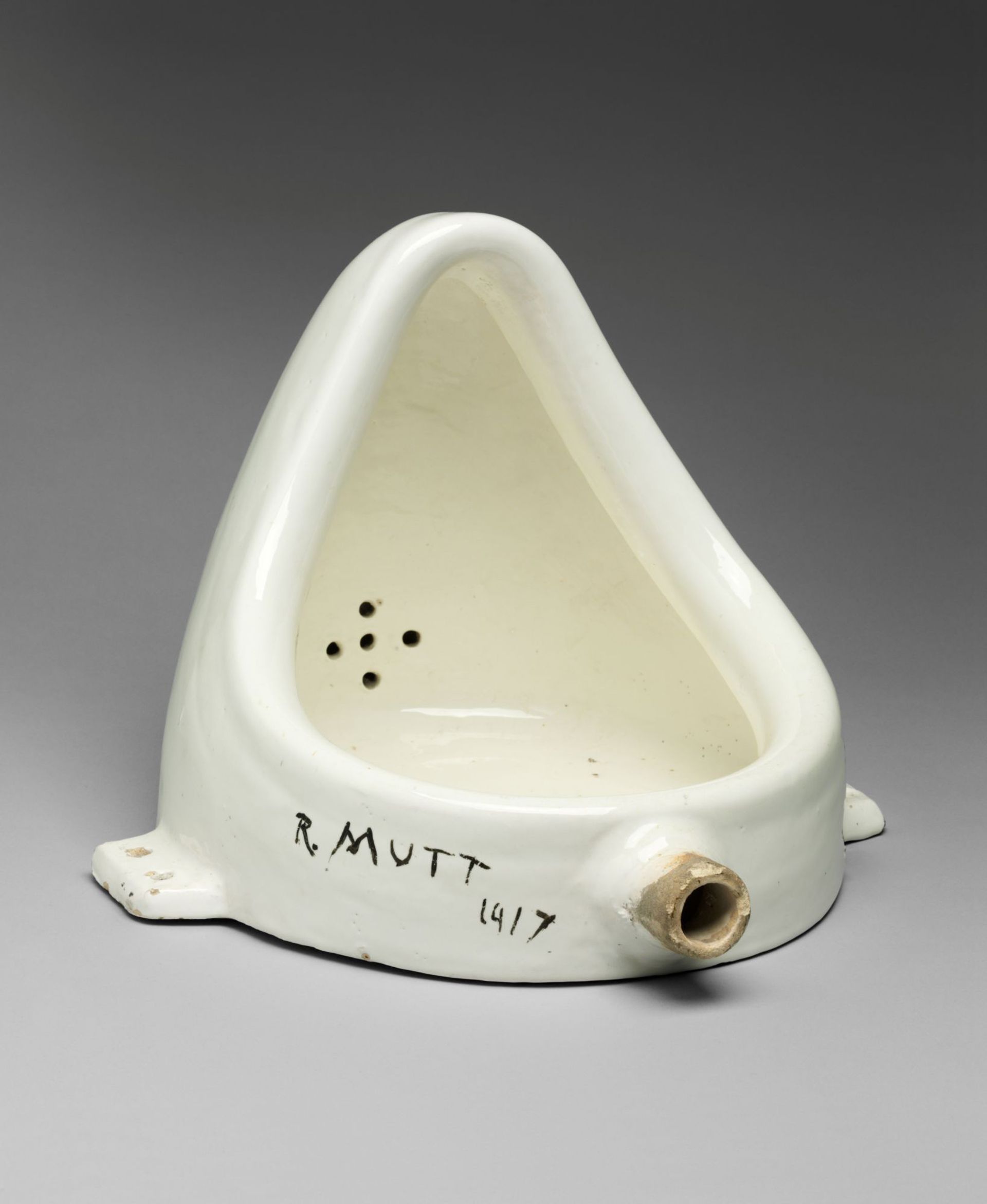
Duchamp’s famous (and much reproduced) signed urinal, Fountain (1917) Courtesy of Philadelphia Museum of Art
Where other exhibitions show the replicas as if they were the originals—“work that was made in the 1950s or 1960s standing in for a 1913 or 1917 object”, as Kuo says—in this instance “you’re not going to see the physical thing until it was literally made. And so the strangeness of that linear chronology becomes very apparent.” The result is a “recursive feedback loop that we think will be a very dizzying but enchanting experience for viewers,” Kuo says.
A devotion to making
In the exhibition catalogue, the curators stress that the father of conceptualism had a “thoroughgoing devotion to making throughout his life”. Temkin argues that Duchamp is “not so familiar to people in the flesh, with the works themselves being something to observe, contemplate, consider, inspect”.
The show will offer that opportunity across around 300 works, including the great paintings of figures in movement, like Nude Descending a Staircase, No. 2 (1912); the readymades, including Fountain (1917), the upturned and signed urinal that is here, despite recent conjecture, presented as unquestionably by Duchamp rather than Elsa von Freytag-Loringhoven; and his final work Étant donnés (1946-66).
He didn’t want to be an artist because of all the connotations that that had acquired over the centuriesAnn Temkin, curator
“He was so much; from beginning to end, an inventor,” Temkin says. “He didn’t want to be an artist because of all the connotations that that had acquired over the centuries. But ‘inventor’ really works for me in terms of just a factual description.”
And that invention accounts for Duchamp’s influence on so many artists since. Among other reasons, Kuo points to his expansion of the media and disciplines available to artists. He “upended the conventional parameters of art”, making it “multi-sensory”, she says, so that “it was famously not just a retinal pursuit for him, but something that could be olfactory or multi-dimensional or spatial or taking place over time”. Part of “the fascination we have for him” in the 21st century, Temkin adds, “is that all these different modes of making now seem very, very today.”
• Marcel Duchamp, Museum of Modern Art, New York, 12 April-22 August; Philadelphia Museum of Art, 10 October-31 January 2027
• Listen to our interview with the curators on The Week in Art podcast from 10 April