

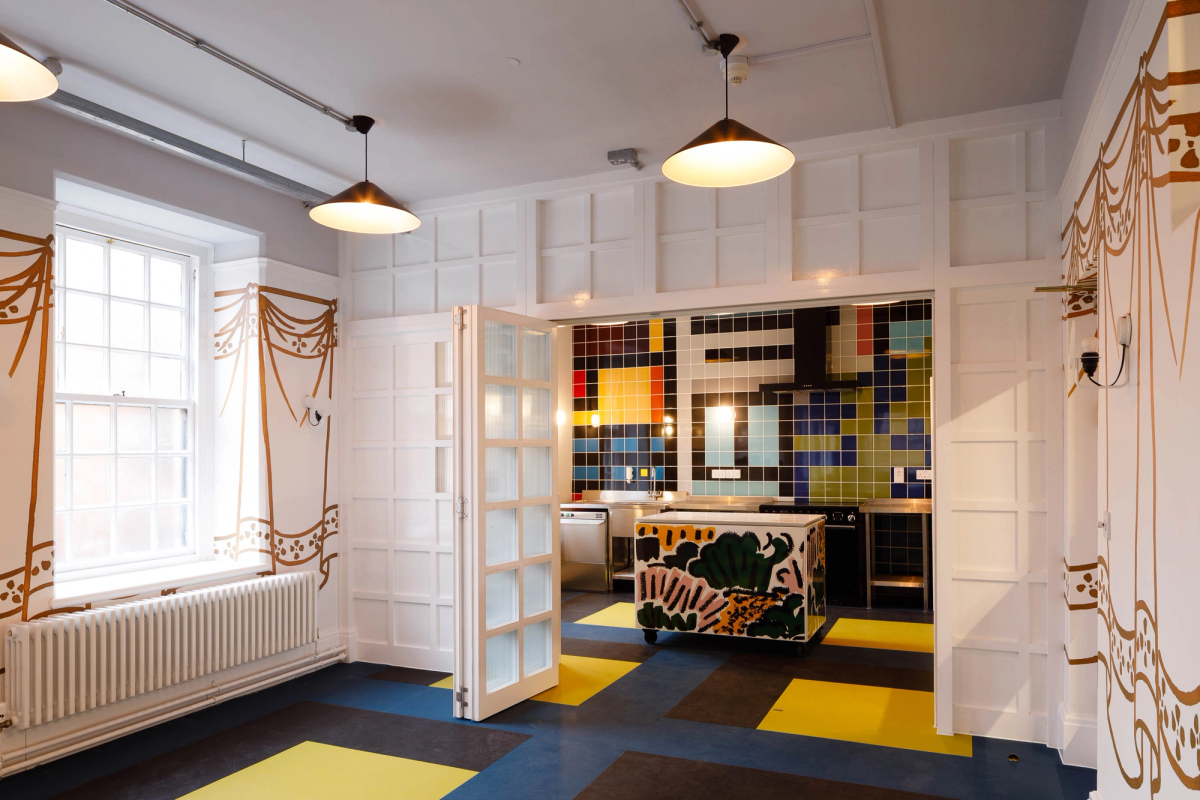
A new cultural centre will open in the UK town of Northampton on 1 May, marking a significant investment in regional arts infrastructure and the reuse of an historic civic building.
Arts Collective will launch its new home next door to Northampton Museum and Art Gallery on 1 May, following a £5.2m refurbishment of the town’s former municipal offices and town hall annexe. The project transforms the 1930s building in Guildhall Road into a multi-use arts venue, bringing together exhibition, learning and community facilities under one roof.
The organisation has operated in Northampton, in the UK’s East Midlands, since 2008. Its new premises represent an expansion in scale and ambition, with a year-round programme of free exhibitions, artist commissions and community-led initiatives. Facilities include a gallery, 17 purpose-built artist studios, public areas and workshop and learning spaces.
An important part of the mission, Art Collective's director Emer Grant says, is to help foster the art scene in Northampton, at a time when life in cities such as London is increasingly and prohibitively expensive. “What we are interested in is not simply attracting artists from metropolitan centres into regional contexts, but in rethinking how institutions can create the conditions for long-term artistic life,” she says. “This means developing models where artists are able to live, work, and contribute within communities over time, and where local economies are meaningfully connected to artistic production.”
The opening exhibition, House Rules, revisits the work of the British conceptual artist Rose Finn-Kelcey (1945–2014) and marks the first presentation of her work in her home county. Curated by Grant, the show brings together photographic, film and installation works that explore the relationship between architecture, power and spirituality. Among the works included are Bar Doors (1991), a photographic study of thresholds and access, highlighting moments of passage between spaces.

Rose Finn-Kelcey, Angel (detail, 2004)
© The Estate of Rose Finn-Kelcey. Courtesy the Estate and Kate MacGarry
Alongside the exhibition programme, the building incorporates a number of permanent commissions and socially engaged projects. The Northampton Rooms, a suite of public spaces conceived by the artist Giles Round, are described as a “living work of art” intended to host gatherings and events. Round will present a participatory installation during the opening period.
A major new furniture commission by the designer Foday Dumbuya, the founder of the fashion label LABRUM London, introduces a collection of chairs, stools and tables informed by West African domestic traditions. Installed across the building’s public areas and archive spaces, the works are intended to foreground themes of migration, hospitality and collective experience.
The centre will also house a permanent open-studio archive developed in collaboration with the Northamptonshire Black History Association. The project focuses on the Matta Fancana Movement, a Rastafarian youth-led cultural initiative active in Northampton from the late 1970s to early 1990s, and forms part of a broader effort to embed local histories within the institution’s programme.
‘Ambitious, confident, creative
The launch will be the culmination of five years of work, which began in 2020 when Arts Collective were in talks with the then Conservative-led council. At last year’s local elections, the insurgent right-wing populist party Reform UK took control of the council. Arts Collective’s artistic director Emer Grant says the Reform councillors have given their backing to the project. She tells The Art Newspaper: “They’ve not had much to say in terms of lofty ideas about art but they’ve been supportive. I think they’re just excited that there’s something happening locally for people. In this day and age, it’s been nice to see art as something which can bring people together as a unifying force.”
Mark Arnull, the Reform UK leader of West Northamptonshire Council, tells The Art Newspaper: “The opening of 24 Guildhall Road is about more than restoring a building, it is about strengthening the future of Northampton. This new arts centre signals our commitment to a town that is ambitious, confident and creative. By bringing this landmark back into public use, we are investing not only in culture, but in the people and ideas that will shape the next chapter of West Northamptonshire.
“This is a major step forward in our wider regeneration plans, and a clear statement that Northampton’s heritage and its future belong together. I’m proud that we are opening a space designed to welcome everyone, spark new opportunities and unlock the full potential of our Cultural Quarter [the area around the centre and art museum].”
An ‘artist-led’ institution
Grant, meanwhile, underlines the importance of the institution's grounding in artistic practice.
“Artists are essential,“ she says. “At a time when more sustainable cultural ecosystems must be developed across the board, we’re creating new models—hybrid institutions shaped by and for the people who will use, care for and build them into the future.” In this way, she describes the institution as “artist-led”.
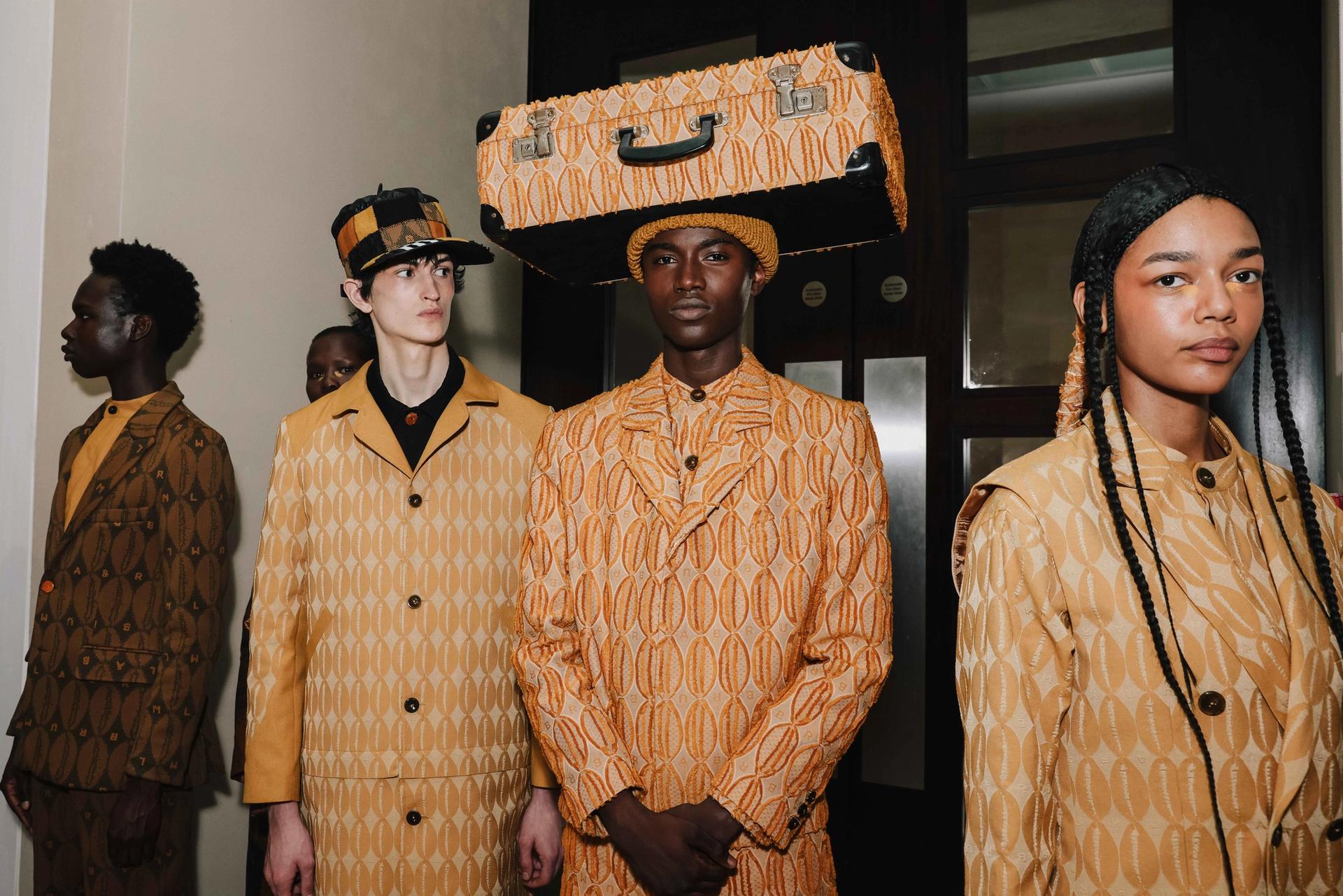
Foday Dumbuya, The Gathering, Labrum LFW 2024
© Foday Dumbuya. Photo: Sama Kai, courtesy of LABRUM
"We all have backgrounds in fine art, but for us ‘artist-led’ isn’t just a descriptor of who’s in the room, it’s a deliberate position,“ she continues. “We’re interested in reclaiming it as infrastructure—where artists are embedded within the social and economic fabric of a place, rather than positioned as temporary catalysts for growth. This requires a more bottom-up model of regeneration, one that prioritises long-term presence, shared ownership, and sustainable career pathways.
Arts Collective’s Northampton home will promote this philosophy through its own activities and approach to growth. “We’ve built a structure that allows artists to move through the organisation in different ways over time,” Grant says. “That can begin with studio provision, extend into the Guild as a generative peer-learning cohort, and develop through public programmes and commissions. From there, artists can move into paid roles, contribute to delivery, and even into governance and trustee positions. It’s a continuous feedback loop, where artists are not just participating in the programme but actively shaping how the organisation evolves.”