

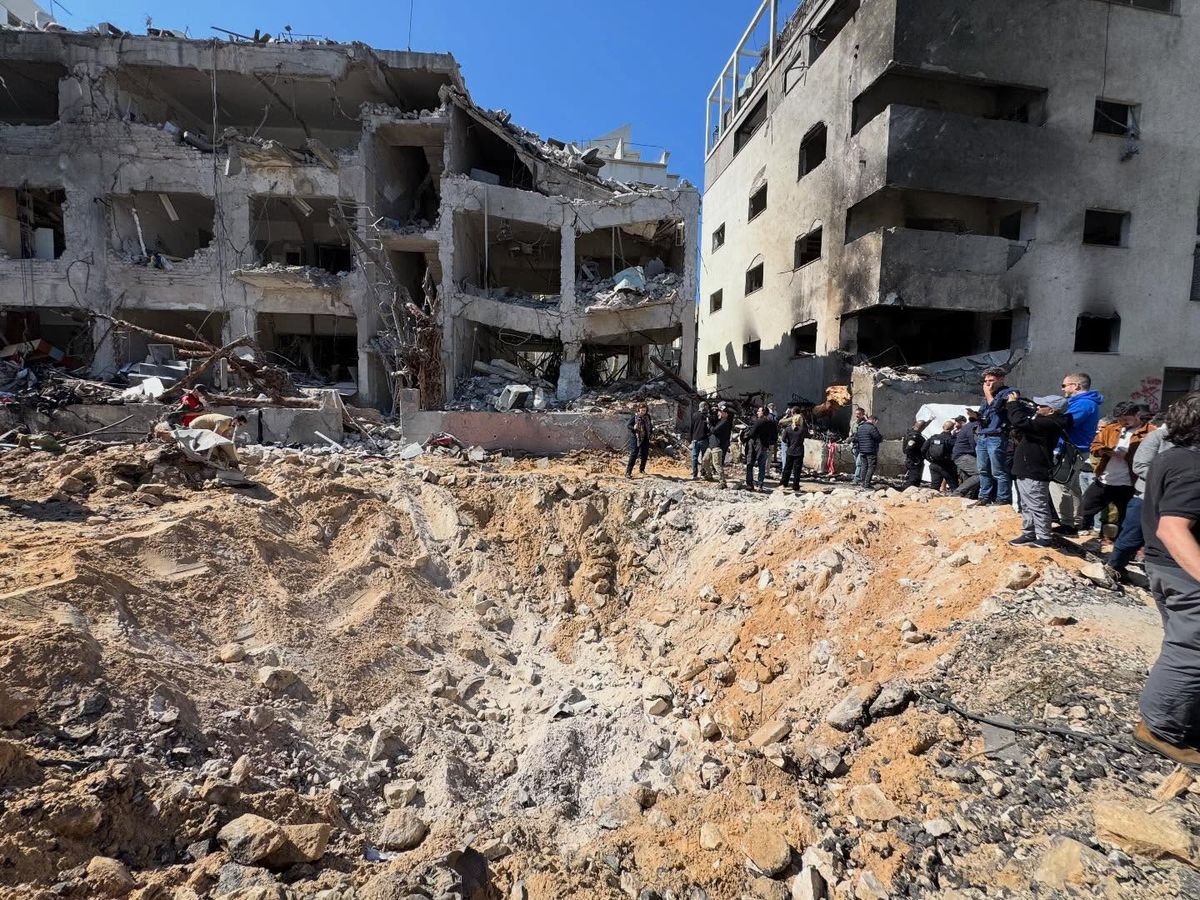
Two Bauhaus buildings in the Unesco World Heritage site of The White City in Tel Aviv were damaged by Iranian missiles on Saturday (28 February). One woman died and more than two dozen people were injured as a result of the blast, according to the Times of Israel.
The White City was constructed from the early 1930s until the 1950s, based on the urban plan by Patrick Geddes. It was inscribed as a Unesco World Heritage site in 2003 “as an outstanding example in a large scale of the innovative town-planning ideas of the first part of the 20th century,” according to the Unesco website. “The architecture is a synthetic representation of some of the most significant trends of Modern Movement in architecture, as it developed in Europe. The White City is also an outstanding example of the implementation of these trends taking into account local cultural traditions and climatic conditions,” it adds.
In a Facebook post on 1 March the Bauhaus Center, which is dedicated to the architectural style, wrote: “These houses were more than concrete and balconies. They were symbols of survival, modernity, and the rebuilding of life in Tel Aviv—the White City. Their clean lines and simple forms carried a powerful story: architecture as refuge, architecture as hope. We mourn the loss of this cultural heritage and stand committed to preserving the memory and values these buildings embodied.” The centre also documented other White City built heritage damaged during the Twelve Day War in June 2025.
Meanwhile, the glass façade of the Habima, Israel’s National Theatre built in 1934, was also damaged by Iranian missiles on 28 February.
Unesco joined other United Nations bodies and senior officials, including the secretary-general António Guterres, in condemning both the US-Israeli strikes and Iran’s retaliatory attacks. Tehran’s Unesco-listed Golestan Palace was reportedly damaged by US-Israeli strikes on Tuesday (3 March).
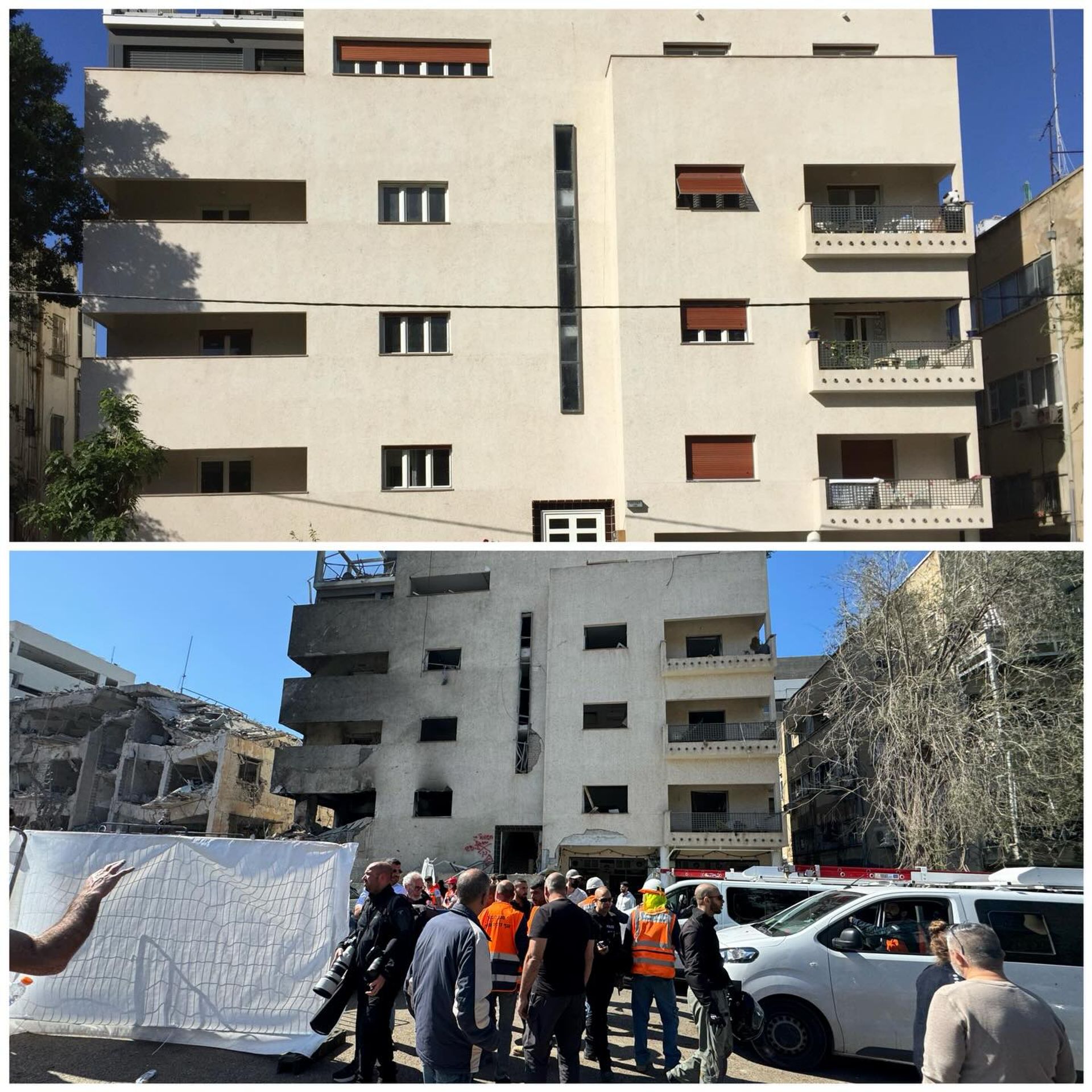
One of the Bauhaus buildings before the attack (above) and after (below) Courtesy of The Bauhaus Center
According to historian Ilan Shchori, the most significant of the two Bauhaus buildings damaged during the current conflict was the "Froma Gurvitz" house, built in 1937 by the architectural firm Zabrodsky and Blacks. During a recent restoration by the architects Alon Ben Nun another floor and a half was built on the roof, he tells The Art Newspaper. Of the more than 4,000 houses built in the International Style in Tel Aviv, most are privately owned he says and “the owners do not want to invest in restoration at the moment”.
Micha Gross, the director of the Bauhaus Center, tells The Art Newspaper, that cultural life “is suffering significantly due to the war, with most institutions currently closed,” including her own. The Israel Museum announced on Facebook on 28 February that it has taken objects from its collection to the bomb shelter: “In accordance with the Home Front Command's emergency guidelines, the museum's skilled teams arrived in the early morning hours and completed the removal of the important works to a protected location! Hoping for quiet days to come.”
Meanwhile the Islamic Museum of Art in Jerusalem, a privately funded organisation that houses one of the most important collections of Islamic art in the world, is also safeguarding its collection. The museum also posted on Facebook that it had evacuated works and that the museum will be closed until further notice. Among the pieces evacuated is “The Harari Hoard”, a collection of rare and valuable Persian silverware from the 11th-12th century. According to the museum, it is “the largest surviving collection of its kind in the world, as well as the only source of silverware from the Seljukian period” and was “found intact in a pot in a cave in western Iran”.
Talya Ezrahi, the international relations co-ordinator at Emek Shaveh, an Israeli anti-occupation group founded by archaeologists, notes that in the current crisis the lives and heritage of both Israelis and Palestinians are at risk. She hopes that this may encourage a sense of cultural solidarity. “War does not distinguish between Jewish, Muslim, Christian, or any other heritage,” she tells The Art Newspaper. “When such sites are damaged or destroyed, the loss reverberates beyond the ruins and will remain as a testament to the failure of our leaders to choose human lives and the cultural and spiritual worlds that give them meaning over destruction and ruin.”
According to the US-based Human Rights Activists News Agency, more than 1,100 civilians have died in the conflict so far.