

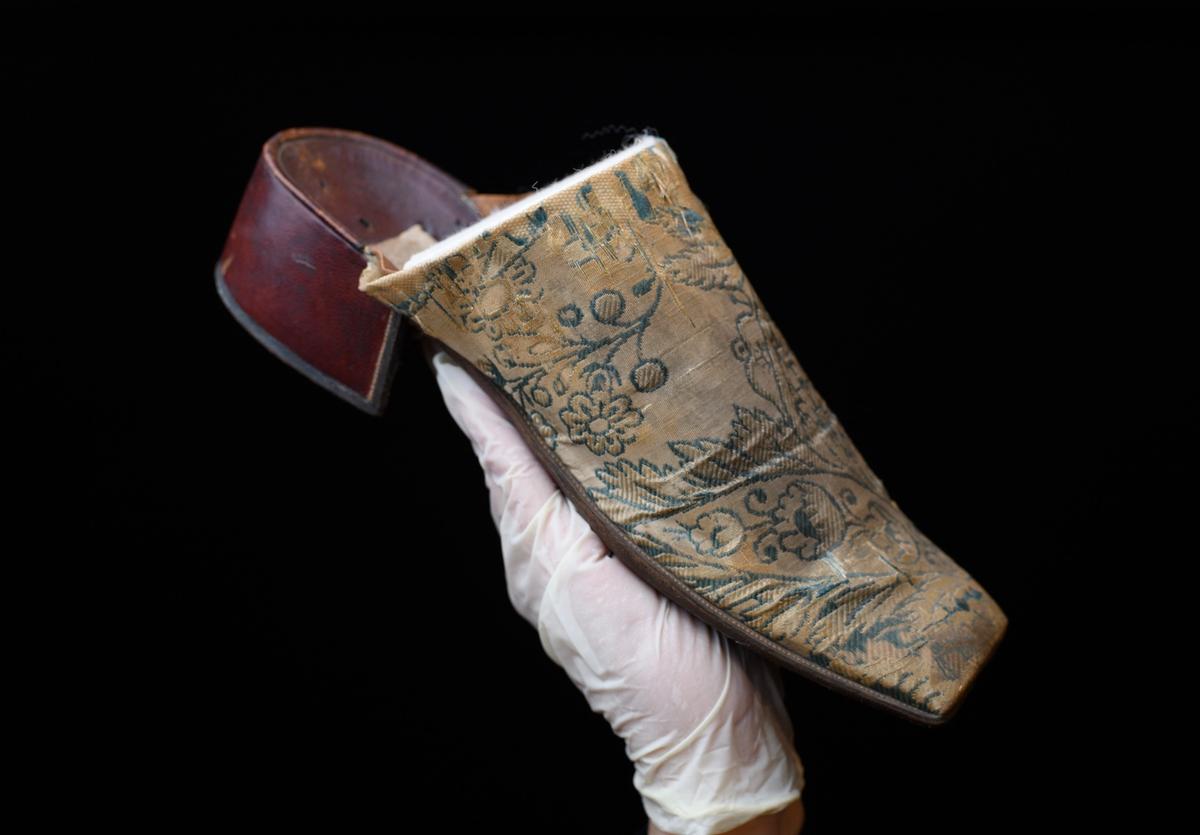
A magnificent leather and golden silk slipper believed to have once been worn, then lost or given away, by King James II is going on display at Killerton, a mansion in Devon that houses the National Trust’s costume collection. He is said to have worn the slippers when visiting Coventry in in 1687, where a grand banquet was held in his honour, and may have given them to one of his hosts. Pieces of opulent royal clothing such as embroidered gloves were often left as gifts, and cherished for generations by the recipients.
The single surviving slipper, which features a woven floral pattern, was bequeathed to the National Trust in 1978, as part of a vast costume collection assembled by Paulise de Bush. The connection with James II is anecdotal and the trust is researching its history: the slipper came with a faded museum label from De Bush’s own private costume museum, but it is not known where or how she acquired it. The rooms occupied by the king in Coventry were destroyed in the Blitz along with much of the historic core of the city.
Shelley Tobin, costume curator at Killerton, wonders if the other slipper may one day be found. “This slipper brings together many qualities we value in historic clothing,” she says. “Craftsmanship, social context and the traces of the people who made and used it … It invites us to imagine royal travel, gift giving and the long journeys objects can take through history before arriving in our care.”
In 1687, unknown to his hosts, time was running out for the king’s reign. James II, with a devout Roman Catholic second wife, Mary of Modena, was promising to repeal the laws barring Catholics from public and military office—sparking fierce opposition from those fearing the restoration of a Catholic state and monarchy. In 1688 he would be deposed in favour of his own daughter Mary, the Protestant child of his first marriage, and her husband William of Orange, who would come to England and become joint monarchs in the regime change known as the Glorious Revolution. James fled to France, but arrived in Ireland in 1689 to lead a wholly unsuccessful rebellion in an attempt to regain his throne. He died in exile in France in 1701.
His son James, and grandson Charles—Bonnie Prince Charlie—became known as the Old Pretender and the Young Pretender because of their failed attempts to regain the throne, which continued into the reign of George I and the coming of the Hanoverians, ending the Stuart succession.
The slipper will be on display in the History off the Hanger exhibition at Killerton, until 1 November.