

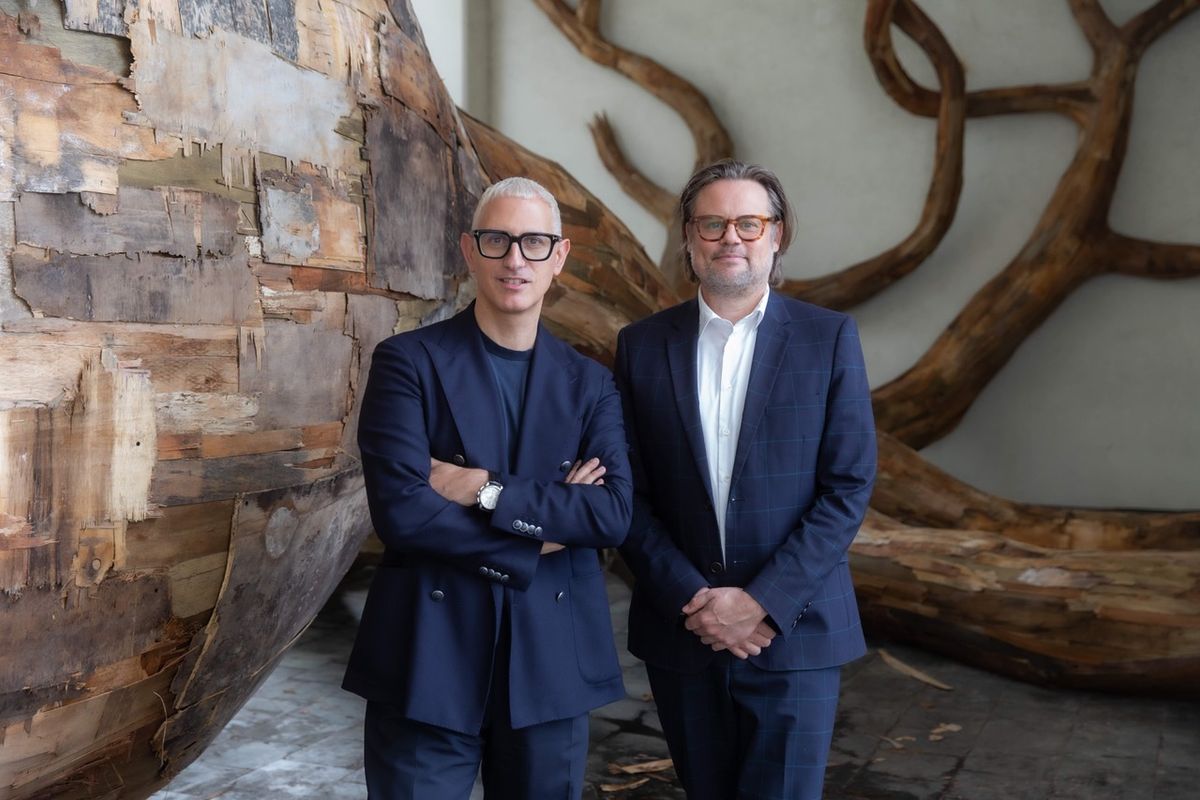
As Hamburger Bahnhof celebrates its 30th anniversary, its co-directors Sam Bardaouil and Till Fellrath discuss their vision for the museum as a site of production, dialogue and experimentation. They also reflect on the international fundraising gala scheduled for 14 March, conceived as a key moment in shaping the institution’s future.
TAN: Since you arrived as co-directors of Hamburger Bahnhof in 2022, you have developed programmes that bring together the collection and numerous temporary projects. How can museums function as sites of experimentation today?
Till Fellrath: I think there is a shift. Contemporary art museums are no longer only interpreting the canon but actively shaping it. With artists such as Klára Hosnedlová or Saâdane Afif, we are producing new works that might otherwise have entered museums much later. Museums should function more like theatres, actively producing, experimenting and giving a platform to artistic voices. In a city like Berlin, it is essential to be part of this fabric and to be an active player in asking where contemporary art is now and where it is going.
Sam Bardaouil: To be a place of experimentation, you have to be closely engaged with artists and allow them to challenge institutional structures. Artists like Delcy Morelos or Dan Lie bring living elements into the museum, which raises questions when these works are shown alongside figures such as Joseph Beuys. This forces us to rethink conservation, education and exhibition practices across all departments. Experimentation is not theoretical. It means changing structures and remaining fluid, allowing artists to truly inform how the institution works.
Hamburger Bahnhof is celebrating its 30th anniversary in March. What does this anniversary mean to you today?
T.F.: Turning 30 is a real moment for an institution, almost a generational moment. It’s a time to reflect and to ask where we go from here. That question is also at the heart of the global conference we’re organising in November, which looks at the future of the institution, collecting, and art history in a changing field. For Hamburger Bahnhof in particular, this anniversary is deeply linked to its origins after German reunification. The museum emerged from the coming together of the East and West national galleries, with Hamburger Bahnhof conceived as a place to look forward and ask about the contemporary. Thirty years on, it feels like a turning point. It is a moment to assess what has been achieved, to regain momentum, and to recalibrate for the future, especially as Berlin today is completely different from the city it was after reunification.
S.B.: It is essential to acknowledge the role this museum has played, not only in Berlin but also in the global discourse on contemporary art and in supporting artists. Many important artists had their first major exhibitions at Hamburger Bahnhof and went on to international recognition. Anne Imhof is one example, as is Tomás Saraceno, whose early installations were shown in the main hall.
At the same time, we need to ask what the key questions are today, given the state of the world and the growing political pressure on cultural institutions. What does it mean to be a public space? How do we mediate difficult conversations? How can a museum truly celebrate and protect plurality, and see art and culture as a way to bring people together? These are crucial questions if we want to rethink, in concrete terms, what the museum model should be for the next 30 years.
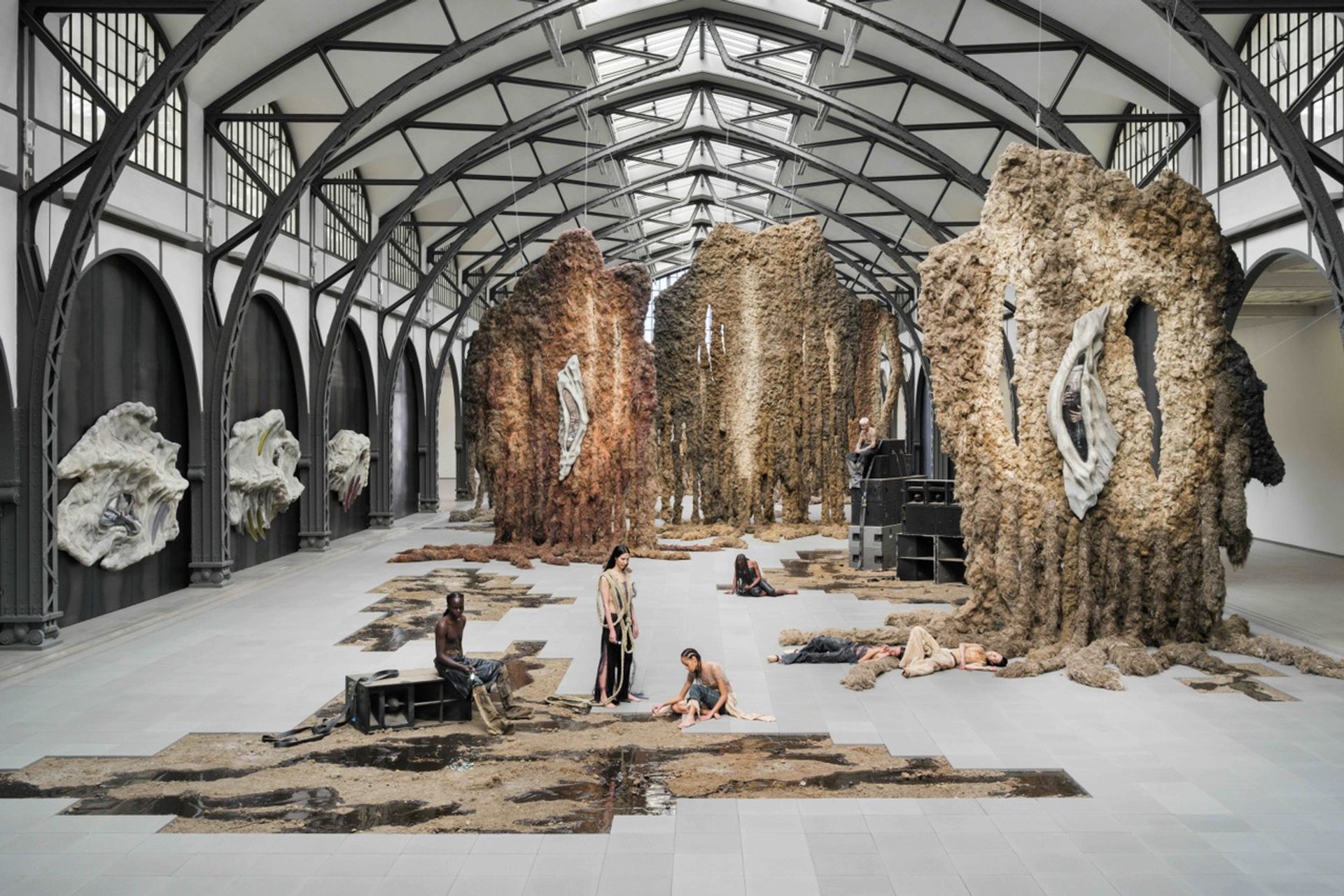
Klára Hosnedlová, embrace (2025), commissioned by Chanel for Hamburger Bahnhof © Artist, Kraupa-Tuskany Zeidler, White Cube / Staatliche Museen zu Berlin – Nationalgalerie , Zdeněk Porcal – Studio Flusse
To mark the 30th anniversary, you are organising a gala dinner with international ambitions. What role does this event play in your strategy?
T.F.: It is a fundraising gala. We believe museums will increasingly need diversified sources of funding, as relying solely on state support can be problematic for maintaining independence. Like any sustainable model, it is about sharing risk and working with different partners and revenue streams. These events also open the institution to new audiences and stakeholders who can become long term supporters and global ambassadors. Hamburger Bahnhof is unique as a platform connecting the Berlin and German art scene with an international community. We see the gala as a way to expand this community and support the museum’s growth. The 30th anniversary is a starting point and the gala is part of a future oriented strategy.
S.B.: We wanted to create a condensed moment to acknowledge the history of Hamburger Bahnhof through key projects and artists, reflected in the programme itself. A reference point is Julian Rosefeldt’s Manifesto, shown in 2016 and filmed in Berlin with Cate Blanchett, who will be present and speak about arts, culture and her connection to the museum. Artists closely linked to the museum include Elmgreen & Dragset, Anne Imhof, Wolfgang Tillmans and Mark Bradford, with others appearing through films such as Anselm Kiefer, Katharina Fritsch, Katharina Grosse and Ayoung Kim. It is a multigenerational snapshot of a larger history. Conceived under the theme A Night in Berlin, the evening brings together different facets of the city’s cultural life, from the Berliner Philharmoniker and the Staatsoper Unter den Linden to Ellen Allien, the Schaubühne with Thomas Ostermeier, and figures from film, fashion and publishing such as Tricia Tuttle, Ulrike Ottinger and 032c. The idea is to make Hamburger Bahnhof the place where these Berlin voices come together, celebrating both the museum and the city.
Who will attendant this dinner?
T.F.: The evening is primarily for the museum’s donors and is conceived as a thank you to those who have supported Hamburger Bahnhof over the past year. Many artists will be present, alongside members of the wider Hamburger Bahnhof family such as Cate Blanchett and other cultural figures we have collaborated with. It is a very international guest list, bringing together people who are deeply committed to the arts, exchange and celebration.
S.B.: It is also about freedom of expression, creative freedom and inspiring younger generations. Among the guests are Wim Wenders, Matt Dillon, Nina Hoss, Edward Berger and Carla Sozzani of 10 Corso Como, who is also on our committee, alongside many others. Guests will come from across Europe, the US, Asia, the Middle East, India and Korea. It is truly a global moment to bring together those who believe in the value of art and to mark Hamburger Bahnhof’s 30th anniversary, still young and going strong.
How do you intend to use the funds raised?
T.F.: Very directly, the funds will go to the programmes of Hamburger Bahnhof. This includes exhibitions and, to a large extent, the educational programme. There are several objectives, but the core ambition is to build solid funding for the museum’s programmes in the coming years. In that sense, the impact of this kind of fundraising will be felt very concretely across all our activities, perhaps even more strongly than in much larger institutions that organise similar events.
How do you see the museum evolving in the coming decades?
T.F.: The museum has to fully reflect the society it exists in, in all its diversity, across age, culture, politics and social backgrounds. That means opening up, listening more and moving away from a didactic model. Rather than telling people what art is, the museum should facilitate conversations and give space to interpretation and participation. Art should feel connected to real life, not like an elitist discourse. It can inspire younger generations, open new perspectives and help people see themselves as part of a wider community. In that sense, the museum should act as a conduit for a free and democratic society, a living organism that helps shape the world around it rather than a static place for objects.
S.B.: From an artistic perspective, we want Hamburger Bahnhof to be the place that comes to mind when people think about the most innovative practices in contemporary art, artists who are pushing the boundaries of their mediums, whether sculpture, video, text or artificial intelligence. Equally important is our role as mediators rather than authors. We want to offer something and genuinely see how audiences engage with it, without imposing a single reading. A living museum is one that never settles, that is always in a state of becoming. The world keeps changing, and the museum has to change with it. If one day it needs to be a place for education, another night a space for music or debate, or a forum to rethink art history in the future, it should be open to all of that. That openness is how a museum can truly absorb and reflect the diversity of the world we live in.