

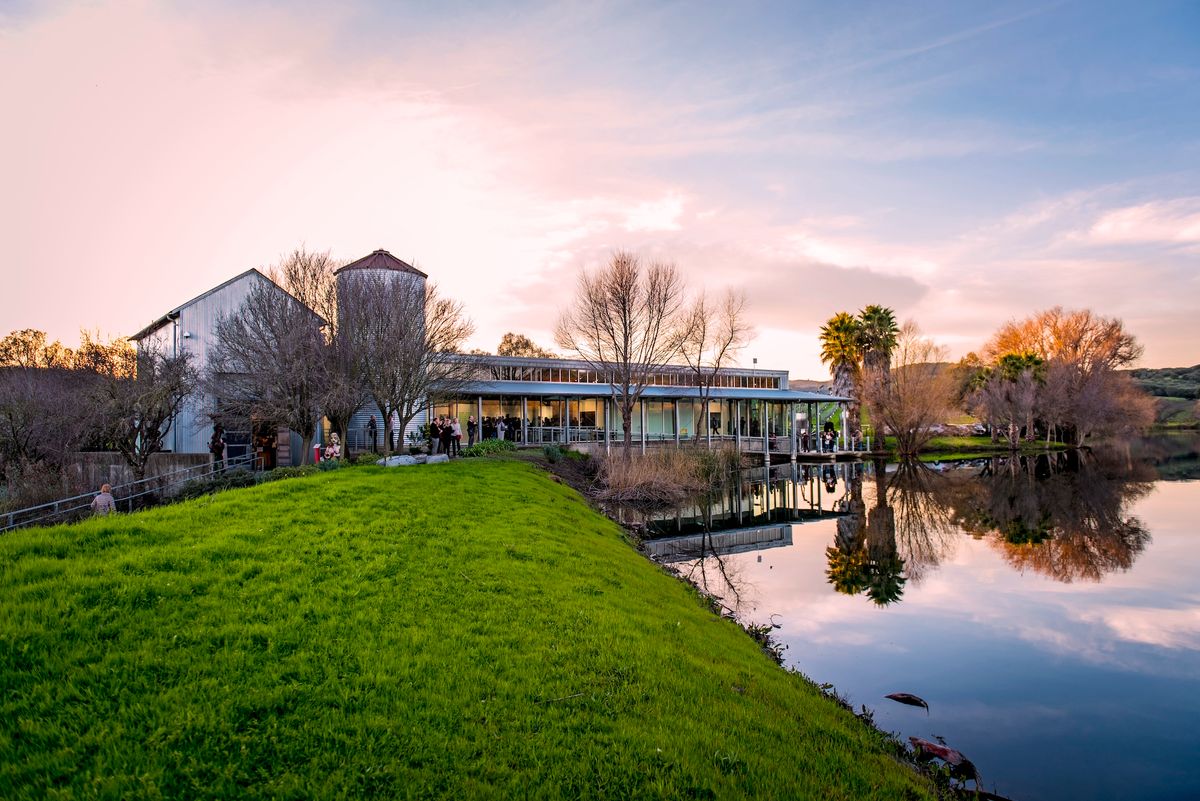
The di Rosa Center for Contemporary Art, a museum and sculpture park in Northern California’s Napa Valley that has struggled to balance its finances in recent years, has put its property up for sale. The asking price for the 217-acre estate—which includes gallery buildings, an historic residence, vineyards and more—is $10.9m. Crucially, the art is not for sale.
“Our priority is to make sure that the collection stays together and that we are able to do exhibitions and loans from our permanent collection,” the centre’s executive director, Kate Eilertsen, told the San Francisco Chronicle. A possible hoped-for outcome, she added, is that “some very wealthy art-loving philanthropist comes in and says: ‘I’ll purchase it, and I will lease it back to you for $5 a year and you can keep everything here.’”
The centre has made significant changes to its programmes over the past year, including scaling back its programming, reducing its staff numbers and prioritising wedding rentals. It is also working to keep the property, its galleries and its outdoor art collection—which includes marquee works by Mark di Suvero, Robert Arneson, Viola Frey, William T. Wiley and many more—accessible to the public.
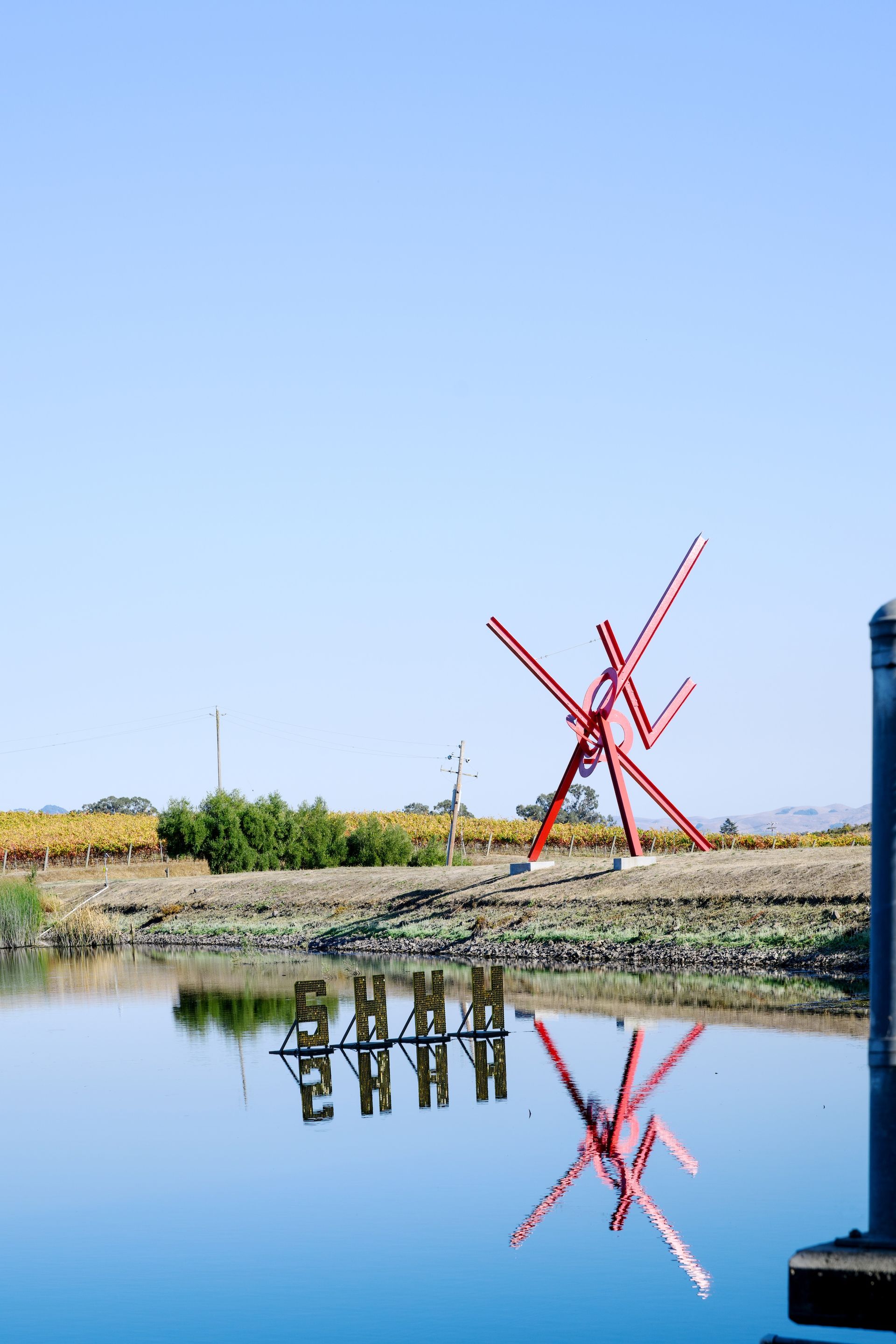
Ana Teresa Fernández's SHHH (2023) and Mark di Suvero's For Veronica (1987) at di Rosa Center for Contemporary Art Photo by James Joiner, courtesy di Rosa Center for Contemporary Art
"We are currently exploring potential land partnerships, including working with the Napa County Open Space District and the Napa County Land Trust to expand public access to the property, as well as the possibility of a sale to a mission-aligned buyer interested in collaborating with di Rosa," Eilertsen wrote earlier this month in a newsletter to the centre's supporters that she shared with The Art Newspaper. "In parallel, we are developing a sustainable business model that supports both our Napa campus and our satellite location in San Francisco. We are continuing to explore philanthropic partnerships with supporters who share our commitment to the mission."
The centre’s Napa Valley campus and its admission-free gallery at the Minnesota Street Project in San Francisco will remain open throughout the sale process.
In 2019, the centre came under fire for a plan to sell off the majority of its 1,600-piece collection, which is considered to be uniquely rich in works by Bay Area artists. The sale was ultimately called off amid outcry from the local art community.
The centre’s property on Sonoma Highway was acquired by the vintner Rene di Rosa in 1960 and, 26 years later, he used the proceeds from the sale of his winery to establish the Rene & Veronica di Rosa Foundation. That non-profit built the art park to show the collection belonging to Rene and his wife, and in 1997 the di Rosa Preserve: Art & Nature opened to the public.
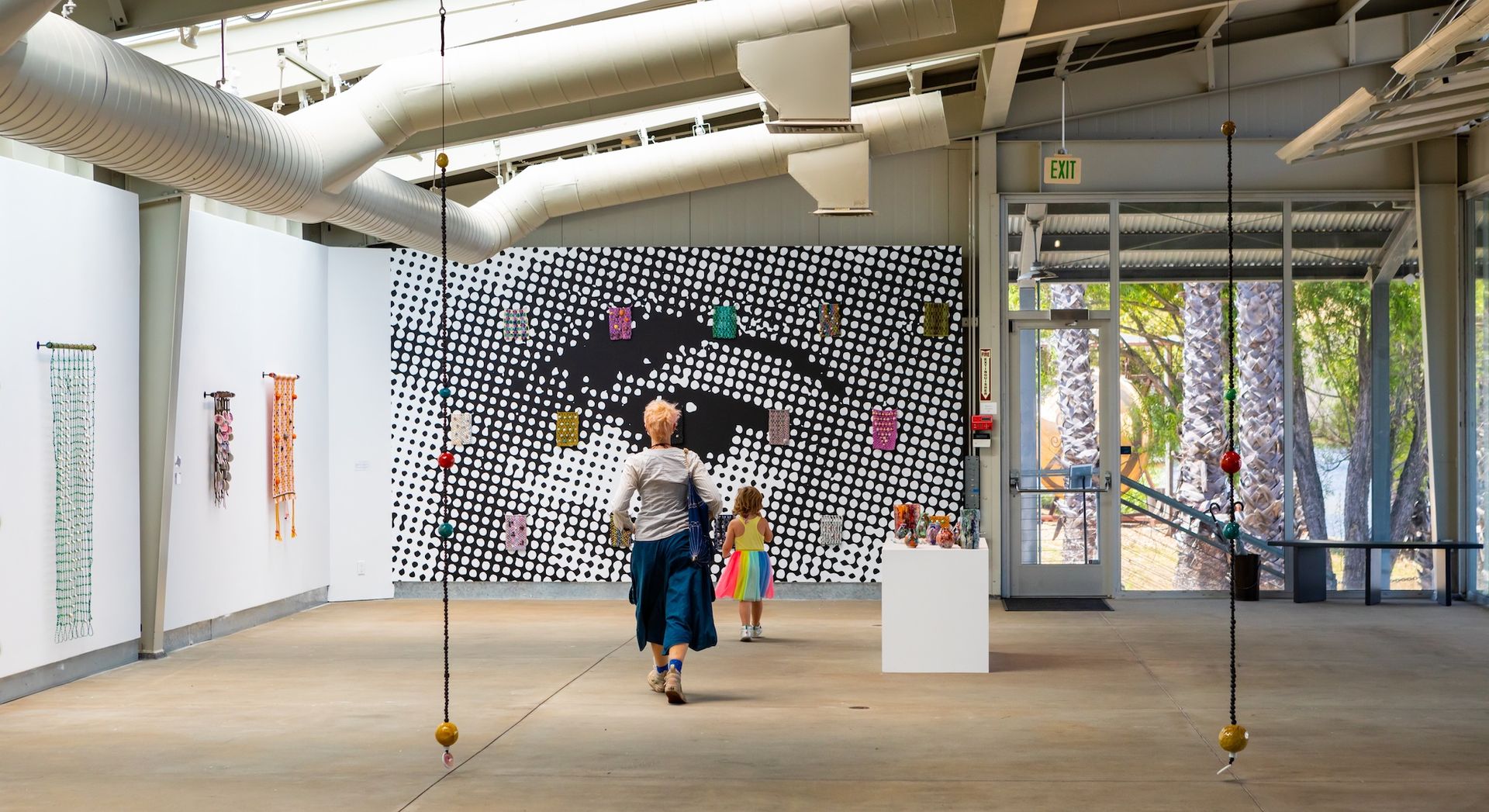
Installation view of Erik Scollon: Anything With a Hole… Is Also a Bead at the di Rosa Center for Contemporary Art Courtesy di Rosa Center for Contemporary Art
Since then, the centre has struggled to cover its costs, and in addition to plans for the abandoned auction in 2019, it has increasingly promoted itself as a wedding venue to boost its revenue.
Last October, it hosted a four-day celebration of the marriage between Melissa Blaustein (the former mayor of nearby Sausalito) and David Saxe, a prominent arts philanthropist in the Bay Area. The event helped generate more than $13,000 in donations to the centre on top of the rental fees, Eilertsen told the Chronicle, and it has spurred additional wedding business—though not enough to cover the di Rosa’s operational costs. As a result, the museum has put off several upgrades to its facilities.
The di Rosa’s financial hardships are consistent with the experiences of other Bay Area art institutions. Both of San Francisco’s independent art schools—the San Francisco Art Institute and the California College of the Arts—are ceasing operations and selling their properties. Meanwhile, the city's Institute of Contemporary Art has opted to forego a dedicated physical exhibition space and is pursuing a nomadic and public-art programme.