

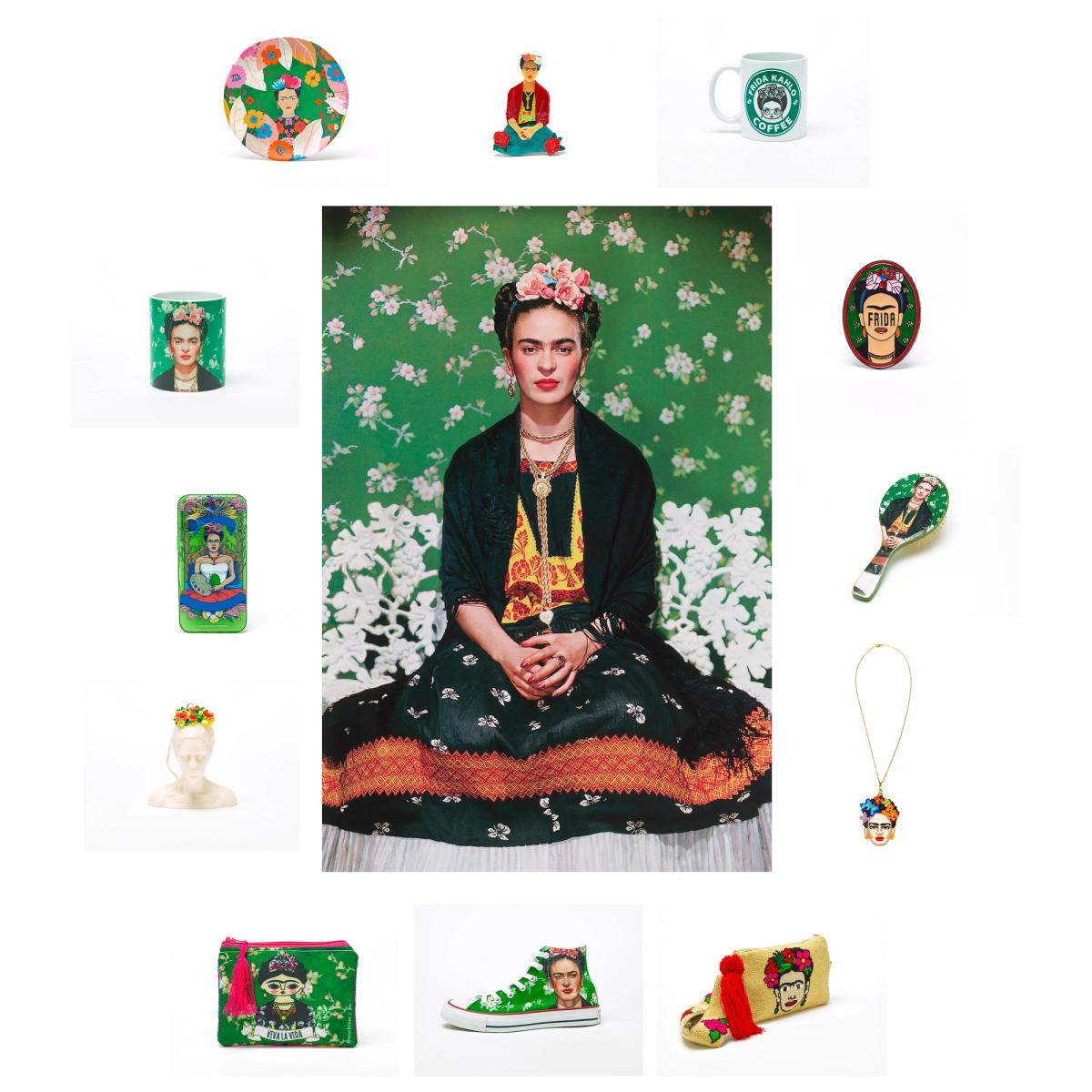
The Mexican painter Frida Kahlo (1907-54) is one of the most recognisable artists in the world. But how did she become so famous? A large-scale exhibition opening at the Museum of Fine Arts, Houston this month will trace Kahlo’s journey from a little-known artist in her husband Diego Rivera’s shadow to a world-famous figure and brand, influencing artists and pop culture alike.
“For over 30 years, we have seen many Kahlo exhibitions, mainly retrospectives, with little or no attention paid to the posthumous ascendancy of her legacy,” says the exhibition’s curator, Mari Carmen Ramírez. “The exhibition is about Frida’s art and legacy, but also about the Frida phenomenon, which reflects the intersection of high and low, elite and popular culture, alongside commercial interests.”
The show Frida: the Making of an Icon will look at Kahlo’s multifaceted, often contradictory, personality and her rise to fame from the 1970s onwards, through influential biographies and Chicano and feminist reinterpretations of her work. “The exhibition looks into Kahlo’s relation to race, ethnicity and gender, her ambiguous relationship with the US, and her overlooked political persona as the basis of her appeal to diverse groups and movements,” Ramírez says.
The show will bring together Kahlo’s personal items and 35 works, including The Broken Column (1944), alongside pieces by 80 artists across five generations who have been influenced by her. They range from established names such as the Cuban American artist Ana Mendieta to more recent artists such as the Mexican Berenice Olmedo, whose work explores disability (Kahlo was disabled by childhood polio and a bus crash when she was 18).
Organised thematically, it will include sections contextualising Kahlo’s work and ties to movements such as Surrealism, the Chicano movement, feminism, LGBTQ+ art and Neo-Mexicanism. Another section will analyse how artists have more recently embraced Kahlo as a symbol of resilience amid physical disability. “In each case, artists have appropriated Kahlo’s motifs or her body, recasting them in proposals addressing issues of their own time, like gender equality or body politics,” Ramírez says.
The show will also explore “Fridamania” through 200 objects. “The term has been used since the 1990s, but this is the first systematic research on its evolution,” Ramírez says.
The aim is to reframe why the artist’s influence—grounded in the emotional ties that her work and persona inspire—is unique. “The Frida phenomenon is unparalleled in past or recent history,” Ramírez says.
The show will travel to London’s Tate Modern this summer. “The structure will remain the same, but some of Kahlo’s works will vary, including other iconic alternatives Tate sourced internationally,” says Tobias Ostrander, the exhibition’s Tate curator.
• Frida: The Making of an Icon, Museum of Fine Arts, Houston, 19 January-17 May; Tate Modern, London, 25 June-3 January 2027