

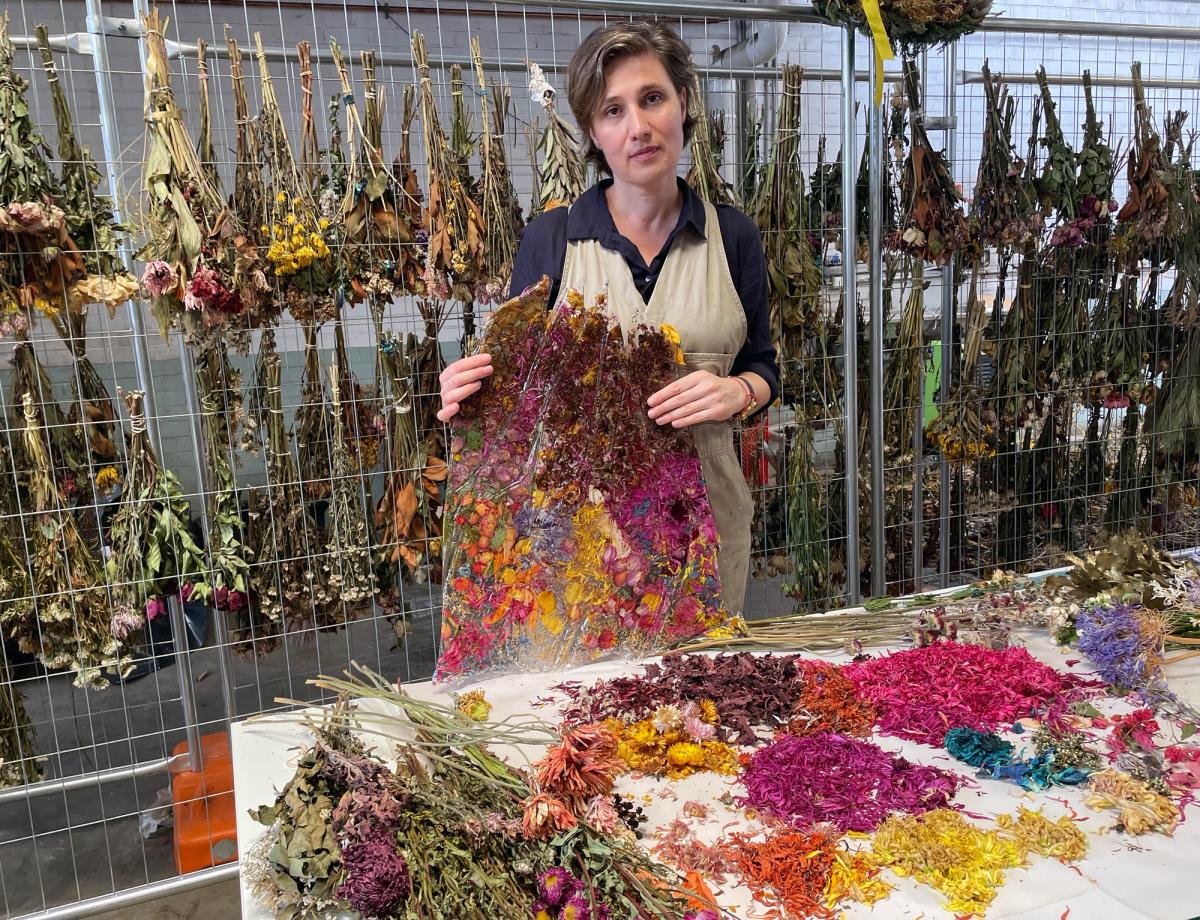
Floral tributes laid at Australia’s Bondi Beach after the deadly terrorist attack at a community Hanukkah celebration on 14 December have been retrieved and will form the basis of an installation at the Sydney Jewish Museum.
The Jewish Australian artist Nina Sanadze, who was born in Georgia when it was part of the USSR and lives in Melbourne, is working with volunteers to process a large truck-full of the flowers in a Sydney warehouse.
Despite their large number, the flowers being dried under whirring ceiling fans amount to only a quarter to a third of what a grieving public placed at the site of the attack. A ten-year-old child was among the 15 people killed in the attack, and many more were injured. Police shot dead the older of two alleged gunmen, Sajid Akram, at the scene, while his son, Naveed Akram, was wounded and remains in custody on multiple charges.
Sanadze said she would finish processing the tribute flowers before contemplating how to turn them into a work or art. She is already experimenting with setting petals in clear resin, and is looking at creating furniture out of composted stems and leaves. Some of the flowers may even be cast in bronze.
Her wish is that part of the work is descriptive, perhaps showing beachgoers fleeing when the shooting began. “I guess that is what art always tries to do—to do something that lasts for centuries and keeps the memory,” Sanadze says.
One of the volunteers working to sort the petals for the work told The Art Newspaper that the Jewish community was “functioning on autopilot, just trying to keep busy”.
Antisemitism has risen sharply in Australia since Hamas’s 7 October 2023 attacks on Israel, and Sanadze is no stranger to the bitter divisions the deadly event provoked. “The abuse and harassment of Jewish creatives like me began instantly,” she wrote in a column in The Australian newspaper in January last year.
Sanadze established Goldstone Gallery in suburban Melbourne in February 2025. It opened with a photographic exhibition focused on the life of Russian opposition leader Alexei Navalny, who died in a Siberian penal colony in 2024.
However, Sanadze has since temporarily shut her space because she says she cannot guarantee the safety of staff or visitors. Like many other Jewish Australians, the artist said it feels like she has “a target on the back”.
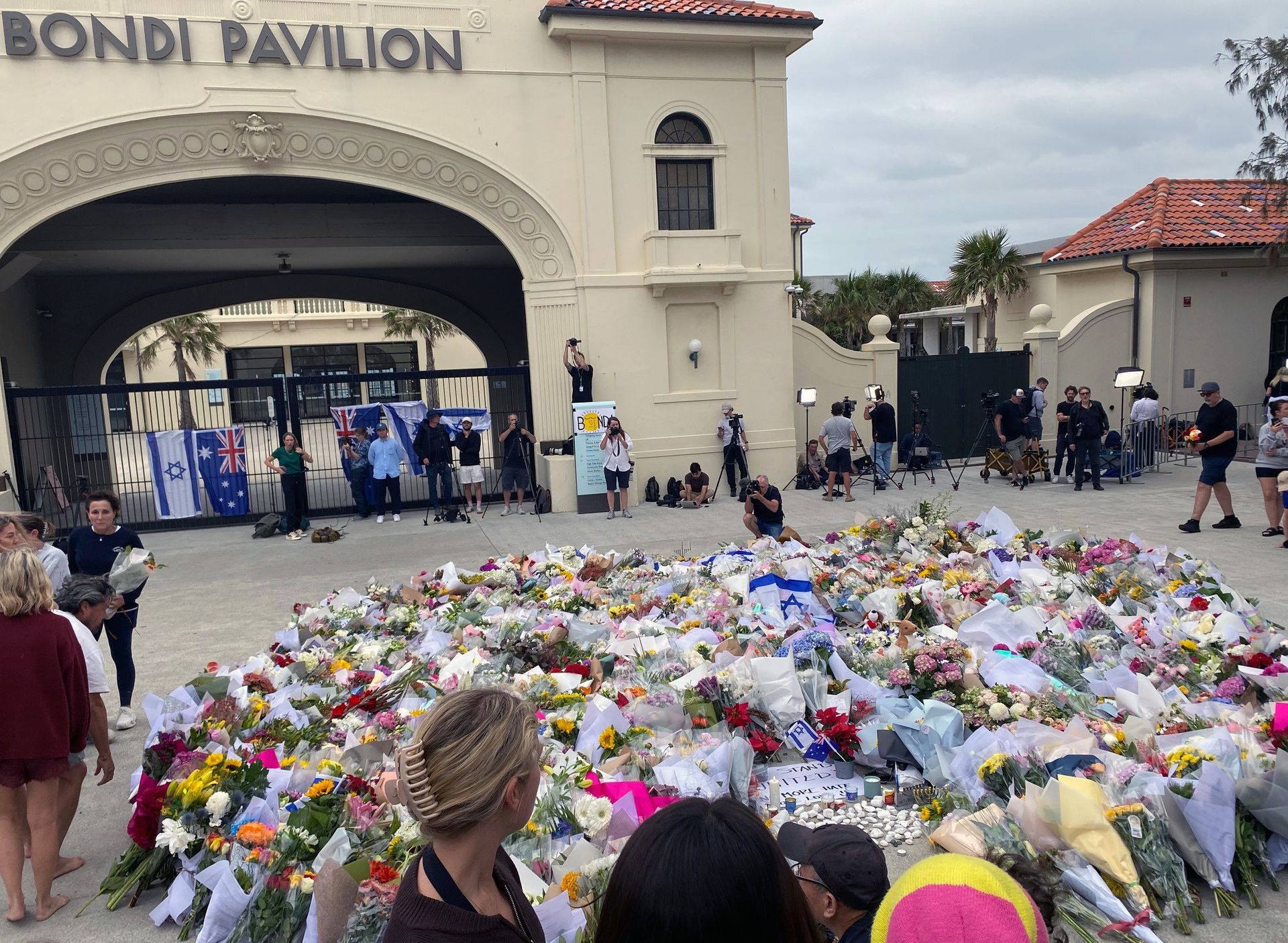
Other tribute items left at the massacre site have also been collected and will be used in other art projects Courtesy of Sydney Jewish Museum
Sydney Jewish Museum is currently closed for a redevelopment and expansion project, but Sanadze’s new floral work will form a special exhibition when it reopens in 2027.
Shannon Biederman, the museum’s senior curator, says the collection of the flowers from outside Bondi Pavilion began on 22 December at 5am. “My arms were yellow from pollen,” she recalls.
Plush toys, pebbles of remembrance, flags and other tribute items left at the massacre site were also collected and will be used in other art projects.
“Many artists have reached out,” Biederman says. “We saved every little stone, every candle, in the thought that maybe someone could create something meaningful out of this.”