

With just under seven months to go until the US marks the 250th anniversary of the ratification of the Declaration of Independence, on 4 July 1776, questions abound about how the country will celebrate its history and culture. Mirroring the fractured history of the country itself, the official United States Semiquincentennial Commission set up by congress in 2016 to plan and oversee the festivities has weathered months of inner turmoil. Known as America250, the commission is made up of 16 private individuals and 20 political appointees, and is meant to be bipartisan, with members chosen by congressional leadership of both parties.
But its executive director, Ariel Abergel, appointed by US President Donald Trump earlier this year, was fired in September for defying the executive committee’s directives and trying to surreptitiously convince some of the commission members to resign, allowing for new appointees more aligned with the administration to step in.
A new executive director is expected to be announced in the coming weeks, and according to Politico, the White House has nominated Jordan Wiggins, a Republican operative who has worked on election campaigns for Vice-President J.D. Vance and Florida Governor Ron DeSantis, to the post. “In accordance with our legislation, the commission must vote to approve any new executive director appointment,” Rosie Rios, the commission’s chairwoman and a former US treasurer under President Barack Obama, said in a statement. “We look forward to sharing more on this important role soon.”
The commission is due to receive $15m in congressionally appropriated funding this year, and also takes in donations and corporate sponsorships, including from companies such as Coca-Cola, Kraft Heinz, Amazon and Walmart. But the only major initiatives America250 has publicly announced so far are America’s Field Trip, a competition for schoolchildren that allows them to visit historic locations across the country, and Our American Story, an oral history project run out of an Airstream trailer that is currently touring the US inviting citizens to share personal stories. Further initiatives are expected to be announced in early 2026, and the commission’s online calendar includes a wider range of related events organised by America250-affiliated groups in each state and independent institutions. Among them is the exhibition In Pursuit of Life, Liberty & Happiness, opening at the Smithsonian’s National Museum of American History in March 2026.
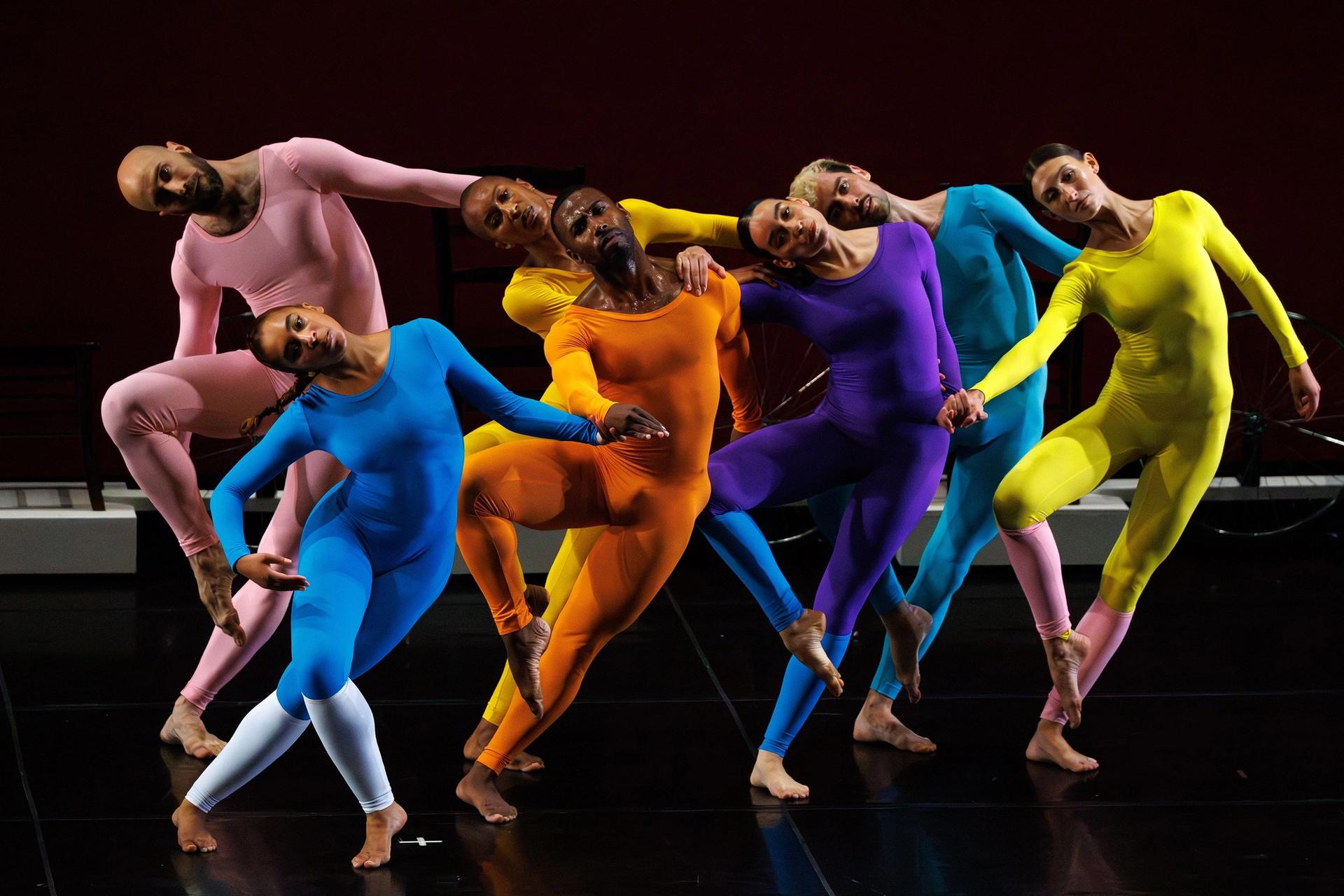
Merce Cunningham’s Travelogue (1977) will be staged as part of the celebrations
Photo: Ben McKeown; courtesy of the American Dance Festival
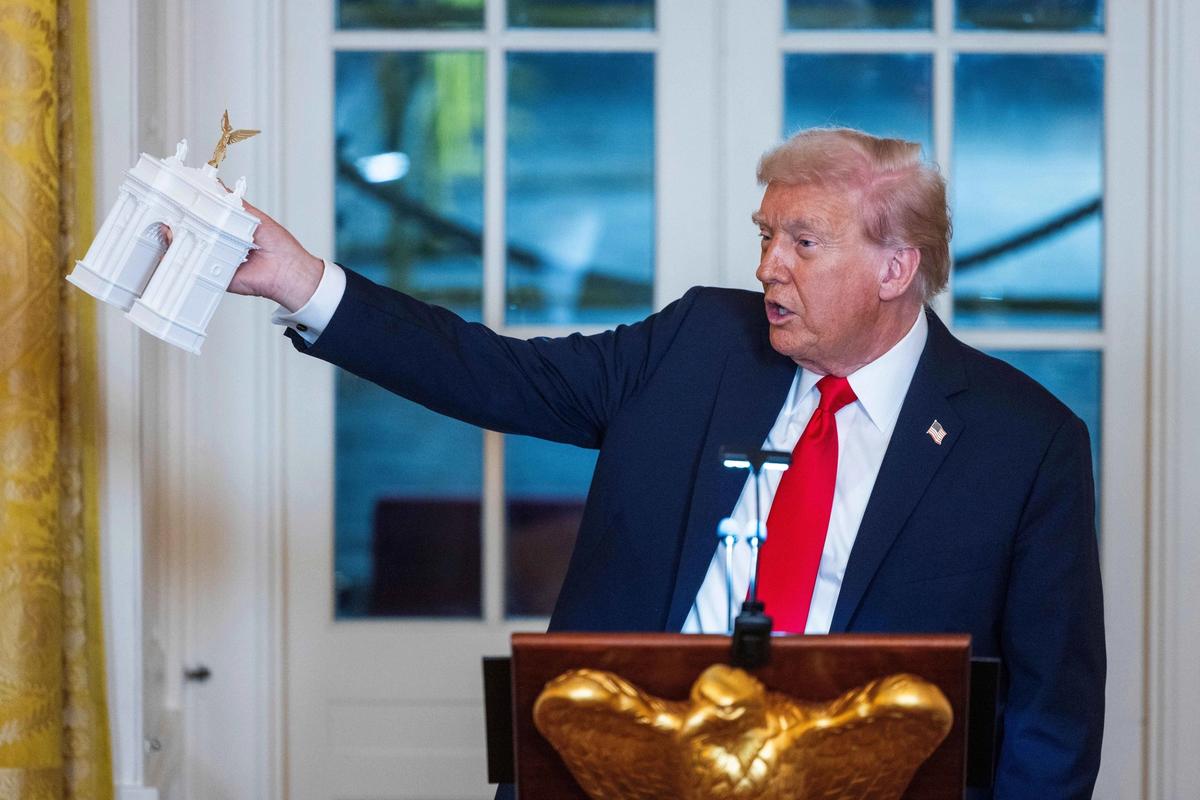
Meanwhile, President Trump was quick to put his stamp on plans for the 250th anniversary. Soon after he took office, he issued an executive order stating that the White House was forming its own task force. One of the key projects promised by that order is the National Garden of American Heroes, a sculpture park of newly commissioned statues. But despite the National Endowment for the Humanities (NEH) and the National Endowment for the Arts (NEA) committing a combined $34m to fund the statues, and a further $40m allocated to the Department of the Interior to build the garden, a site has still not been announced and there is little sign that it will be completed in time for the semiquincentennial. In an email to The Washington Post, the White House adjusted its timeline for the garden, saying it would open sometime during President Trump’s second term. His plan to build a triumphal arch near Arlington National Cemetery in time for the 250th anniversary also faces logistical hurdles.
Some of the other projects organised by the task force have been criticised by historians for presenting a one-sided or even fictionalised view of historic figures, such as a virtual Founders Museum, posted on the White House website. The display features a series of short videos generated with artificial intelligence (AI) in which paintings of historical figures are animated to speak, but their words are often not their own. For example, the second president of the US, John Adams, can be heard to say “facts do not care about our feelings”, a catchphrase tied to the conservative commentator Ben Shapiro.
More headway is being quietly made by the NEA and NEH, despite the drastic cuts made to their staff earlier this year. The NEA has issued grants supporting projects tied to the anniversary, although it has yet to publicly announce them.
Among the recipients is the Martha Graham Dance Company in New York, which will be celebrating Graham’s 100th birthday in addition to the semiquincentennial next year. “So much of what Graham did—not everything, by any means—but a lot did focus on our American heritage,” says LaRue Allen, the organisation’s executive director, adding that Graham’s work “highlights the American spirit of adventure, and of inclusiveness, which I think is so important for us to remember”. The company will use its $91,000 grant from the NEA to help fund the production of some well-known pieces, such as her solo ballet Frontier (1935).
On 16 January, the Martha Graham Dance Company announced that it would no longer be performing at the John F. Kennedy Center for the Performing Arts in Washington, DC, this spring as part of its nationwide tour. While the company's representatives did not specify a reason, many performers and groups have canceled events at the Kennedy Center since Trump took control of the complex and its board, of which he is the chair, voted to add his name to its exterior.
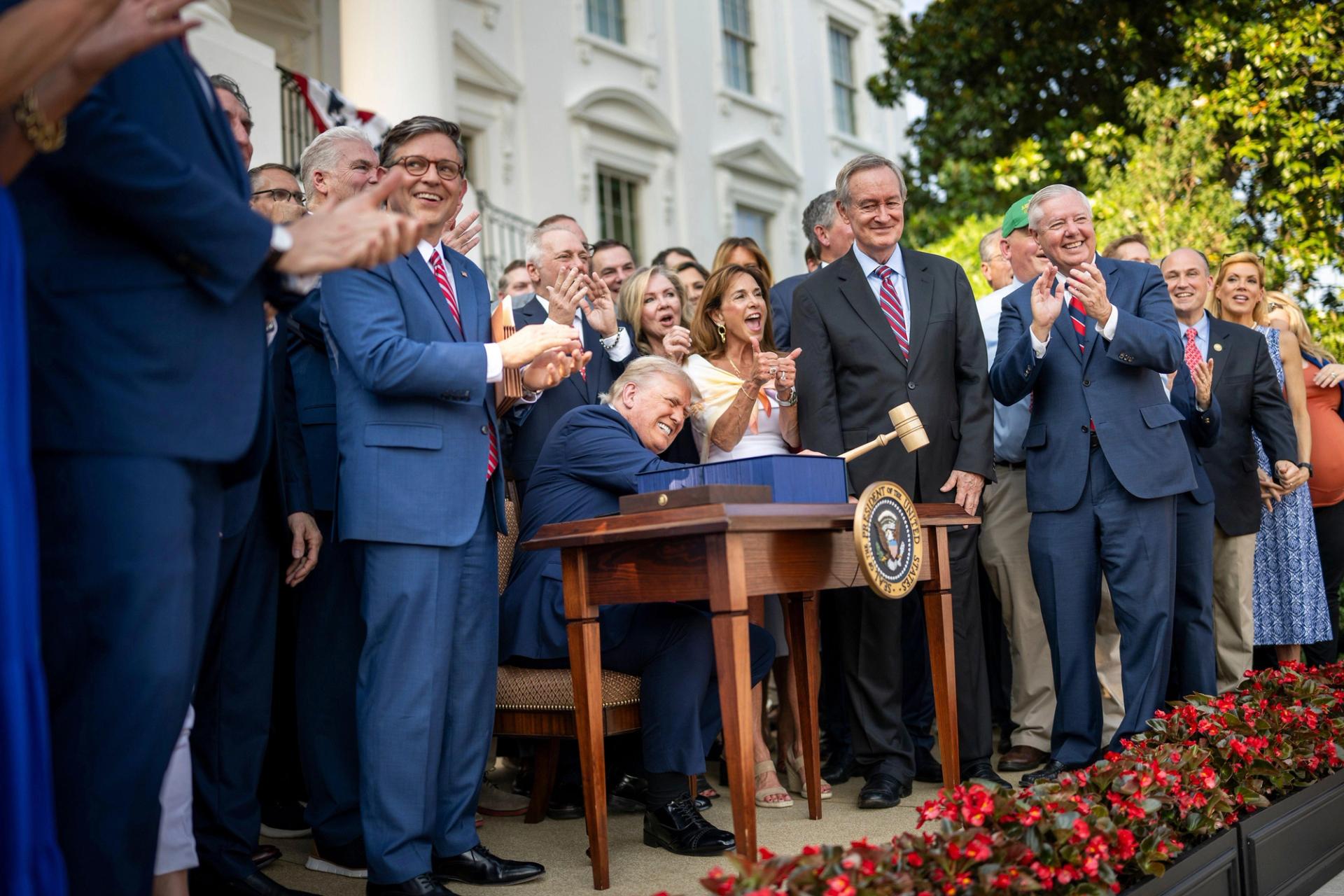
Donald Trump hammers a gavel in July after signing into law the One Big Beautiful Bill Act, which, among other things, provided funding for his planned National Garden of American Heroes sculpture park Daniel Torok/White House Photo/Alamy Live News
The Wallis Annenberg Center for the Performing Arts in Beverly Hills has also received an NEA grant, for $40,000, to support two performances that were created in collaboration with the visual artist Robert Rauschenberg—Trisha Brown’s Set and Reset (1983), with music by Laurie Anderson, and Merce Cunningham’s Travelogue (1977). “This is the powerful American legacy of the late 20th century,” says Robert van Leer, the Wallis’s executive director and chief executive. “That period was especially creative. And to look back to it, in terms of how these artists were crossing artistic lines and celebrating that in a contemporary context, was an important moment for us.”
“We have woven in America250… throughout our programmes and our grant-making,” the NEA’s acting chair, Mary Anne Carter, said during a public meeting of the National Council on the Arts held at the end of October, when the advisory body voted on further grants tied to the anniversary. “Stay tuned for more announcements.” Among them, Carter said, would be projects celebrating the historic figures listed in Trump’s National Garden of Heroes executive order, “in a wide variety of artistic formats, from newly commissioned works to world premier productions to community art activities”.
Similarly, this summer the NEH notified several of the applicants for its Celebrate America! grants that they would be receiving up to $25,000 each in matching funds for “projects that focus on the founding of the American nation, key historical figures and milestones that reflect the exceptional achievements of the United States”.
One of the organisations awarded a grant is the Thomas Cole National Historic Site in Catskill, New York, which is organising a series of exhibitions and programming under the title Thomas Cole: Painting the Nature of America, featuring work by the Hudson River School founder as well as the artists he influenced. Another organisation awarded a grant is the Vermont Historical Society, which plans to stage an exhibition highlighting 50 objects tied to the state’s history from 1776 to today, such as a printing press used to publish some of the state’s first laws. However, Steve Perkins, the society’s executive director, acknowledges that the country’s semiquincentennial holds less appeal for many Vermonters than the 250th anniversary of the founding of the Vermont Republic, to be celebrated in 2027.
As for the other kinds of cultural project that might result from the anniversary, Perkins says he is “hoping people aren’t afraid to showcase our nation’s history, warts and all”. He adds: “It’s certainly a time for fireworks and parades. We’ve been in existence for 250 years, that is exciting and that’s an accomplishment. But it’s also a time to reflect and think about this national experiment that we created 250 years ago. Where are we now? And where are we going?”